 US & Canada:
  Email:


 Access IFU & SDS
Summary & Explanation
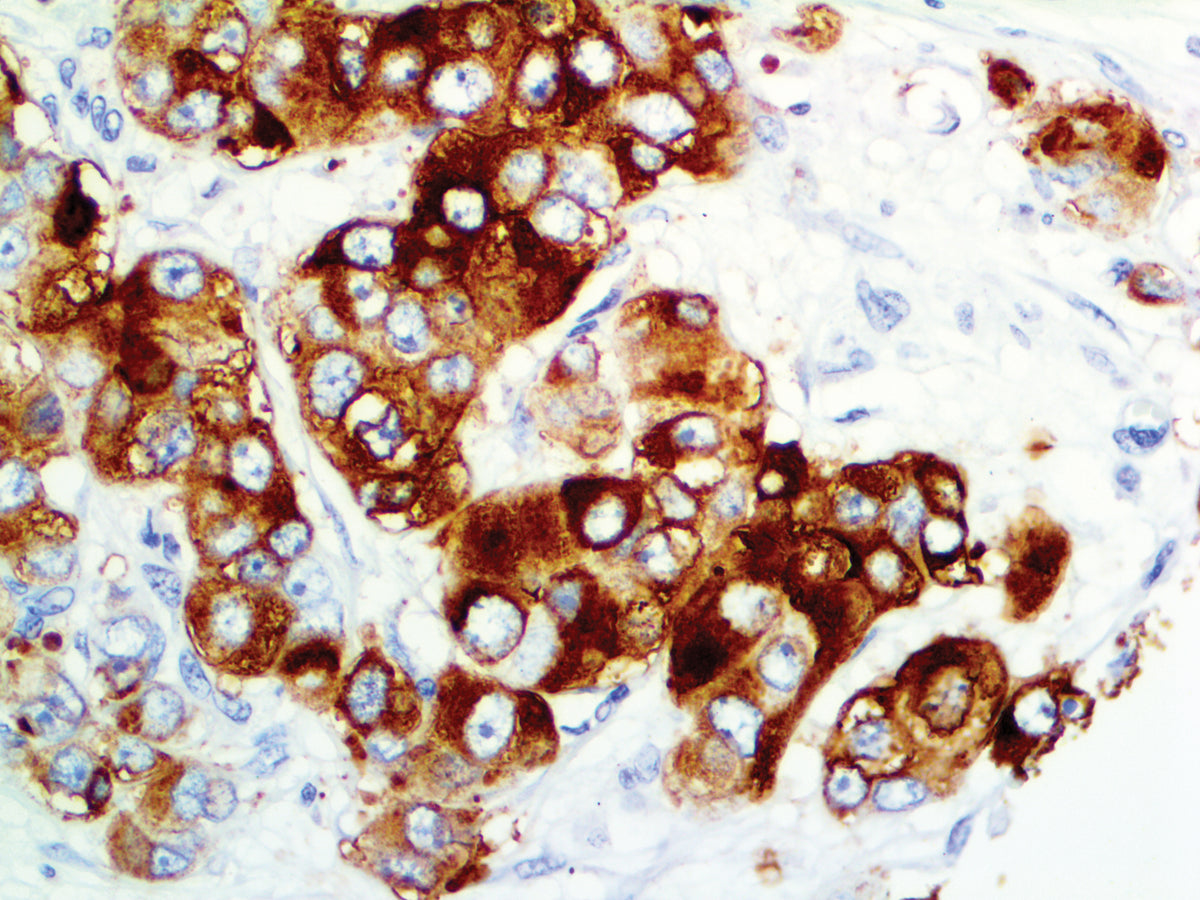
{"type":"root","children":[{"type":"paragraph","children":[{"type":"text","value":"Mucin 1, also known as MUC1, is a member of the mucin family and encodes a membrane-bound, glycosylated phosphoprotein. The protein is anchored to the apical surface of many epithelia by a transmembrane domain, the degree of glycosylation varying with cell type. Mucins are high molecular-weight glycoproteins which constitute the major component of the mucus layer that protects the gastric epithelium from chemical and mechanical aggressions. The MUC1 protein serves a protective function by binding to pathogens and also functions in a cell-signaling capacity. Overexpression, aberrant intracellular localization, and changes in glycosylation of this protein have been associated with carcinomas. Multiple alternatively-spliced transcript variants that encode different isoforms of this gene have been reported, but the full-length nature of only some has been determined."}]}]}
Antibody Type
Rabbit Monoclonal
Clone
EP85
Isotype
IgG
Localization
Cytoplasmic
Dilution
1:50-1:200
Species Reactivity
Human
Immunogen
A synthetic peptide corresponding to residues on the C-terminus of human MUC1 protein.