 US & Canada:
  Email:


 Access IFU & SDS
Summary & Explanation
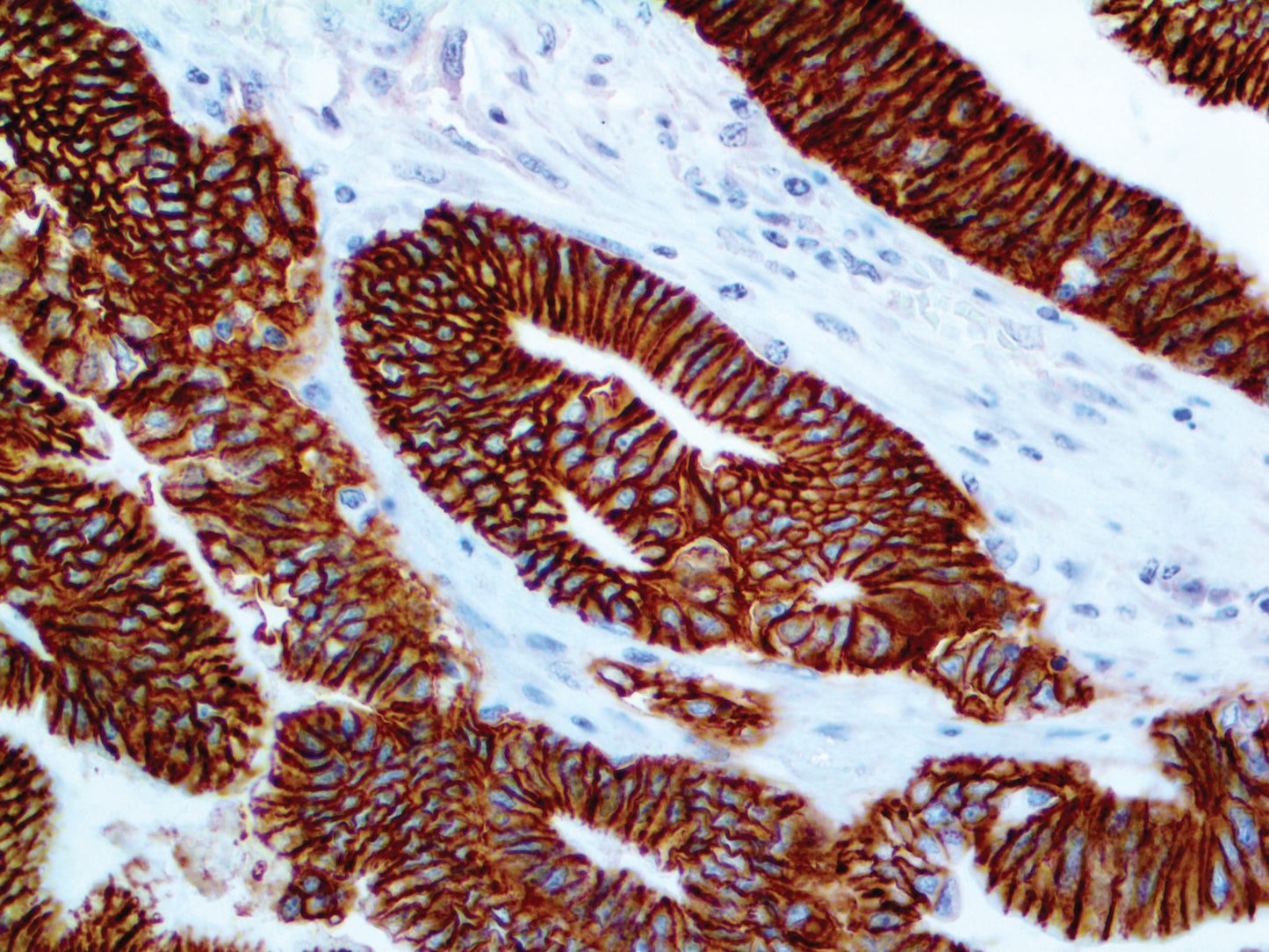
{"type":"root","children":[{"type":"paragraph","children":[{"type":"text","value":"LI-Cadherin, also known as Cadherin-17, is part of the cadherin superfamily and is a calcium-dependent, membrane-associated glycoprotein. Cadherins are responsible for mediating cell-cell adhesion and are important for the structural integrity of epithelia. LI-Cadherin consists of an extracellular region containing 7 cadherin domains, and a transmembrane region but lacking the conserved cytoplasmic domain. It is a component of the gastrointestinal tract and pancreatic ducts, acting as an intestinal proton-dependent peptide transporter in the first step in oral absorption of many medically important peptide-based drugs. It may play a role in the morphological organization of liver and intestine."}]},{"type":"paragraph","children":[{"type":"text","value":"In normal tissues, the LI-Cadherin antibody labels epithelial cells in the gastrointestinal tract and pancreatic duct, but not in kidney, liver and other tissues. In tumors, LI-Cadherin is expressed on adenocarcinoma of the digestive system including liver cancer. It is a sensitive marker for the identification of gastric intestinal metaplasia and well differentiated adenocarcinomas."}]}]}
Antibody Type
Rabbit Monoclonal
Clone
EP86
Isotype
IgG
Localization
Cytoplasmic
Dilution
1:25-1:100
Species Reactivity
Human
Immunogen
A synthetic peptide corresponding to residues in human LI-Cadherin protein.