 US & Canada:
  Email:


 Access IFU & SDS
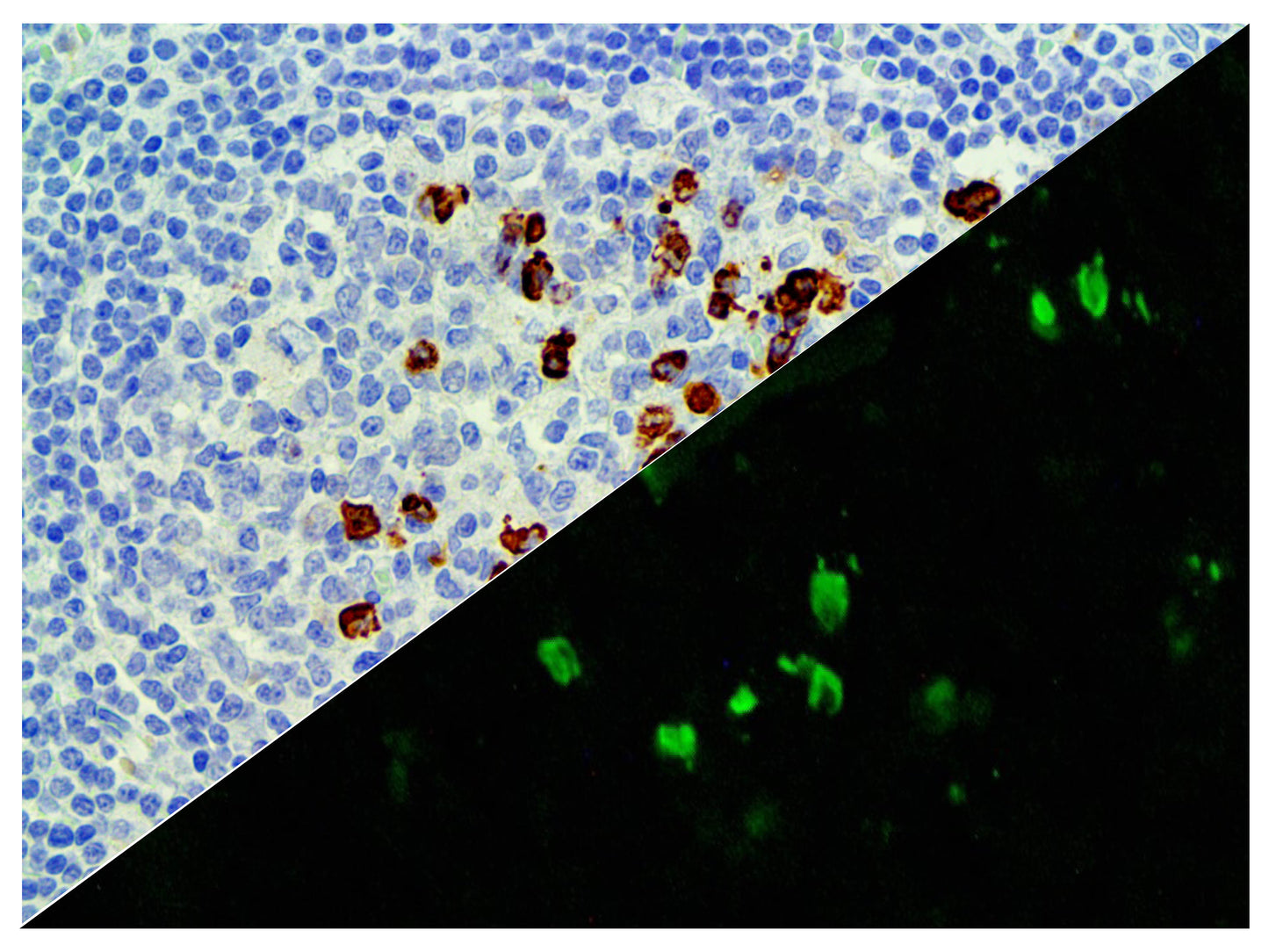
Summary & Explanation
{"type":"root","children":[{"type":"paragraph","children":[{"type":"text","value":"IgG4-related sclerosing disease has been recognized as a systemic disease entity characterized by an elevated serum IgG4 level, sclerosing fibrosis and diffuse lymphoplasmacytic infiltration with the presence of many IgG4-positive plasma cells. As these patients tend to respond favorably to steroid treatment, it is important to recognize this entity and differentiate it from such mimics as lymphoma."}]},{"type":"paragraph","children":[{"type":"text","value":"Clinical manifestations are apparent in the pancreas, bile duct, gallbladder, lacrimal gland, salivary gland, retroperitoneum, kidney, lung, breast, thyroid, and prostate. Immunohistochemical analyses in the case of IgG4-related sclerosing disease not only exhibits significantly more IgG4-positive plasma cells in affected tissues but also significantly higher IgG4/ IgG ratios (typically > 30%)."}]}]}
Antibody Type
Rabbit Monoclonal
Clone
EP138
Isotype
IgG
Localization
Cytoplasmic
Dilution
1:50 - 1:200
Species Reactivity
Human
Immunogen
A synthetic peptide corresponding to residues in the hinge region of Human IgG4. It does not cross-react with IgG1, IgG2, or IgG3.