 US & Canada:
  Email:


 Access IFU & SDS
Summary & Explanation
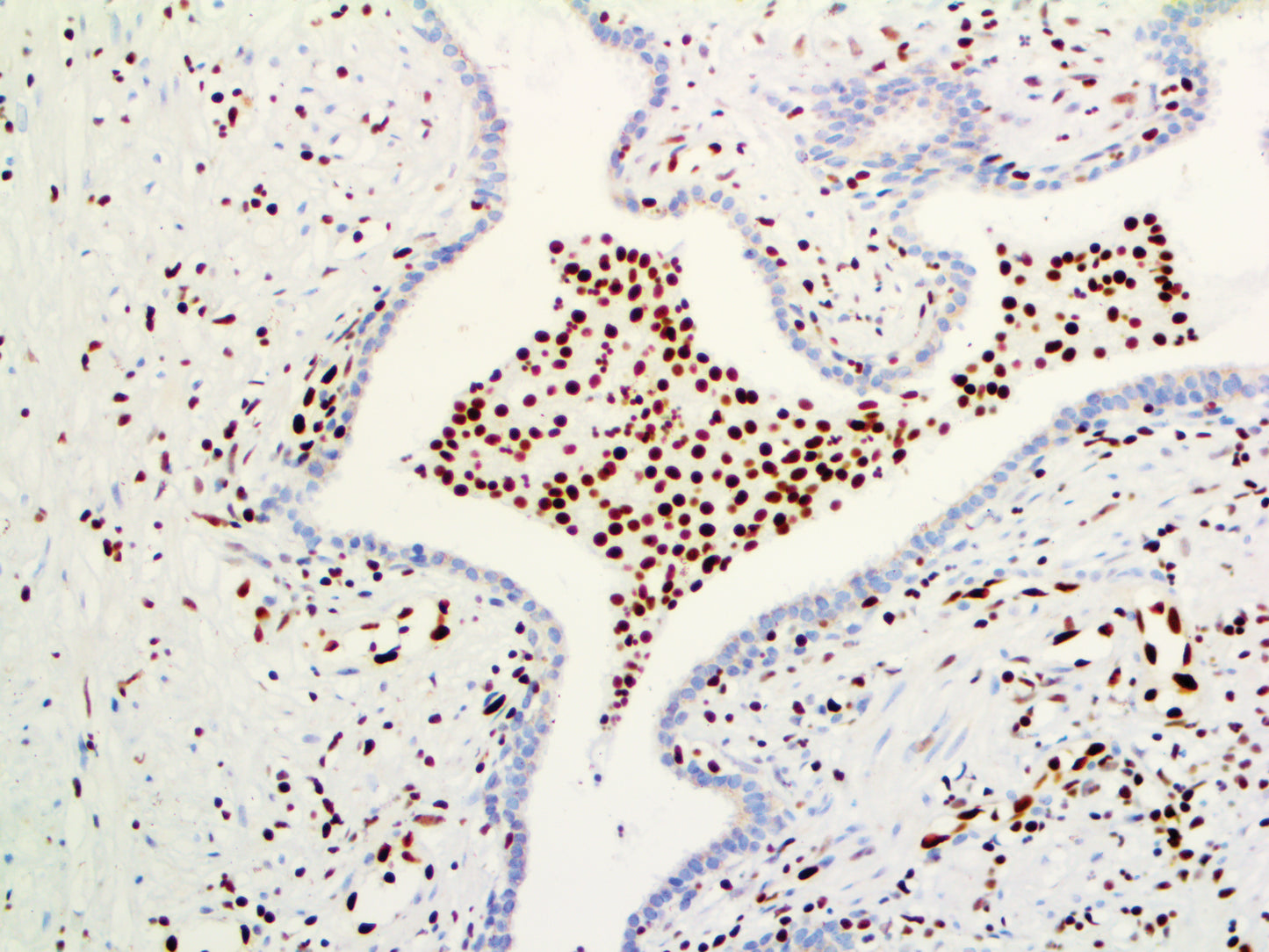
{"type":"root","children":[{"type":"paragraph","children":[{"type":"text","value":"ERG belongs to the ETS family that plays important roles in cell development, differentiation, proliferation, apoptosis and tissue remodeling. The aberrant expression of several ETS proteins is involved in tumor development and progression. ERG is linked to normal processes such as mesoderm formation. TMPRSS2-ERG fusion,"}]},{"type":"paragraph","children":[{"type":"text","value":"which occurs on account of translocations and interstitial deletions, is implicated in aggressive forms of prostate cancer."}]},{"type":"paragraph","children":[{"type":"text","value":"ERG overexpression is associated with aggressive tumor behavior and patient survival in prostate cancer. ERG antibody labels endothelial cells, lymophocytes, and prostate cancer cells."}]}]}
Antibody Type
Rabbit Monoclonal
Clone
EP111
Isotype
IgG
Localization
Nuclear
Dilution
1:100-1:500
Species Reactivity
Human, Predicted: Mouse, Rat
Immunogen
A synthetic peptide corresponding to residues on the C-terminus in human ERG protein.