 US & Canada:
  Email:


 Access IFU & SDS
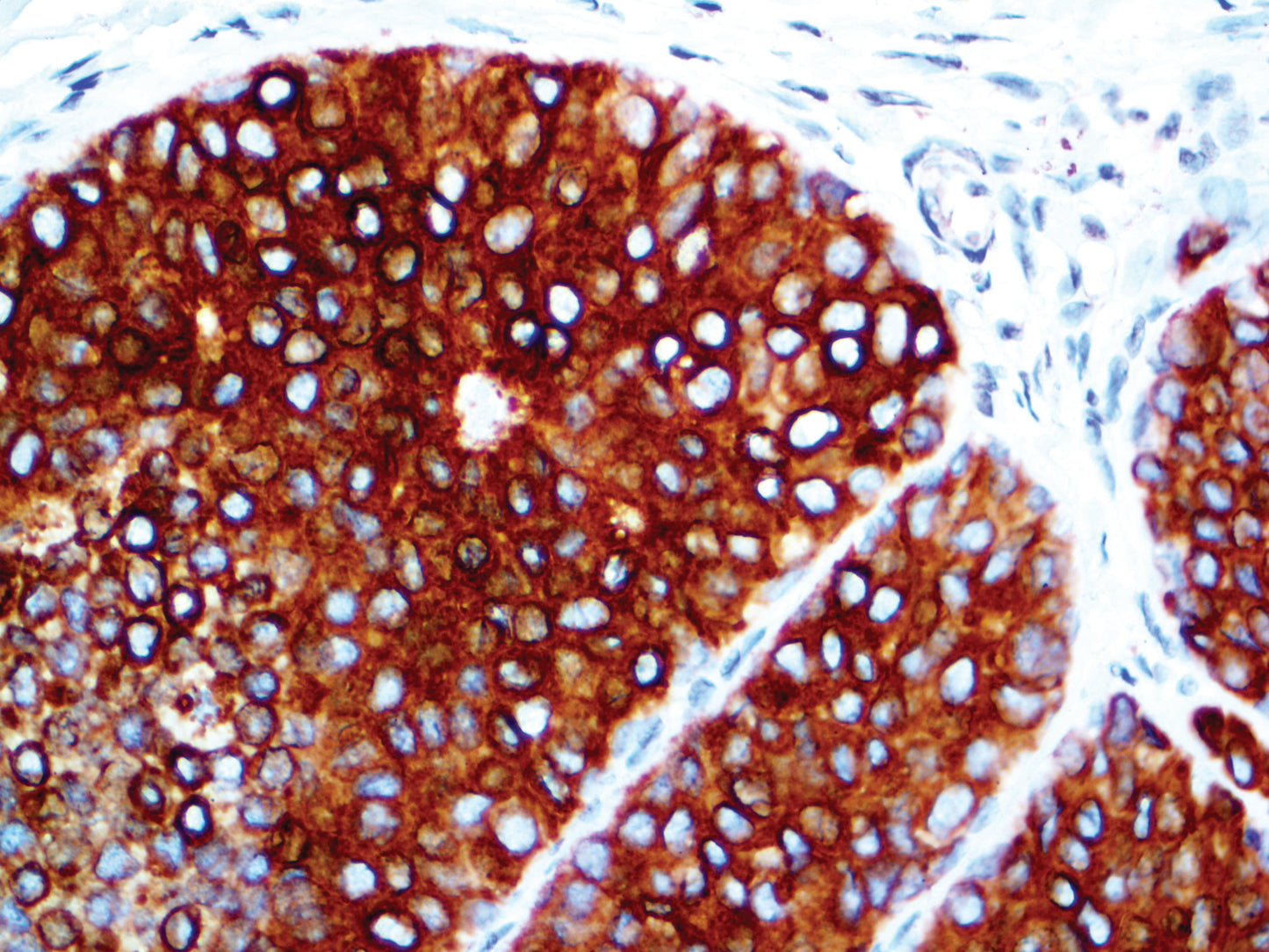
Summary & Explanation
{"type":"root","children":[{"type":"paragraph","children":[{"type":"text","value":"Epithelial Cell Adhesion Molecule (EpCAM) or Epithelial Specific Antigen is a 40kD cell surface antigen that is broadly distributed in epithelial cells and displays a highly conserved expression in carcinomas. These glycoproteins are located on the cell membrane surface and in the cytoplasm of virtually all epithelial cells, with the exception of most squamous epithelia, hepatocytes, renal proximal tubular cells, gastric parietal cells and myoepithelial cells. However, focal positivity may be seen in the basal layer of squamous cell epithelium of endoderm (e.g., palatine tonsils) and mesoderm (e.g., uterine cervix)."}]},{"type":"paragraph","children":[{"type":"text","value":"EpCAM expression has been reported to be a possible marker of early malignancy, with expression being increased in tumor cells, and de novo expression being seen in dysplastic squamous epithelium. Epithelial specific antigen has been known to play an important role as a tumor-cell marker in lymph nodes from patients with esophageal carcinoma. EpCAM can be used to distinguish among Basal Cell, Basosquamous Carcinomas and Squamous Cell Carcinomas of the skin."}]}]}
Antibody Type
Mouse Monoclonal
Clone
MOC-31
Isotype
IgG1/K
Localization
Cytoplasmic
Dilution
1:50-1:200
Species Reactivity
Human
Immunogen
Neuraminidase treated cells from a variant of small-cell lung carcinoma cell line GLS-1.