 US & Canada:
  Email:


 Access IFU & SDS
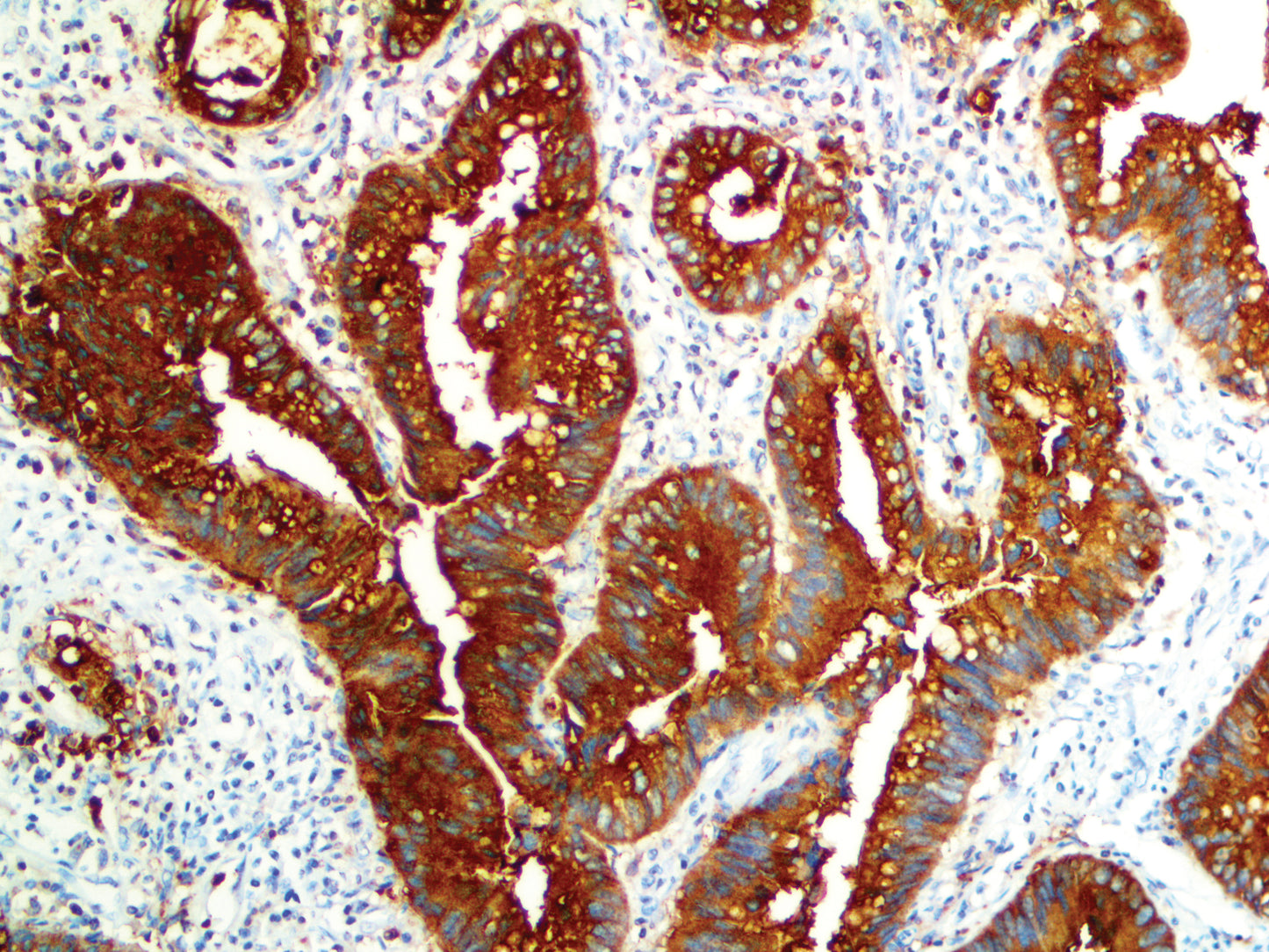
Summary & Explanation
{"type":"root","children":[{"type":"paragraph","children":[{"type":"text","value":"Carcinoembryonic antigen (CEA) is a glycoprotein involved in cell adhesion. It is normally produced during fetal development, but the production of CEA stops before birth. Therefore, it is not usually present in the blood of healthy adults, although levels are raised in heavy smokers. CEA is synthesized during development in the fetal gut, and is re-expressed in increased amounts in Intestinal Carcinomas and several other tumors."}]},{"type":"paragraph","children":[{"type":"text","value":"CEA is employed essentially as a tool to assist in the distinction between Adenocarcinoma and Malignant Mesotheliomas of the epithelial type, along with other markers for mucosubstances such as Leu M1 and Ber-EP4. Another suggested use of CEA is the immunophenotyping of various Metastatic Adenocarcinomas as a means of identifying their origin."}]}]}
Antibody Type
Rabbit Polyclonal
Clone
Polyclonal
Isotype
IgG
Localization
Cytoplasmic
Dilution
1:100-1:500
Species Reactivity
Human, Dog, Cat
Immunogen
Recombinant human CEA.