 US & Canada:
  Email:


 Access IFU & SDS
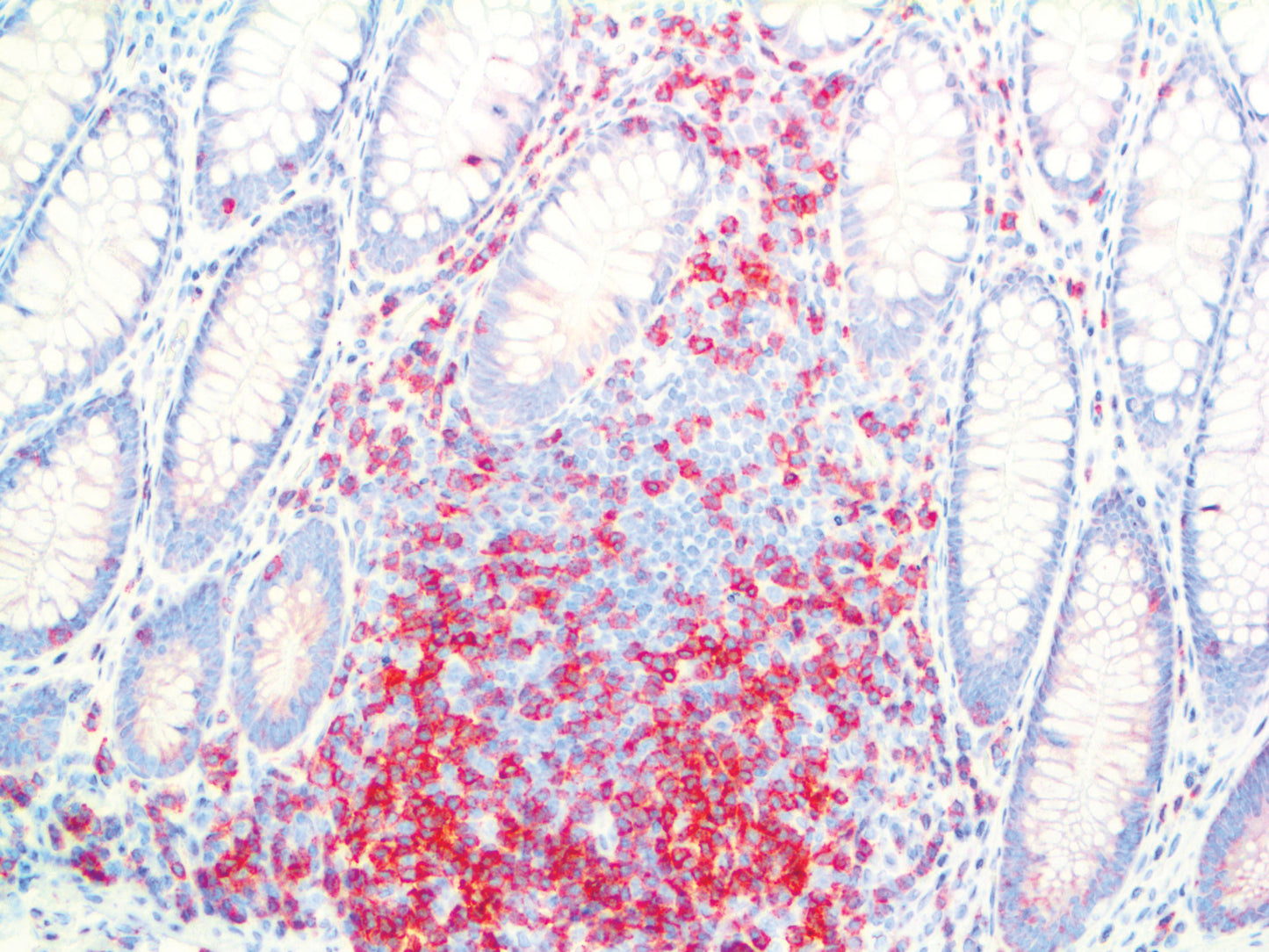
Summary & Explanation
{"type":"root","children":[{"type":"paragraph","children":[{"type":"text","value":"The CD3 antigen is a protein complex composed of three distinct chains (CD3γ, CD3δ and CD3ε) that associate with T-cell receptors and the ζ-chain to generate an activation signal in T-lymphocytes. The TCR, ζ-chain and CD3 molecules together comprise the TCR complex. The CD3γ, CD3δ, and CD3ε chains are highly-related"}]},{"type":"paragraph","children":[{"type":"text","value":"cell surface proteins of the immunoglobulin superfamily containing a single extracellular immunoglobulin domain. The intracellular tails of the CD3 molecules contain a single conserved motif known as an immunoreceptor tyrosine-based activation motif (or ITAM for short), which is essential for the signaling capacity of the TCR. Phosphorylation of the ITAM on CD3 renders the CD3 chain capable of binding the enzyme ZAP70 (zeta-associated protein), a kinase important in the signaling cascade of the T-cell. \n CD3 has been considered the best all-around T-cell marker. This antibody reacts with an antigen present in early thymocytes. The positive staining of this marker may represent a sign of early commitment to the T-cell lineage."}]}]}
Antibody Type
Rabbit Monoclonal
Clone
RBT-CD3
Isotype
IgG
Localization
Membranous
Dilution
1:50-1:200
Species Reactivity
Human
Immunogen
Synthetic peptide corresponding to residues in the cytoplasmic domain of the human CD3 protein.