 US & Canada:
  Email:


 Access IFU & SDS
Summary & Explanation
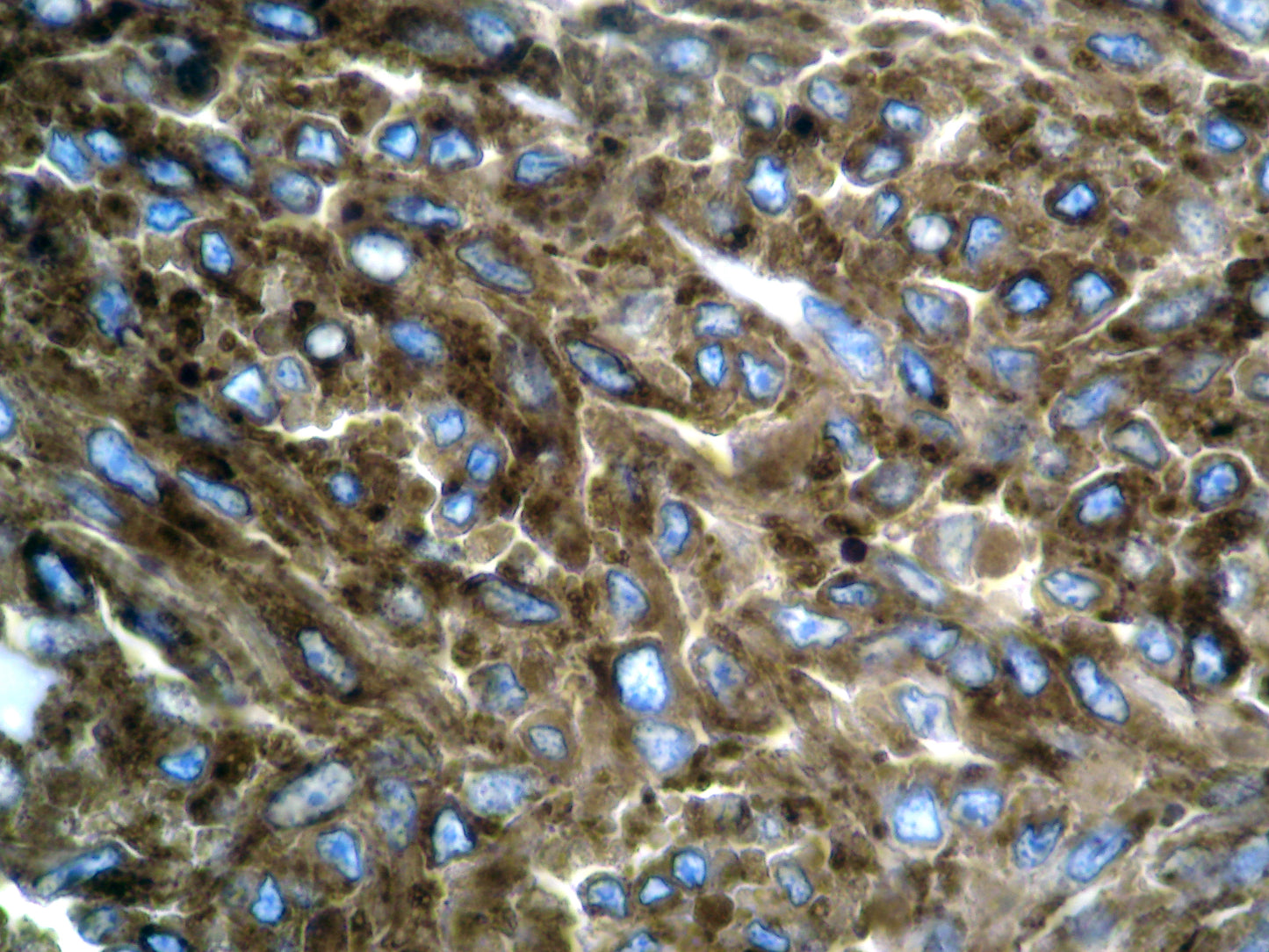
{"type":"root","children":[{"type":"paragraph","children":[{"type":"text","value":"The protein encoded by CD63 gene is a member of the transmembrane-4 superfamily, also known as the tetraspanin family, and mediates signal-transduction events that play a role in the regulation of cell development, activation, growth and motility. This encoded protein is a cell-surface glycoprotein that is known to be complex with integrins. It may function as a blood-platelet activation marker. Deficiency of this protein is associated with Hermansky-Pudlak Syndrome. This gene has been associated with tumor progression. CD63 is a good marker for flow-cytometric quantification of in vitro-activated basophils for diagnosis of IgE-mediated allergy. The test is commonly designated as a basophil activation test."}]},{"type":"paragraph","children":[{"type":"text","value":"Anti-CD63 reacts with a 53 kDa protein. The antigen was originally designated as a lysosomal membrane protein characterized as an activation-dependent platelet surface antigen. In fact, the CD63 antigen has a diverse distribution on the surface and in the cytoplasm of many cell types including lymphoid, myeloid and endothelial cells and Melanoma. It is weakly expressed in granulocytes, B and T-cells. It has been quite useful in identifying Malignant Melanoma. CD63 is thought to be associated with the early stages of Melanoma tumor progression (in regulation of motility and adhesion of Melanoma cells)."}]}]}
Antibody Type
Mouse Monoclonal
Clone
NKI\C3
Isotype
IgG1/K
Localization
Cytoplasmic, Membranous
Dilution
1:250-1:1000
Species Reactivity
Human
Immunogen
Smooth plasma membrane fraction of MeWo cells.