 US & Canada:
  Email:


 Access IFU & SDS
Summary & Explanation
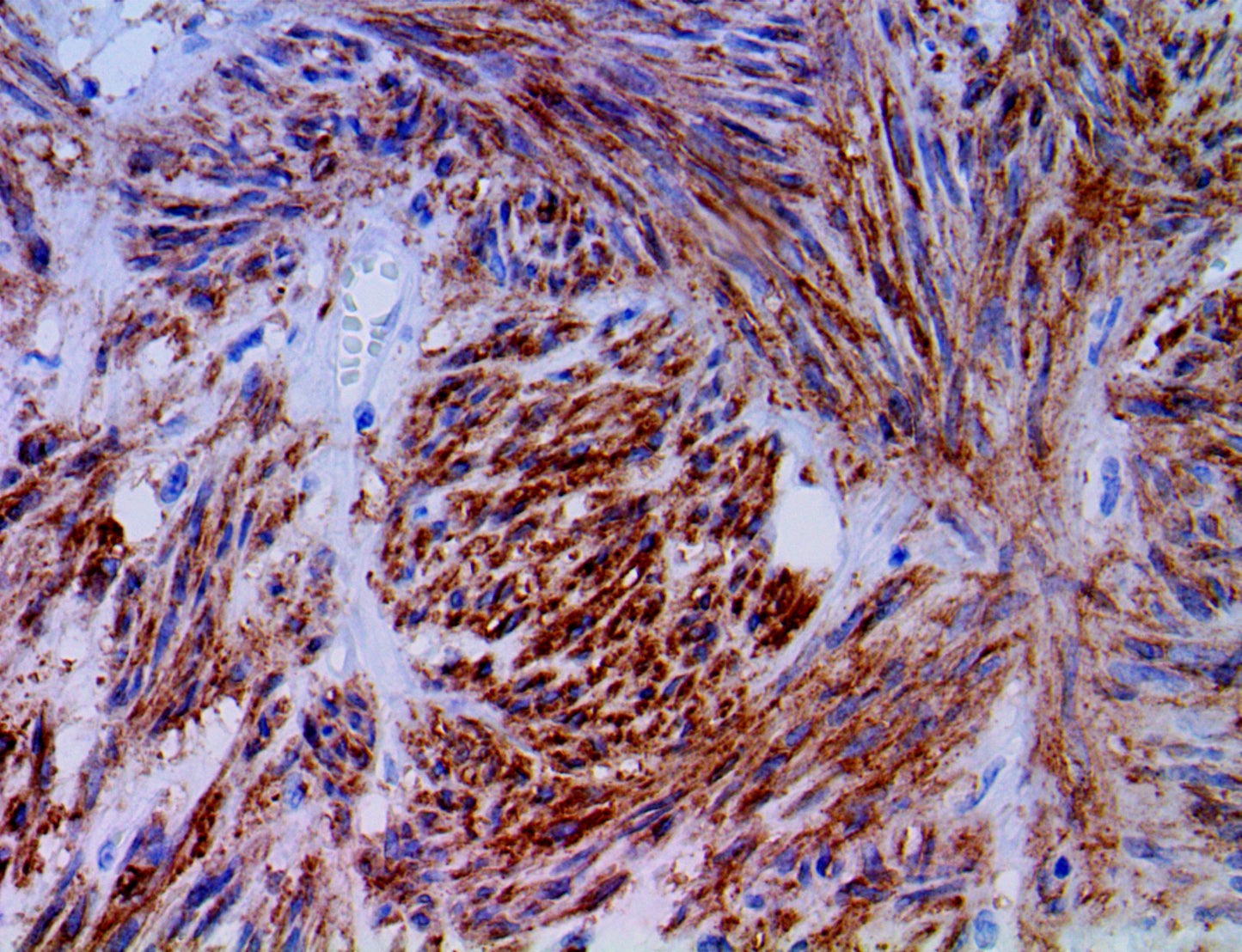
{"type":"root","children":[{"type":"paragraph","children":[{"type":"text","value":"DOG1 (discovered on GIST 1), a cell-surface protein of unknown function, is expressed strongly on the cell surface of GISTs and is rarely expressed in other soft tissue tumors. Among GIST cases with c-Kit mutations, the DOG1 antibody identified 11% more cases than a c-Kit antibody."}]},{"type":"paragraph","children":[{"type":"text","value":"DOG1 identifies the vast majority of both c-Kit negative and PDGFRA mutated GIST cases that may still benefit from imatinib mesylate (Gleevac), an inhibitor of the kit tyrosine kinase. In addition, DOG1 immunoreactivity is seen in fewer cases of mesenchymal and epithelial tumors, and melanomas when compared with c-Kit. The\n use of this highly-sensitive and specific novel marker should increase the accuracy of GIST diagnosis."}]}]}
Antibody Type
Rabbit Monoclonal
Clone
RBT-DOG1
Isotype
IgG
Localization
Cytoplasmic, Membranous
Dilution
1:100-1:500
Species Reactivity
Human
Immunogen
Synthetic peptide corresponding to the N-terminus of human DOG-1 protein.