 US & Canada:
  Email:


 Access IFU & SDS

Summary & Explanation
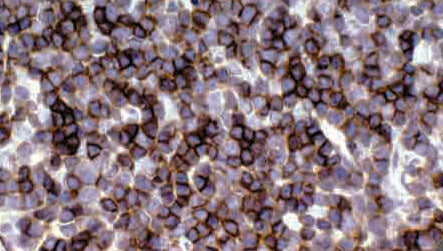
{"type":"root","children":[{"type":"paragraph","children":[{"type":"text","value":"CD2 is a cell-adhesion molecule found on the surface of T-cells and natural killer (NK) cells. It has also been called T-cell surface antigen T11/Leu-5, LFA-2, LFA-3 receptor, erythrocyte receptor and rosette receptor. Due to its structural characteristics, CD2 is a member of the immunoglobulin superfamily; it possesses two immunoglobulin-like domains in its extracellular portion. It interacts with other adhesion molecules, such as lymphocyte function-associated antigen-3 (LFA-3/CD58) in humans, or CD48 in rodents, which are expressed on the surfaces of other cells. In addition to its adhesive properties, CD2 also acts as a co-stimulatory\n molecule on T and NK cells."}]},{"type":"paragraph","children":[{"type":"text","value":"CD2 is a surface antigen of the human T-lymphocyte lineage that is expressed on all peripheral blood T-cells. It is one of the earliest T-cell markers, being present on more than 95% of thymocytes; it is also found on some natural killer cells but not on B-lymphocytes. CD2 is implicated in the triggering of T-cells; the cytoplasmic domain is implicated in the signaling function. It is useful for the identification of Lymphomas and Leukemias of T-cell origin. As with other pan-T cell antigens, CD2 may be aberrantly deleted in some neoplastic T-cell populations, especially Peripheral T-cell Lymphomas."}]}]}
Antibody Type
Mouse Monoclonal
Clone
AB75
Isotype
IgG1/K
Localization
Membranous
Dilution
1:25-1:100
Species Reactivity
Human
Immunogen
Recombinant fragment encoding the external domain of the human CD2 molecule.