 US & Canada:
  Email:


 Access IFU & SDS
Summary & Explanation
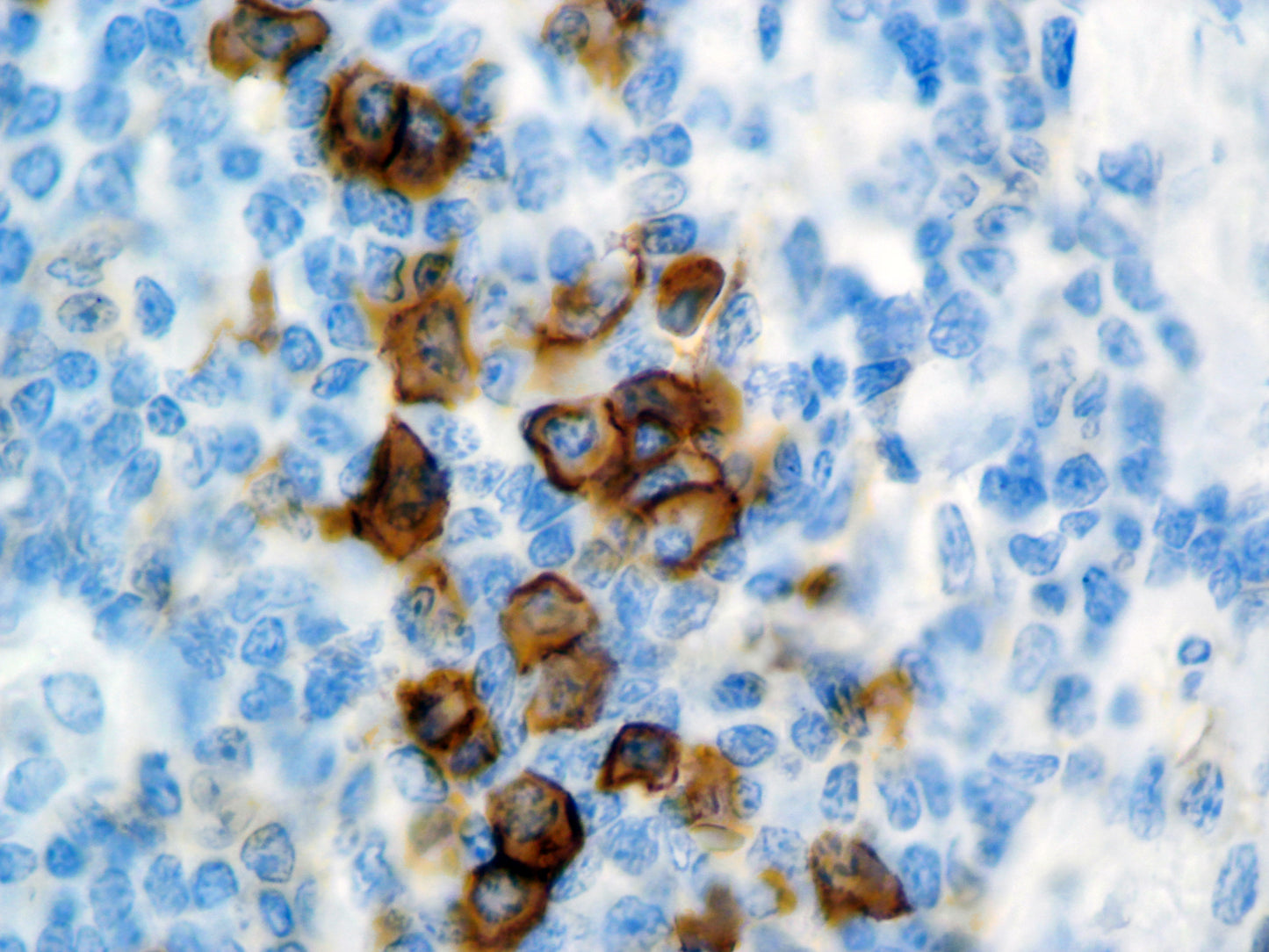
{"type":"root","children":[{"type":"paragraph","children":[{"type":"text","value":"CD38 is a glycoprotein found on the surface of many immune cells (white blood cells), including CD4+, CD8+, B and natural killer cells. It is a marker of cell activation. The CD38 protein has been connected to HIV infection, Leukemias, Myelomas, solid tumors, Type II Diabetes Mellitus and bone metabolism, as well as some genetically-determined conditions. It has also been used as a prognostic marker in Leukemia. CD38 is highly expressed on thymocytes. It is also expressed by early cells of B and T lineages, NK cells, plasma cells, monocytes and macrophages, and may be detected on cells from Multiple Myeloma, ALL (B and T) and some AML."}]},{"type":"paragraph","children":[{"type":"text","value":"Monoclonal antibodies to CD38 have been shown to be useful in subtyping of Lymphomas and Leukemias, inhibition of B-lymphopoiesis, detection of plasma cells, protection of B-cells from apoptosis, and as a marker for activated B and T-cell proliferation."}]}]}
Antibody Type
Mouse Monoclonal
Clone
SPC32
Isotype
IgG1
Localization
Membranous
Dilution
1:25-1:100
Species Reactivity
Human, Rabbit
Immunogen
Recombinant protein encoding the extracellular domain of human CD38.