 US & Canada:
  Email:


 Access IFU & SDS
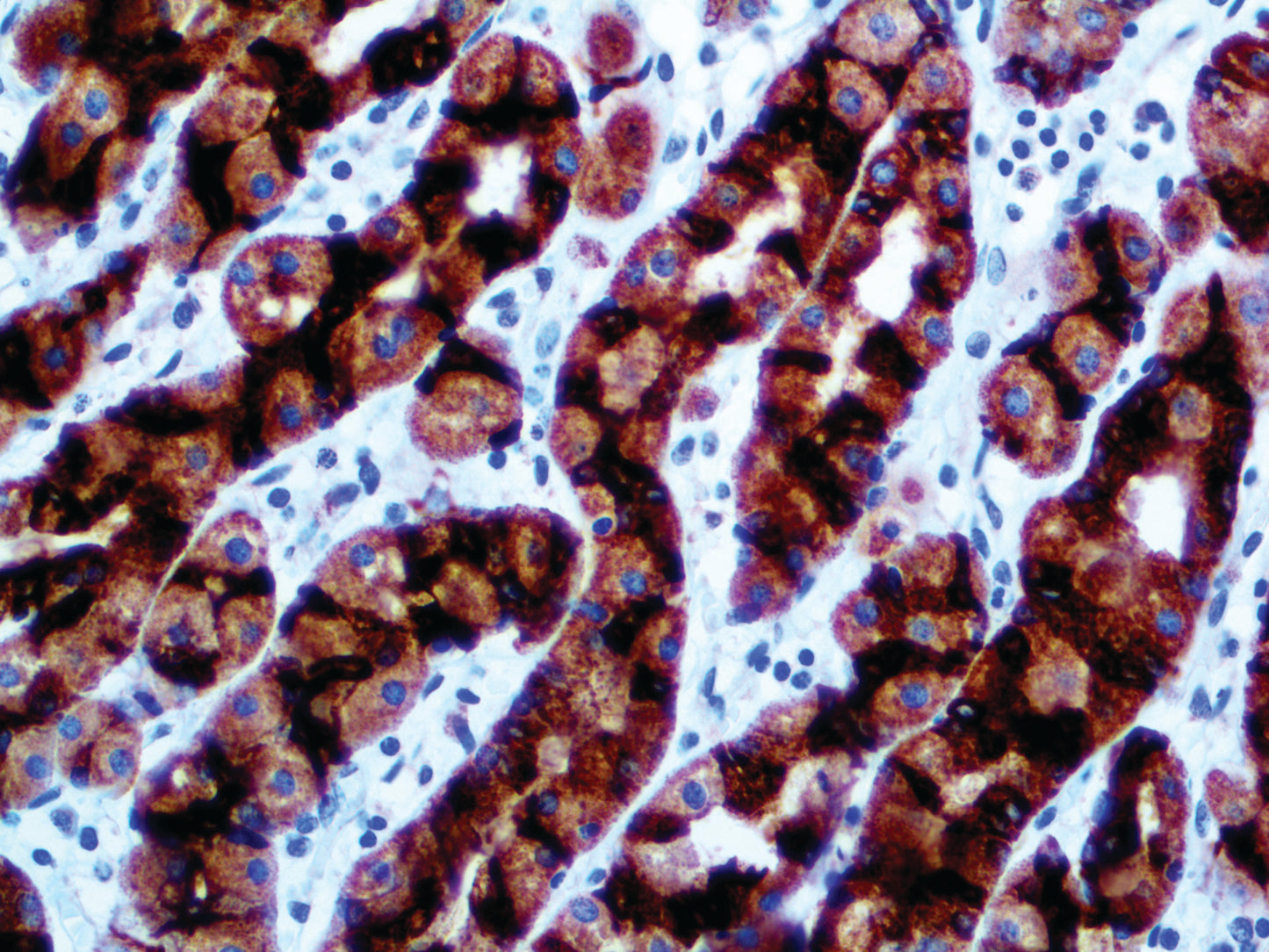
Summary & Explanation
{"type":"root","children":[{"type":"paragraph","children":[{"type":"text","value":"Mucin 6, also known as MUC6, is a human gene. Mucin is a high M.W. (>1,000 kDa) glycoprotein, expressed by mucous cells of the gastric epithelium and by goblet cells of the fetal, precancerous and cancerous colon, but not by those of the normal colon. It also appears in other epithelial tissues, which are embryologically derived from the foregut (epigastric and bronchial epithelium) and in Müller ducts (mucous cells of the endocervix and urethral epithelium near the prostatic utriculus). MUC6 antibody works well with ethanol-fixed, cultured epithelial cells and ethanol- or formalin-fixed, paraffin-embedded tissue sections. It stains the surface gastric epithelium of normal human gastrointestinal tract and reacts with fetal, precancerous and cancerous colonic mucosa, but not with normal colon."}]}]}
Antibody Type
Mouse Monoclonal
Clone
CLH5
Isotype
IgG1
Localization
Cytoplasmic
Dilution
1:100-1:400
Species Reactivity
Human
Immunogen
Synthetic peptide of the Gastric Mucin (Muc-6) tandem repeat sequence purified by HPLC.