 US & Canada:
  Email:


 Access IFU & SDS
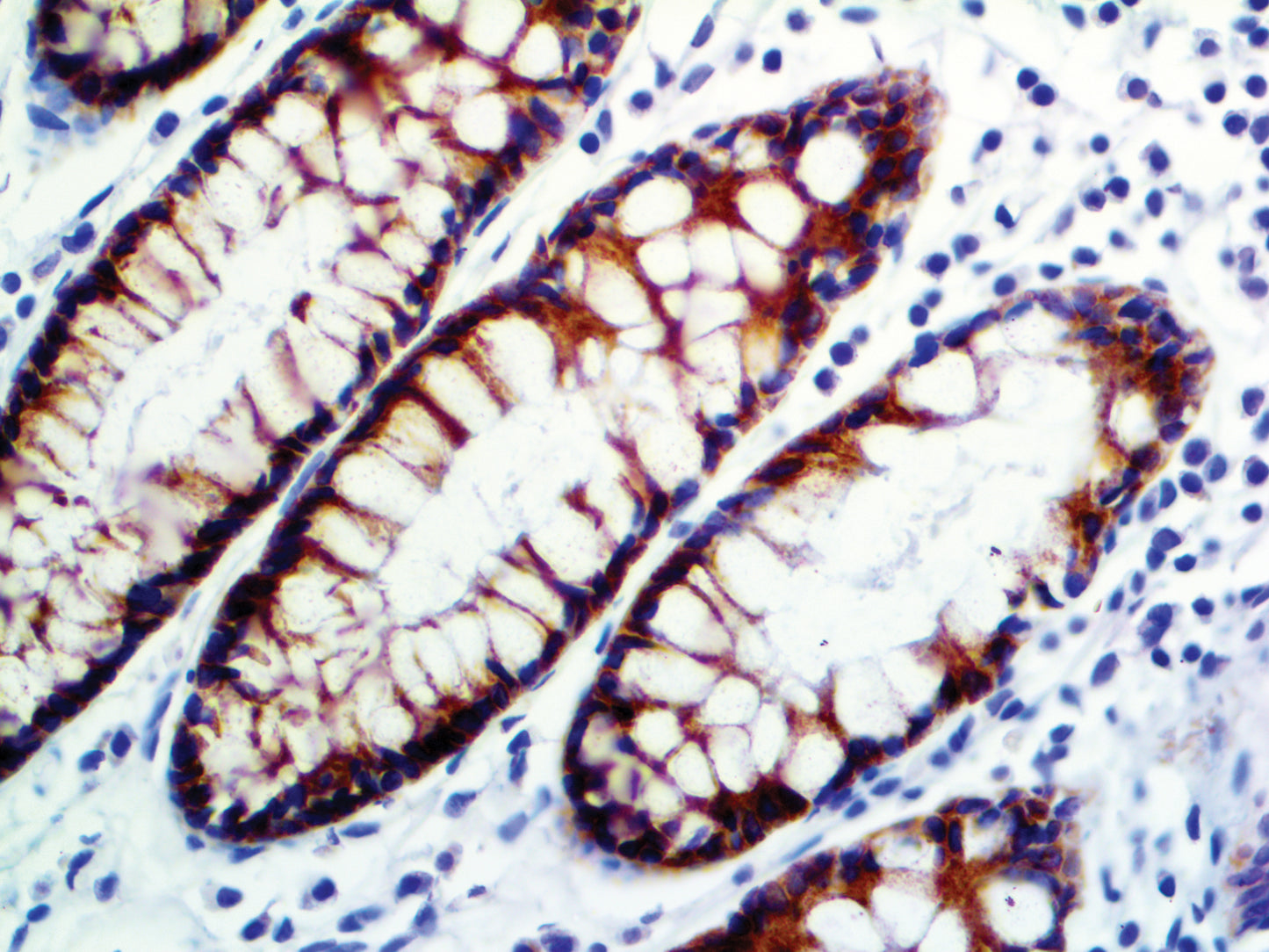
Summary & Explanation
{"type":"root","children":[{"type":"paragraph","children":[{"type":"text","value":"Mucin 1, also known as MUC1, is a human gene. This gene is a member of the mucin family and encodes a membrane-bound, glycosylated phosphoprotein. The protein is anchored to the apical surface of many epithelia by a transmembrane domain, the degree of glycosylation varying with cell type. Mucins are high molecular-weight glycoproteins which constitute the major component of the mucus layer that protects the gastric epithelium from chemical and mechanical aggressions. The MUC1 protein serves a protective function by binding to pathogens and also functions in a cell-signaling capacity. Overexpression, aberrant intracellular localization, and changes in glycosylation of this protein have been associated with carcinomas. Multiple alternatively-spliced transcript variants that encode different isoforms of this gene have been reported, but the full-length nature of only some has been determined. MUC1 is a large cell, surface-mucin glycoprotein expressed by most glandular and ductal epithelial cells and some hematopoietic cell lineages. It is expressed on most secretory epithelium, including mammary gland and some hematopoietic cells. It is expressed in lactating mammary glands and overexpressed in more than 90% Breast Carcinomas and metastases. Transgenic MUC1 has been shown to associate with all four cebB receptors and localize with erbB1 (EGFR) in lactating glands."}]}]}
Antibody Type
Mouse Monoclonal
Clone
BSB-44
Isotype
IgG1/K
Localization
Cytoplasmic
Dilution
1:250-1:1000
Species Reactivity
Human
Immunogen
Synthetic peptide corresponding to N-Terminus of human MUC1.