 US & Canada:
  Email:


 Access IFU & SDS
Summary & Explanation
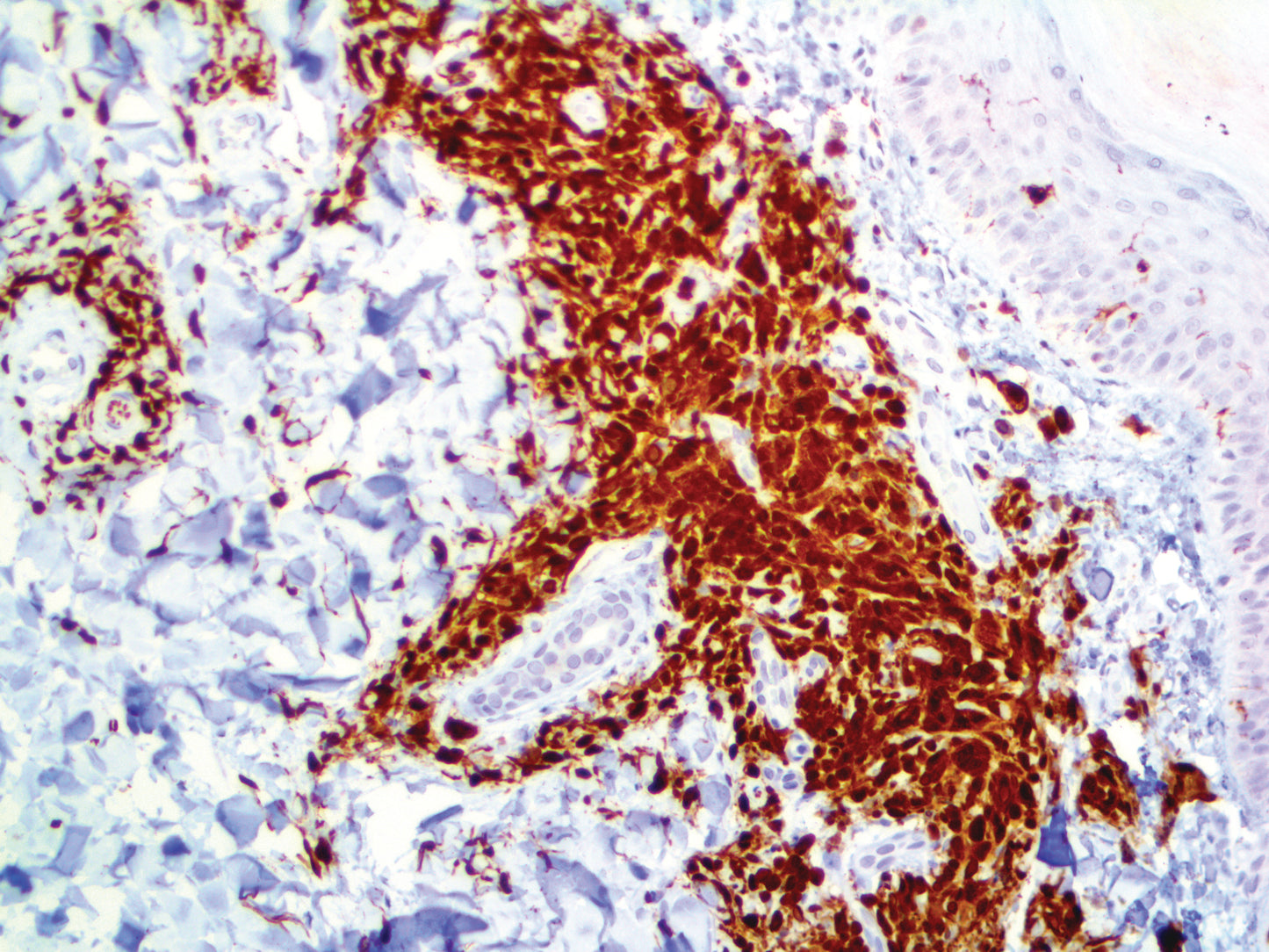
{"type":"root","children":[{"type":"paragraph","children":[{"type":"text","value":"S-100 protein is a type of low-molecular weight protein found in vertebrates, characterized by two calcium-binding sites of the helix-loop-helix conformation. S-100 is normally present in cells derived from the neural crest (Schwann cells, melanocytes and glial cells), chondrocytes, adipocytes, myoepithelial cells,\n macrophages, Langerhans cells, dendritic cells, and keratinocytes. It may be present in some breast epithelial cells. Several members of the S-100 protein family are useful as markers for certain tumors and epidermal differentiation. The S-100 protein can be found in melanomas, 50% of Malignant Peripheral Nerve Sheath\n Tumors, and Clear Cell Sarcomas."}]},{"type":"paragraph","children":[{"type":"text","value":"Almost all Malignant Melanomas and cases of Histiocytosis X are positive for S-100 protein. Despite the fact that S-100 protein is a ubiquitous substance, its demonstration is of great value in the identification of several neoplasms, particularly Melanomas."}]}]}
Antibody Type
Mouse Monoclonal
Clone
4C4.9
Isotype
IgG2a
Localization
Cytoplasmic, Nuclear
Dilution
1:100-1:500
Species Reactivity
Human, Dog, Cat, Mouse, Rat, Cattle
Immunogen
Purified bovine brain S100 protein