 US & Canada:
  Email:


 Access IFU & SDS
Summary & Explanation
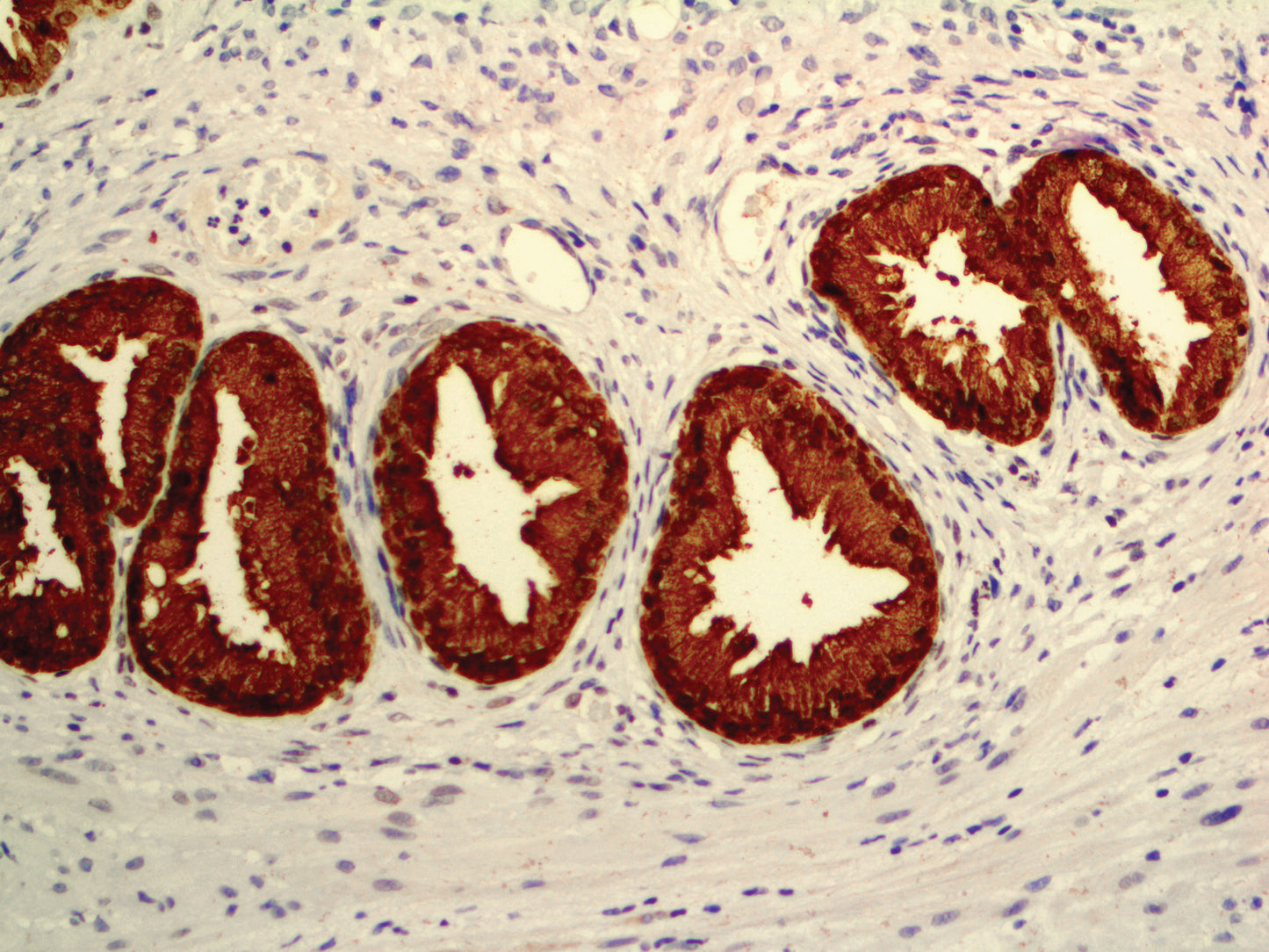
{"type":"root","children":[{"type":"paragraph","children":[{"type":"text","value":"Prostate-specific antigen (PSA) is a protein produced by the cells of the prostate gland. PSA is present in small quantities in the serum of normal men and is often elevated in the presence of prostate cancer and in other prostate disorders. Higher than normal levels of PSA are associated with both localized and metastatic prostate cancer."}]},{"type":"paragraph","children":[{"type":"text","value":"The PSA antibody recognizes primary and metastatic prostatic neoplasms but not tumors of nonprostatic origin. The antigen is a 33-34 kDa glycoprotein that is restricted to cells of prostatic origin. An immunohistochemical study showed more than 95% of prostatic carcinomas stained with PSA. PSA is demonstrable in the\n cytoplasm of acinar and ductal cells of normal or malignant prostate tissue."}]}]}
Antibody Type
Mouse Monoclonal
Clone
BSB-7
Isotype
IgG1/K
Localization
Cytoplasmic
Dilution
1:250-1:1000
Species Reactivity
Human
Immunogen
Synthetic peptide corresponding to the C-terminus of human PSA protein.