 US & Canada:
  Email:


 Access IFU & SDS
Summary & Explanation
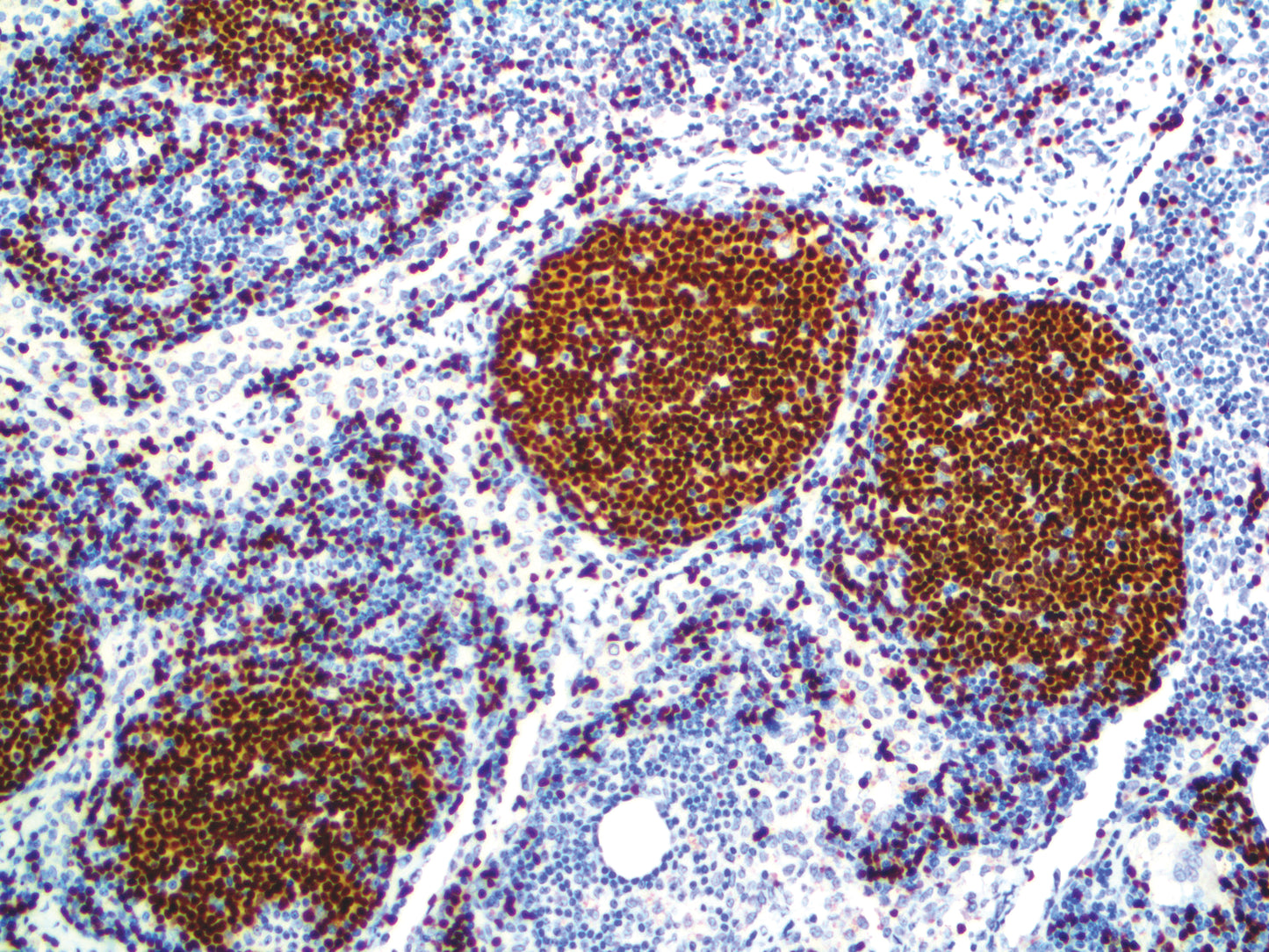
{"type":"root","children":[{"type":"paragraph","children":[{"type":"text","value":"The PAX proteins are important regulators in early development, and alterations in the expression of their genes are thought to contribute to neoplastic transformation. The PAX-5 gene encodes the B-cell lineage specific activator protein (BSAP) that is expressed at early, but not late, stages of B-cell differentiation. Its expression has also been detected in developing CNS and testis; therefore, PAX-5 gene product may not only play an important role in B-cell differentiation, but also in neural development and spermatogenesis. PAX-5 expression is not only continuously required for B-cell lineage commitment during early B-cell development but also for B-cell lineage maintenance. PAX-5 is found in most cases of mature and precursor B-cell Non-Hodgkin’s Lymphomas/Leukemias. PAX-5 is not detected in Multiple Myeloma and solitary Plasmacytoma, making it useful for such differentiation. Diffuse Large B-cell Lymphomas do express PAX-5, except for those with terminal B-cell differentiation. T-cell neoplasms do not stain with anti-PAX-5; however, there is a strong association with CD20 expression."}]}]}
Antibody Type
Rabbit Monoclonal
Clone
RBT-PAX5
Isotype
IgG
Localization
Nuclear
Dilution
1:50-1:200
Species Reactivity
Human,Mouse
Immunogen
A synthetic peptide corresponding to the C-terminus of the human PAX-5 protein.