 US & Canada:
  Email:


 Access IFU & SDS
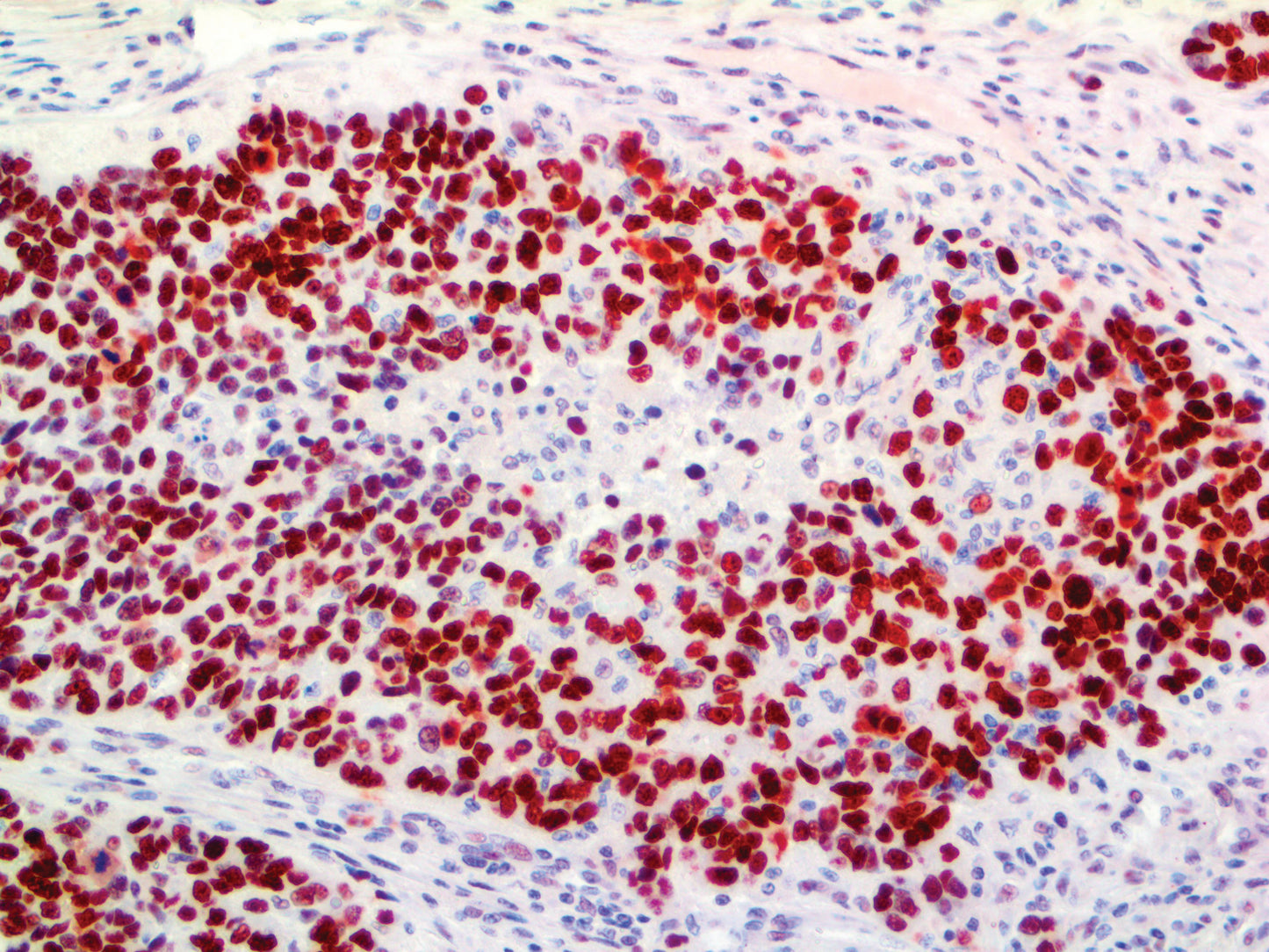
Summary & Explanation
{"type":"root","children":[{"type":"paragraph","children":[{"type":"text","value":"p53 (also known as tumor protein 53 [TP53]) is a transcription factor that regulates the cell cycle and, hence, functions as a tumor suppressor. p53 has been described as the “guardian of the genomeâ€, referring to its role in conserving stability by preventing genome mutation. p53 has many anti-cancer mechanisms. It can activate DNA repair proteins when DNA has sustained damage; it can also hold the cell cycle at the G1/S regulation point on DNA damage recognition. It can initiate apoptosis, programmed cell death, if DNA damage proves to be irreparable. p53 is central to many of the cell’s anti-cancer mechanisms. It can induce growth arrest, apoptosis and cell senescence. Mutations involving p53 have been found in a wide variety of malignant tumors, including Breast, Ovarian, Bladder, Colon, Lung, and Melanoma."}]}]}
Antibody Type
Mouse Monoclonal
Clone
DO7
Isotype
IgG2b/K
Localization
Nuclear
Dilution
1:250-1:1000
Species Reactivity
Human, Cat, Cattle, Horse, Sheep
Immunogen
Recombinant human wild-type p53 protein.