 US & Canada:
  Email:


 Access IFU & SDS
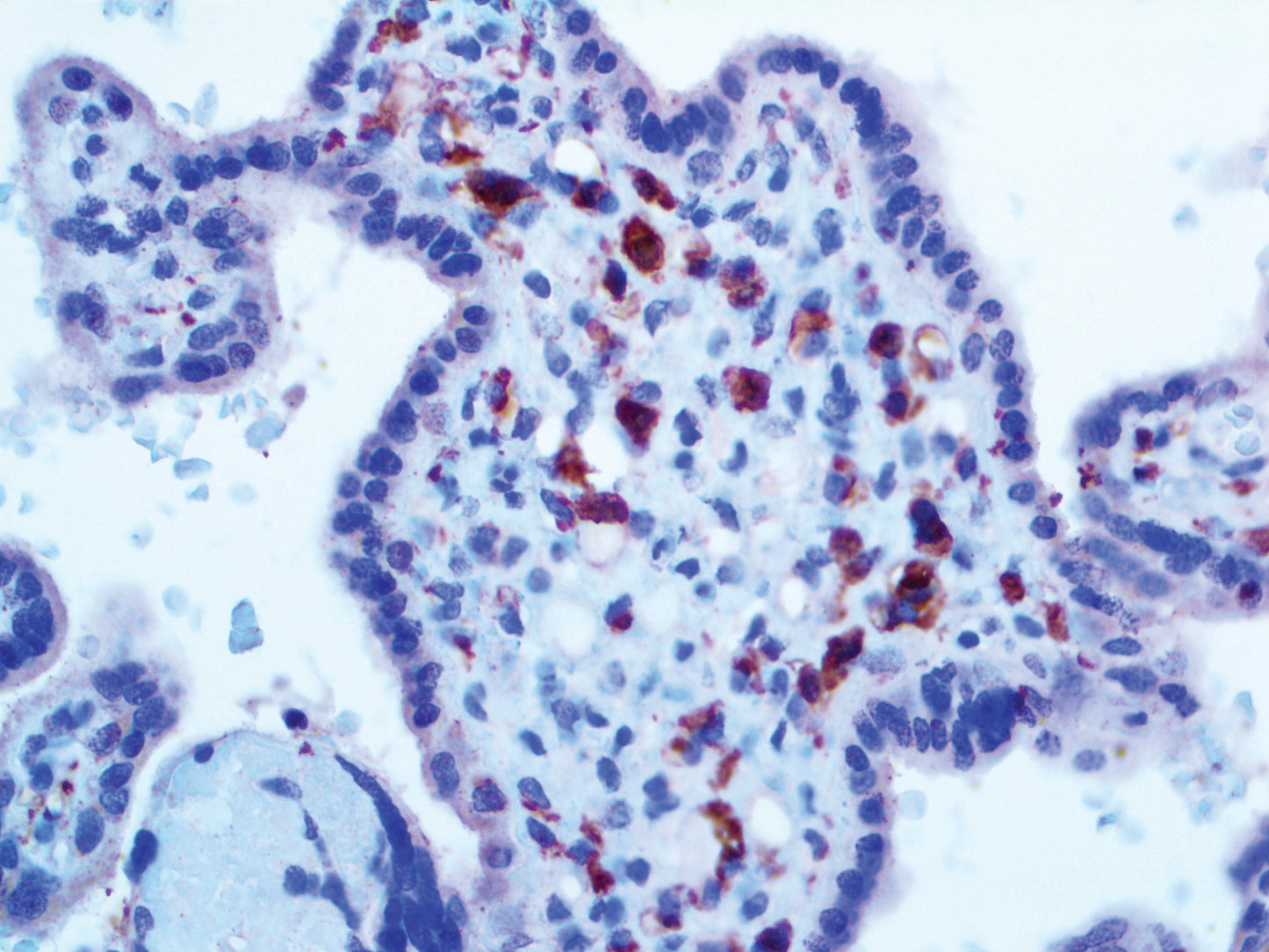
Summary & Explanation
{"type":"root","children":[{"type":"paragraph","children":[{"type":"text","value":"Factor XIII or fibrin stabilizing factor is an enzyme of the blood coagulation system that crosslinks fibrin. When thrombin has converted fibrinogen to fibrin, the latter forms a proteinaceous network in which every E-unit is crosslinked to only one D-unit. Factor XIII is activated by thrombin into Factor XIIIa; its activation into \n Factor XIIIa requires calcium as a cofactor. Factor XIIIa has been identified in platelets, megakaryocytes, and fibroblast-like mesenchymal or histiocytic cells present in the placenta, uterus, and prostate; it is also present in monocytes, macrophages and dermal dendritic cells."}]},{"type":"paragraph","children":[{"type":"text","value":"Anti-Factor XIIIa has been found to be useful in differentiating between Dermatofibroma (90% (+)), Dermatofibrosarcoma Protuberans (25%(+)) and Desmoplastic Malignant Melanoma (0%(+)). Factor XIIIa positivity is also seen in Capillary Hemangioblastoma (100%(+)), Hemangioendothelioma (100%(+)), Hemangiopericytoma (100%(+)), Xanthogranuloma (100%(+)), Xanthoma (100(+)), Hepatocellular Carcinoma (93%(+)), Glomus Tumor (80%(+)), and Meningioma 80%(+))."}]}]}
Antibody Type
Rabbit Monoclonal
Clone
EP292
Isotype
IgG
Localization
Cytoplasmic
Dilution
1:50-1:200
Species Reactivity
Human
Immunogen
Recombinant protein corresponding to A-subunit of coagulation Factor XIII.