 US & Canada:
  Email:


 Access IFU & SDS
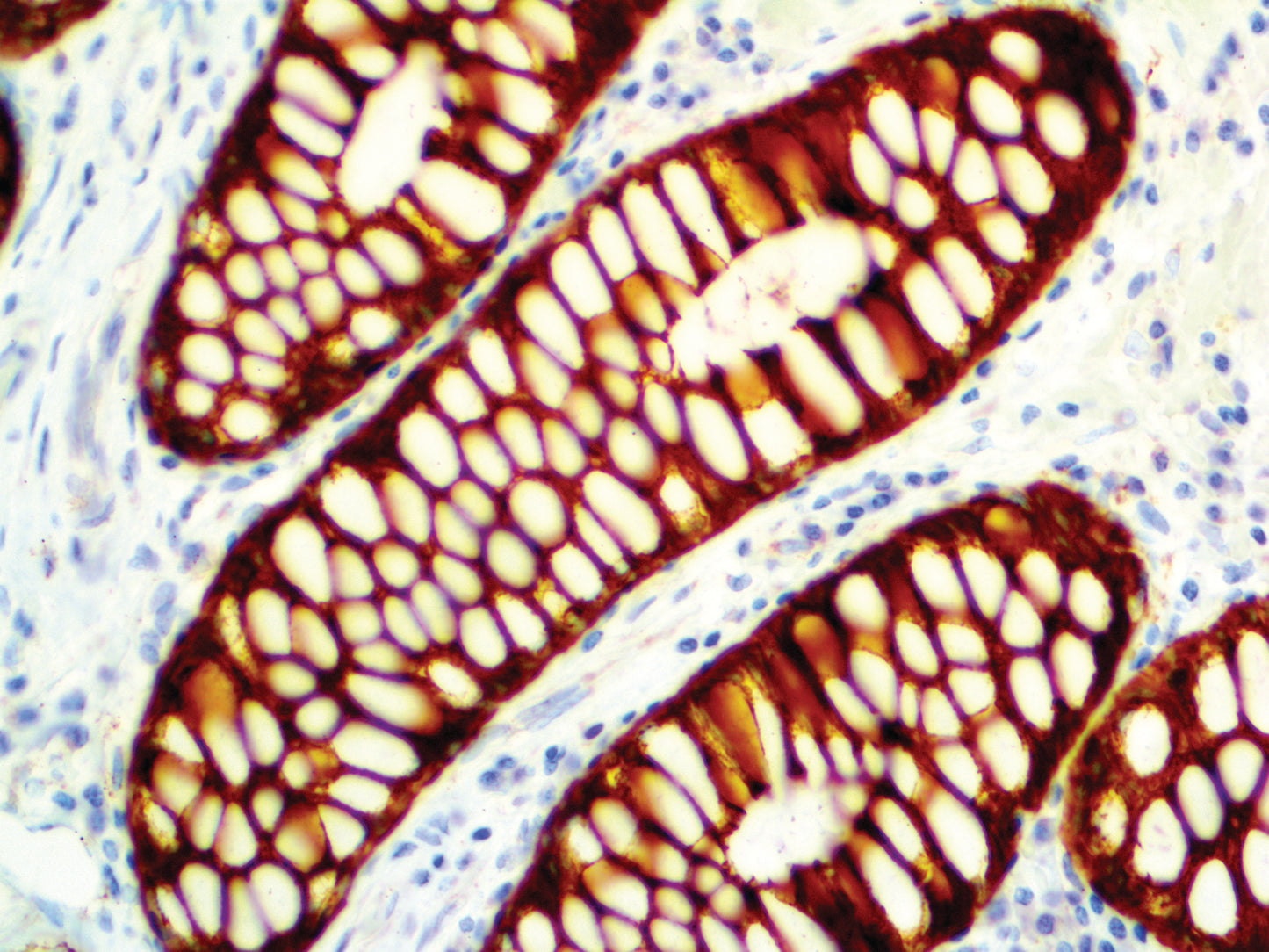
Summary & Explanation
{"type":"root","children":[{"type":"paragraph","children":[{"type":"text","value":"Cytokeratins are intermediate-filament keratins found in the intracytoplasmic cytoskeleton of epithelial tissue. There are two types of cytokeratins: the low-weight, acidic Type I cytokeratins and the high-weight, basic or neutral Type II cytokeratins. Cytokeratins are usually found in pairs comprising a Type I cytokeratin and a Type II cytokeratin. Expression of these cytokeratins is frequently organ or tissue-specific."}]},{"type":"paragraph","children":[{"type":"text","value":"Cytokeratin cocktail AE1/AE3 is well suited to distinguish Epithelial Carcinoma from Non-epithelial malignancies and is used to aid Epithelial Tumor classification. This antibody has been used to characterize the source of various neoplasms and to study the distribution of keratin-containing cells in epithelia during normal development and during the development of epithelial neoplasms. This antibody stains cytokeratins present in normal and abnormal human tissues. This antibody has shown high sensitivity and specificity in recognizing epithelial cells of neoplastic origin."}]}]}
Antibody Type
Mouse Monoclonal
Clone
AE1 & AE3
Isotype
IgG1
Localization
Cytoplasmic
Dilution
1:100-1:500
Species Reactivity
Human, Dog, Cat, Mouse, Rat, Monkey, Rabbit, Chicken, Horse
Immunogen
Purified human epidermal keratin.