 US & Canada:
  Email:


 Access IFU & SDS
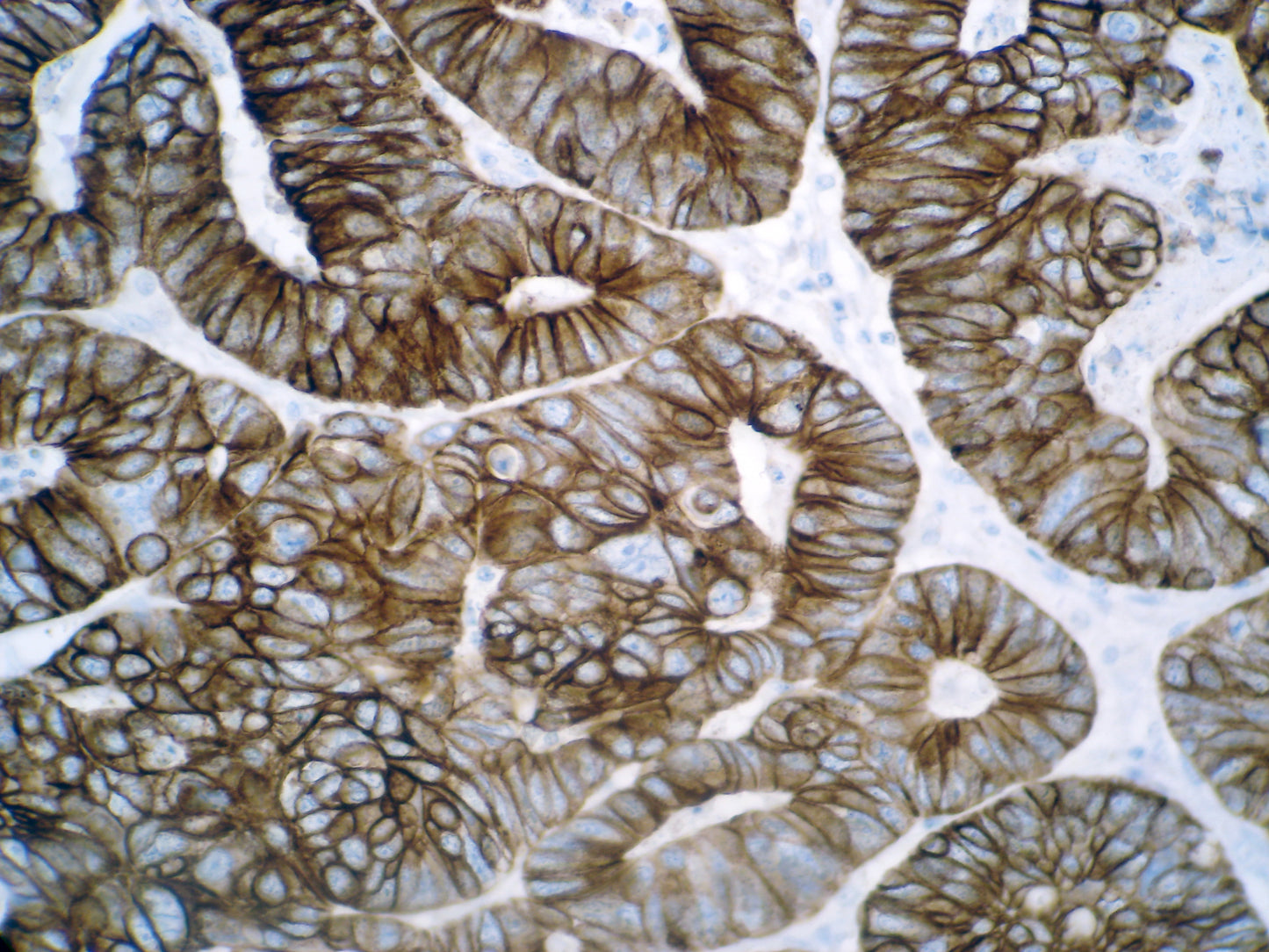
Summary & Explanation
{"type":"root","children":[{"type":"paragraph","children":[{"type":"text","value":"Cytokeratin 8 belongs to the Type II (basic) subfamily of low molecular-weight keratins and exists in combination with Cytokeratin 18 (Type I [acidic] subfamily of low molecular weight keratins). They are perhaps the most commonly found products of the intermediate filament gene family, and are expressed in single-layer epithelial tissues of the body."}]},{"type":"paragraph","children":[{"type":"text","value":"Cytokeratins 8 and 18 can be found in most simple epithelium (e.g., thyroid, female breast, gastrointestinal tract, and respiratory tract). Adenocarcinomas and most Non-keratinizing Squamous Carcinomas will stain, but Keratinizing Squamous Carcinomas will not. This antibody is used when attempting to demonstrate the presence of Paget cells; there is very little keratin 18 in the normal epidermis so only Paget cells will stain. This approach facilitates the interpretation using immunostains and is more sensitive than mucin histochemistry."}]}]}
Antibody Type
Mouse Monoclonal
Clone
B22.1 & B23.1
Isotype
IgG1
Localization
Cytoplasmic
Dilution
1:250-1:1000
Species Reactivity
Human
Immunogen
Cytoskeleton preparations from HeLa cells and PMC-42 human breast carcinoma cells.