 US & Canada:
  Email:


 Access IFU & SDS
Summary & Explanation
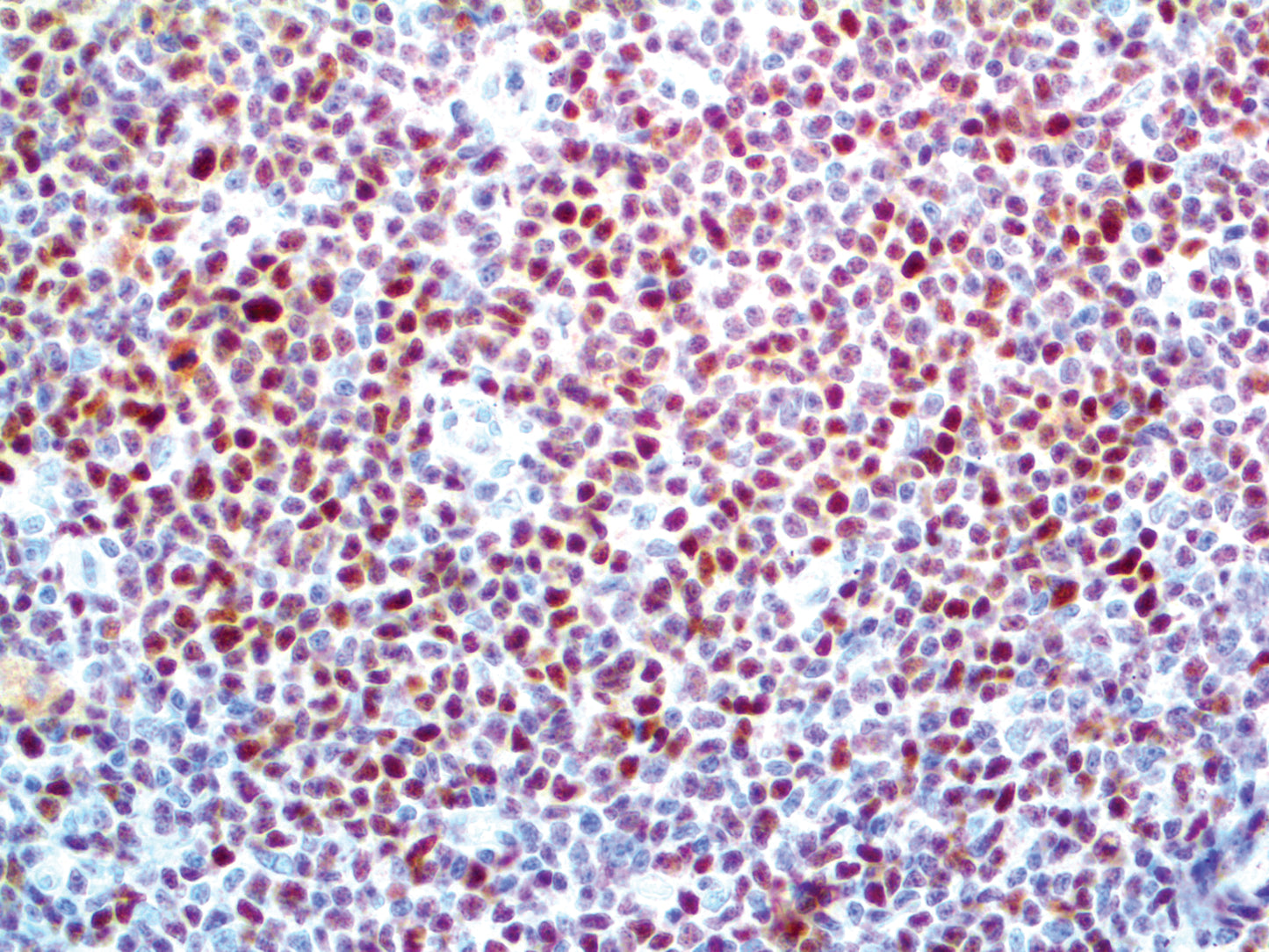
{"type":"root","children":[{"type":"paragraph","children":[{"type":"text","value":"Cyclins are a family of proteins involved in the progression of cells through the cell cycle. Cyclins form a complex with their partner, cyclin-dependent kinase (Cdk), which activates the latter’s protein kinase function. Cyclins are so named because they are produced or degraded as needed in order to drive the cell through the"}]},{"type":"paragraph","children":[{"type":"text","value":"different stages of the cell cycle. When its concentrations in the cell are low, the cyclin detaches from the Cdk, inhibiting the enzyme’s activity, probably by causing a protein chain to block the enzymatic site."}]},{"type":"paragraph","children":[{"type":"text","value":"Cyclin D1 or PRAD-1 or bcl-1 is one of the key cell-cycle regulators, and functions in association with Cdk4 and/or Cdk6 by phosphorylating the Rb protein. It is a putative proto-oncogene overexpressed in a wide variety of human neoplasms including Mantle Cell Lymphomas (MCL)."}]}]}
Antibody Type
Rabbit Monoclonal
Clone
RBT-14
Isotype
IgG
Localization
Nuclear
Dilution
1:100-1:500
Species Reactivity
Human, Mouse, Rat
Immunogen
Synthetic peptide corresponding to residues of the C-terminus of the human cyclin D1 protein.