 US & Canada:
  Email:


 Access IFU & SDS
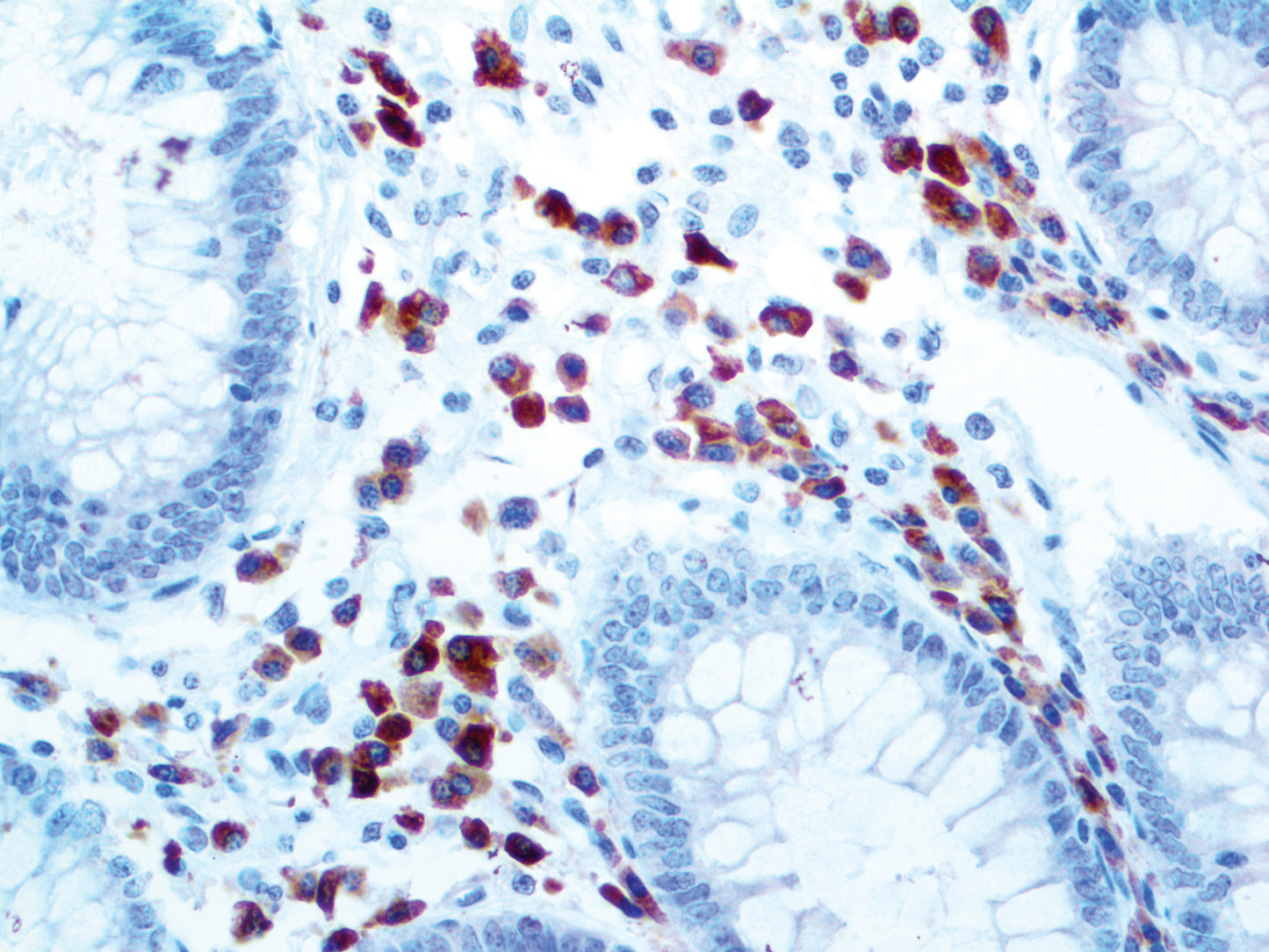
Summary & Explanation
{"type":"root","children":[{"type":"paragraph","children":[{"type":"text","value":"CD79a is non-covalently associated with membrane-bound immunoglobulins on B-cells to constitute the B-cell Ag receptor. CD79a first appears at pre B-cell stage and persists until the plasma-cell stage, where it is found as an intracellular component. CD79a is found in the majority of Acute Leukemias of precursor B-cell type, in B-cell lines, B-cell Lymphomas, and in some Myelomas."}]},{"type":"paragraph","children":[{"type":"text","value":"CD79a is a B-cell marker that is generally used to complement CD20. This antibody will stain many of the same Lymphomas as CD20, but also stains more B-precursor Lymphoid Leukemias than CD20. CD79a also stains more cases of Plasma-cell Myeloma and occasionally some types of endothelial cells as well. CD79a will stain many cases of Acute Promyelocytic Leukemia (FAB-M3), but only rarely stains other types of Myeloid Leukemia."}]}]}
Antibody Type
Mouse Monoclonal
Clone
JCB117
Isotype
IgG1/K
Localization
Membranous
Dilution
1:250-1:1000
Species Reactivity
Human, Canine, Feline, Mouse
Immunogen
Recombinant protein containing part of the extracellular portion of the CD79a glycoprotein.