 US & Canada:
  Email:


 Access IFU & SDS
Summary & Explanation
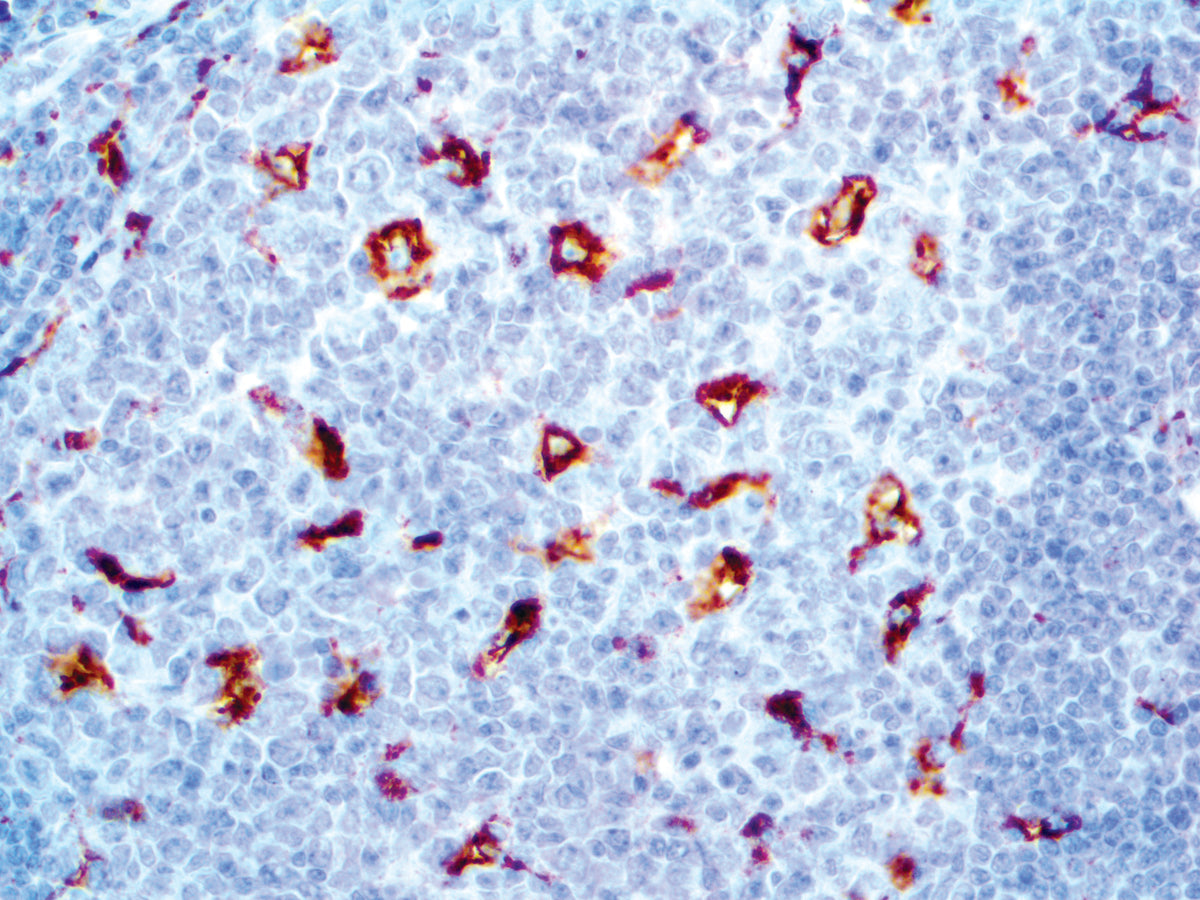
{"type":"root","children":[{"type":"paragraph","children":[{"type":"text","value":"The CD68 antigen is a heavily glycosylated transmembrane protein of 87-115 kDa which is specifically expressed by tissue macrophages, Langerhans cells and, at low levels, by dendritic cells. CD68 could play a role in phagocytic activities of tissue macrophages, both in intracellular lysosomal metabolism and extracellular cell-cell and cell-pathogen interactions."}]},{"type":"paragraph","children":[{"type":"text","value":"CD68 marks cells of monocyte/macrophage lineage. This antibody is capable of staining monocytes, Kupffer cells, osteoclasts, granulocytes and their precursors; Lymphomas are negative or show a few granules. This antibody may be useful for the identification of Myelomonocytic and Histiocytic Tumors. CD68 may help to distinguish Malignant Fibrous Histiocytoma from other Pleomorphic Sarcomas. However, since CD68 detects a formalin-resistant epitope that may be associated with lysosomal granules, other lysosome-rich cells may also produce positive results."}]}]}
Antibody Type
Mouse Monoclonal
Clone
BSB-8
Isotype
IgG1
Localization
Cytoplasmic, Membranous
Dilution
1:250-1:1000
Species Reactivity
Human, Mouse, Rabbit, Rat
Immunogen
Synthetic peptide corresponding to residues from the internal region of the human CD68 protein.