 US & Canada:
  Email:


 Access IFU & SDS
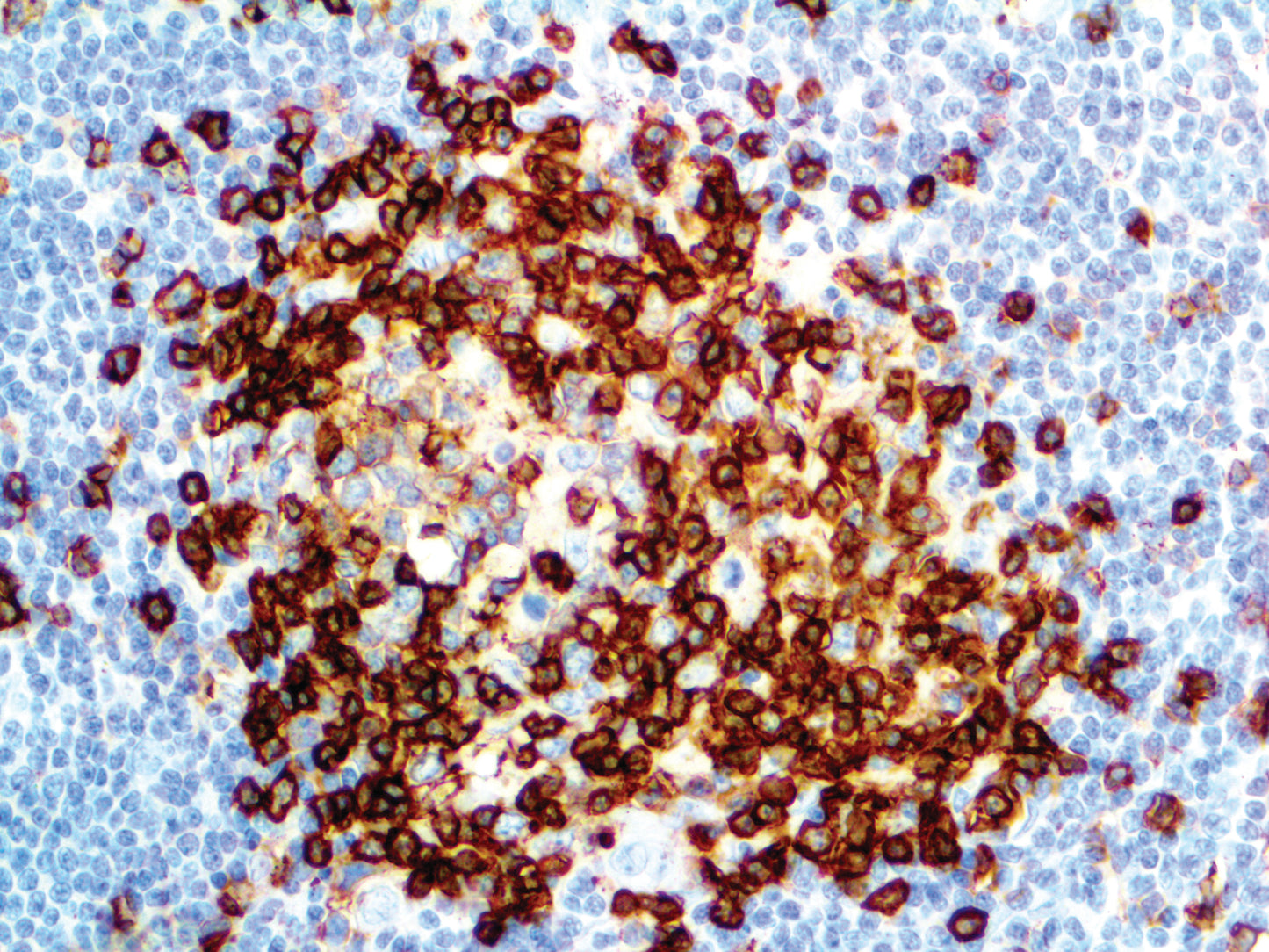
Summary & Explanation
{"type":"root","children":[{"type":"paragraph","children":[{"type":"text","value":"CD43 (leukosialin, sialophorin, or leukocyte sialoglycoprotein) is one of the major glycoproteins expressed in all thymocytes and T-cells. It plays a role in the physicochemical properties of the T-cell surface and in lectin binding. During T-cell activation, CD43 is actively removed from the T-cell antigen-presenting cell contact site, suggesting a negative regulatory role in adaptive immune response."}]},{"type":"paragraph","children":[{"type":"text","value":"This antibody has been found useful in identification and classification of T-cell malignancies and low grade B-cell Lymphomas. CD43 expression is seen in some cases of B-cell Lymphocytic Lymphoma and Centrocytic Lymphoma. When used in combination with CD45 and CD20, effective immunophenotyping of the majority of Lymphomas can be obtained. Co-staining of a lymphoid infiltrate with CD20 and CD3 argues against a reactive process and favors Lymphoma."}]}]}
Antibody Type
Mouse Monoclonal
Clone
MT1
Isotype
IgG1
Localization
Membranous
Dilution
1:100-1:500
Species Reactivity
Human
Immunogen
Human lymph node cells.