 US & Canada:
  Email:


 Access IFU & SDS
Summary & Explanation
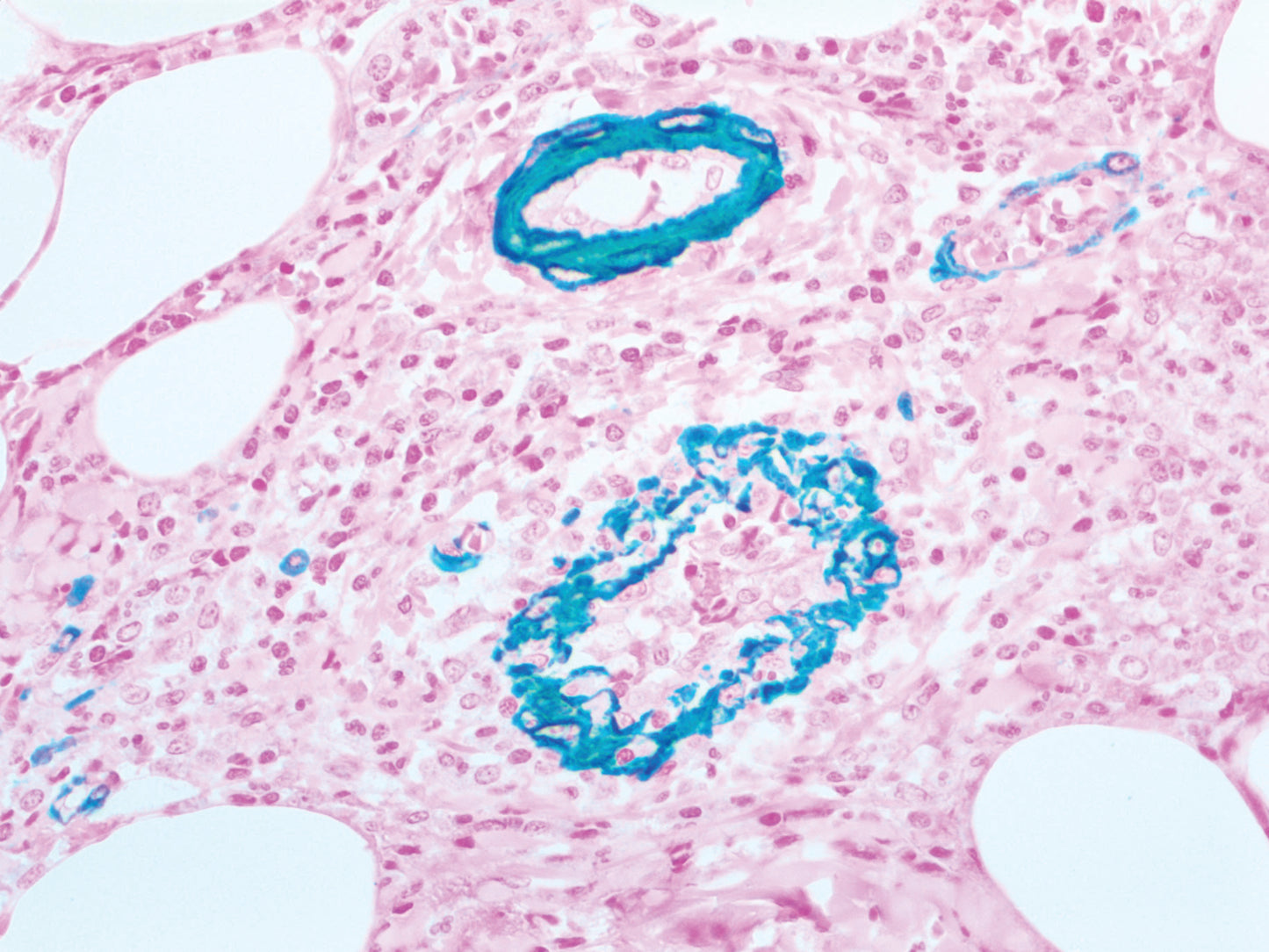
{"type":"root","children":[{"type":"paragraph","children":[{"type":"text","value":"Actin is a major component of the cytoskeleton and is present in every cell type. Actins are highly conserved proteins that are involved in various types of cell motility and are ubiquitously expressed in all eukaryotic cells. In vertebrates 3 main groups of actin isoforms (alpha, beta and gamma) have been identified. The alpha actins are found in muscle tissues and are a major constituent of the contractile apparatus. The beta and gamma actins coexist in most cell types as components of the cytoskeleton and as mediators of internal cell motility."}]},{"type":"paragraph","children":[{"type":"text","value":"Smooth-Muscle Actin antibody does not stain cardiac or skeletal muscle; however, it will stain myofibroblasts and myoepithelial cells. This antibody could be used together with Muscle-Specific Actin to distinguish Leiomyosarcoma from Rhabdomyosarcoma. In most cases of Rhabdomyosarcoma, this antibody gives negative results whereas M. S. Actin is positive in the rhabdomyoblasts. Leiomyosarcomas are positive with both M. S. Actin and S. M. Actin antibodies."}]}]}
Antibody Type
Mouse Monoclonal
Clone
BSB-15
Isotype
IgG2a/K
Localization
Cytoplasmic
Dilution
1:250-1:1000
Species Reactivity
Human, Mouse, Rat, Rabbit, Feline
Immunogen
Synthetic peptide corresponding to the N-terminus of human smooth muscle actin.