 US & Canada:
  Email:


 Access IFU & SDS
Summary & Explanation
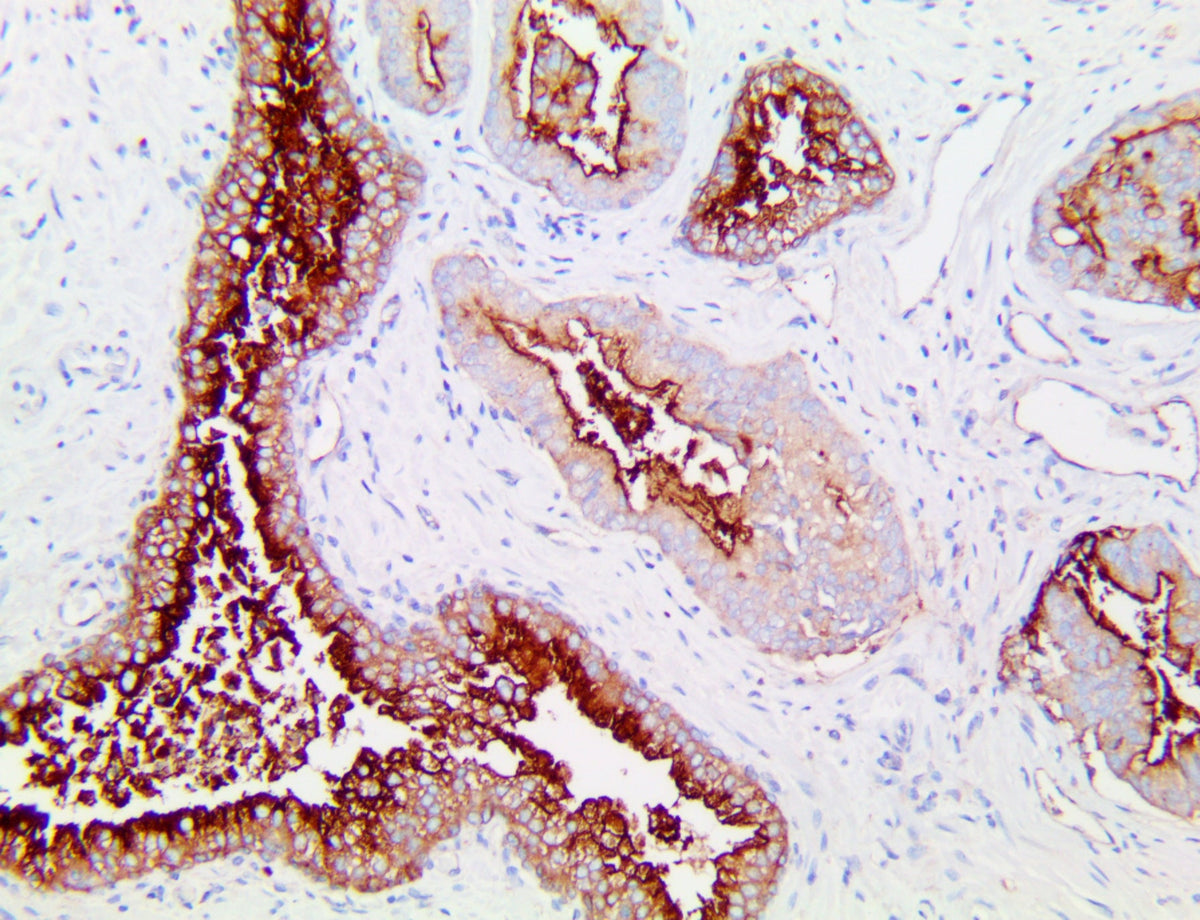
{"type":"root","children":[{"type":"paragraph","children":[{"type":"text","value":"CD10, also known as neutral endopeptidase (NEP), neprilysin, and common acute lymphoblastic leukemia antigen (CALLA), is a zinc-dependent metalloprotease enzyme that degrades a number of small secreted peptides, most notably the amyloid beta peptide whose abnormal misfolding and aggregation in neural tissue has been implicated as a cause of Alzheimer’s disease."},{"type":"text","value":" CD10 is a useful marker for the characterization of childhood leukemia and B-cell lymphomas. This antibody reacts with the antigens of lymphoblastic, Burkitt’s, and follicular lymphomas, and chronic myelocytic leukemia. Also, CD10 detects the antigen of glomerular epithelial cells and the brush border of the proximal tubules. Other non-lymphoid cells that are reactive with CD10 are breast myoepithelial cells, bile canaliculi, neutrophils, a small population of bone marrow cells, fetal small intestine epithelium, and normal fibroblasts."}]}]}
Antibody Type
Rabbit Monoclonal
Clone
RBT-CD10
Reactivity
Paraffin, Frozen
Control
Kidney, Tonsil, Lymph Node, Prostate
Isotype
IgG
Localization
Cytoplasmic, Membranous
Species Reactivity
Human
Immunogen
Recombinant external domain of the human CD10 glycoprotein.