 US & Canada:
  Email:


 Access IFU & SDS
Summary & Explanation
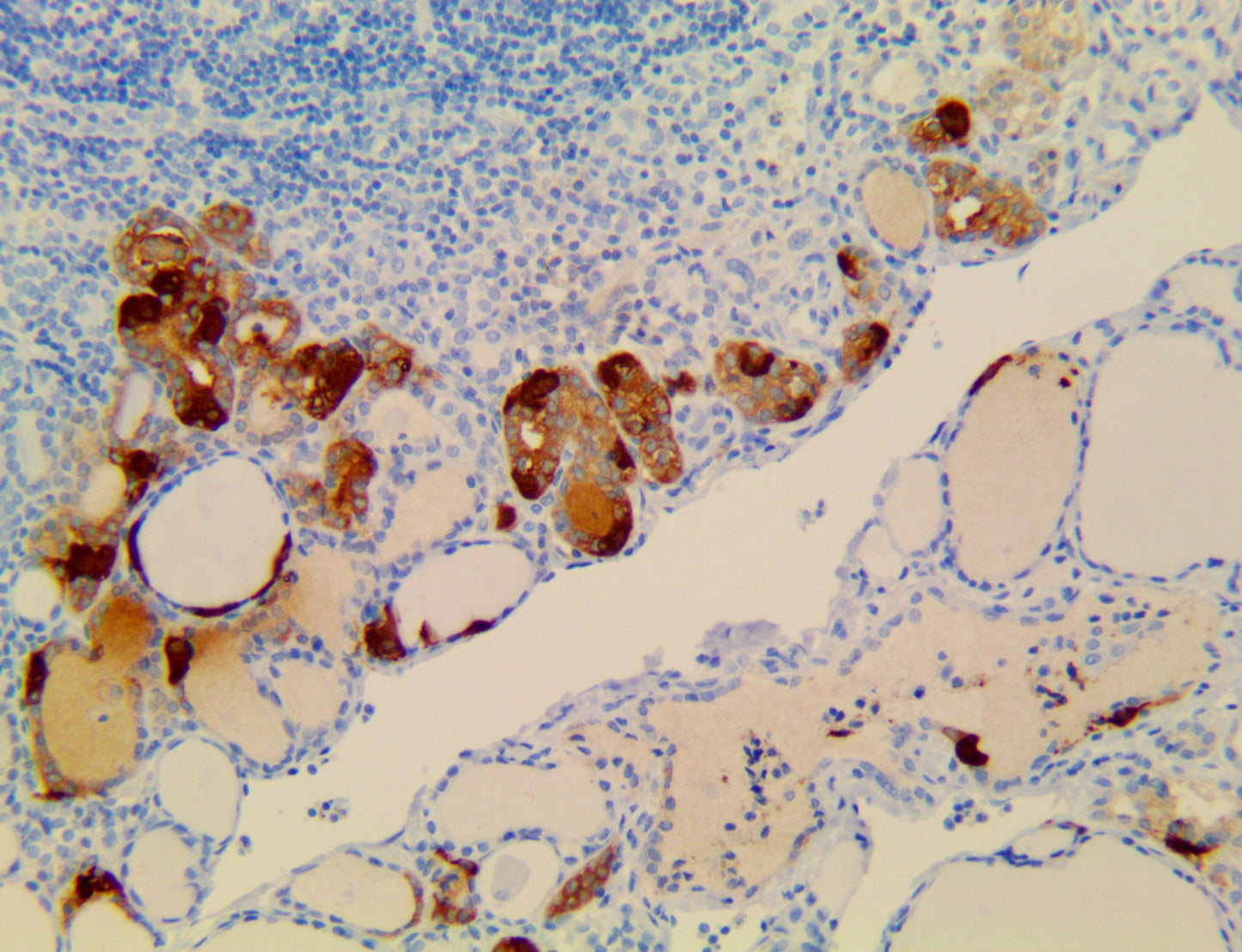
{"type":"root","children":[{"type":"paragraph","children":[{"type":"text","value":"Calcitonin is a 32-amino acid polypeptide hormone that is produced in humans primarily by C-cells located in the thyroid, and in many other animals in the ultimobranchial gland. It acts to reduce blood calcium (Ca2+), opposing the effects of parathyroid hormone (PTH). Calcitonin can also protect the skeleton from excessive loss of bone during periods of high calcium demand, such as lactation."}]},{"type":"paragraph","children":[{"type":"text","value":"Immunohistochemical staining with Calcitonin antibody has proven to be an effective way of demonstrating the existence of Calcitonin-producing cells in the thyroid. Studies of Calcitonin have resulted in the identification of a wide spectrum of C-cell proliferative abnormalities; C-cell Hyperplasia and Medullary Thyroid Carcinomas stain positive for Calcitonin."}]}]}
Antibody Type
Rabbit Monoclonal
Clone
RBT-Calcitonin
Isotype
IgG
Localization
Cytoplasmic
Dilution
1:100-1:500
Species Reactivity
Human, Mouse, Rat
Immunogen
A synthetic peptide corresponding to human calcitonin.