 US & Canada:
  Email:


 Access IFU & SDS
Summary & Explanation
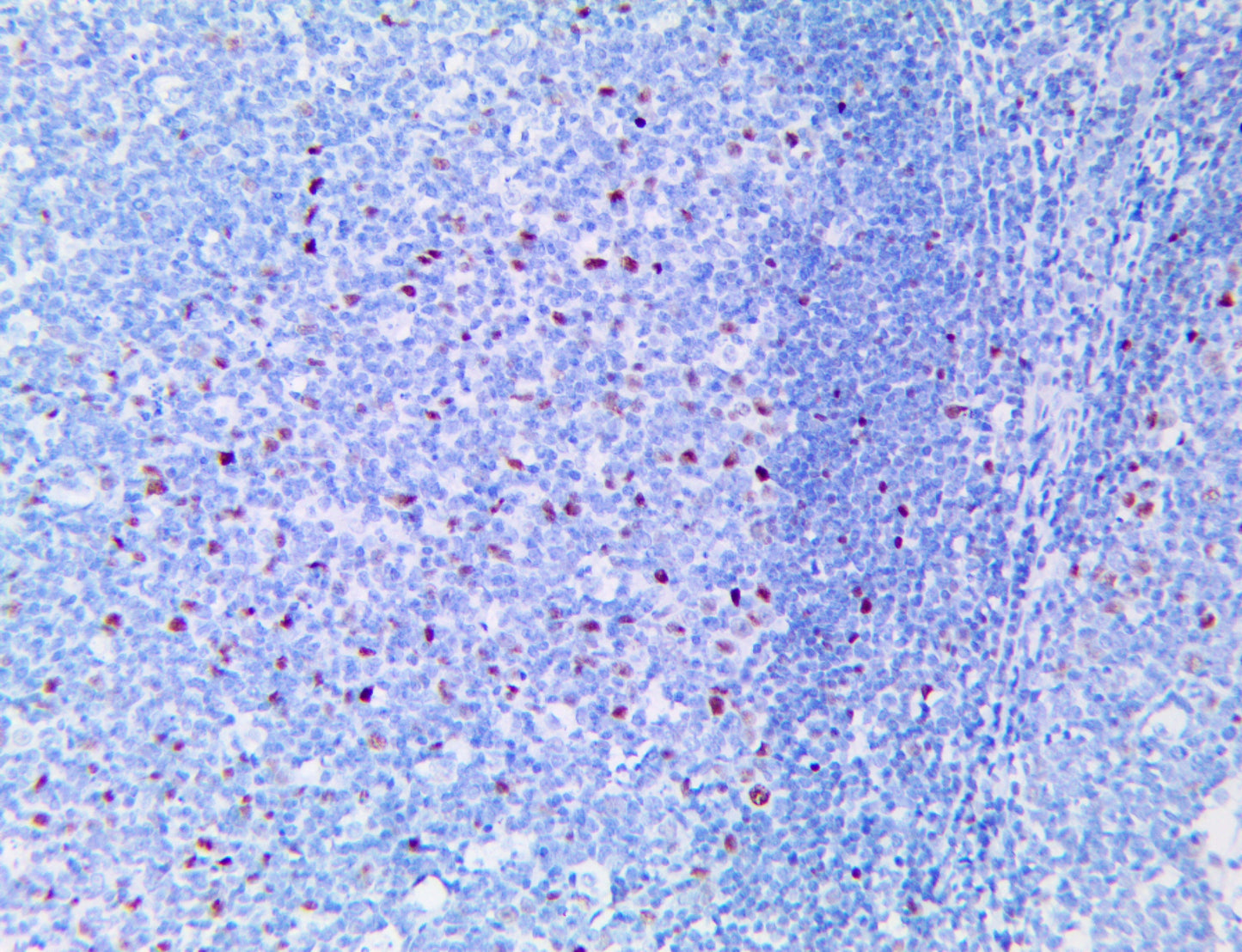
{"type":"root","children":[{"type":"paragraph","children":[{"type":"text","value":"Oncogene-encoded proteins c-Myc, N-Myc, and L-Myc function in cell proliferation, differentiation and neoplastic disease. A mutated version of MYC is found in many cancers, which causes Myc to be constitutively expressed. This leads to the unregulated expression of many genes, some of which are involved in cell proliferation, and results in the formation of cancer. c-Myc is a transcription factor and is a proto-oncogene that is the focal point in cell cycle regulation, metabolism, apoptosis, differentiation, cell adhesion, and tumorigenesis."}]},{"type":"paragraph","children":[{"type":"text","value":"A common human translocation involving Myc is t(8; 14) which is critical to the development of most cases of Burkitt’s Lymphoma. Malfunctions in Myc have also been found in carcinoma of the cervix, colon, breast, lung, and stomach."}]}]}
Antibody Type
Rabbit Monoclonal
Clone
RBT-CMYC
Isotype
IgG
Localization
Nuclear
Dilution
1:10-1:50
Species Reactivity
Human
Immunogen
Recombinant fragment (around aa1-200) of human MYC protein.