 US & Canada:
  Email:


 Access IFU & SDS
Summary & Explanation
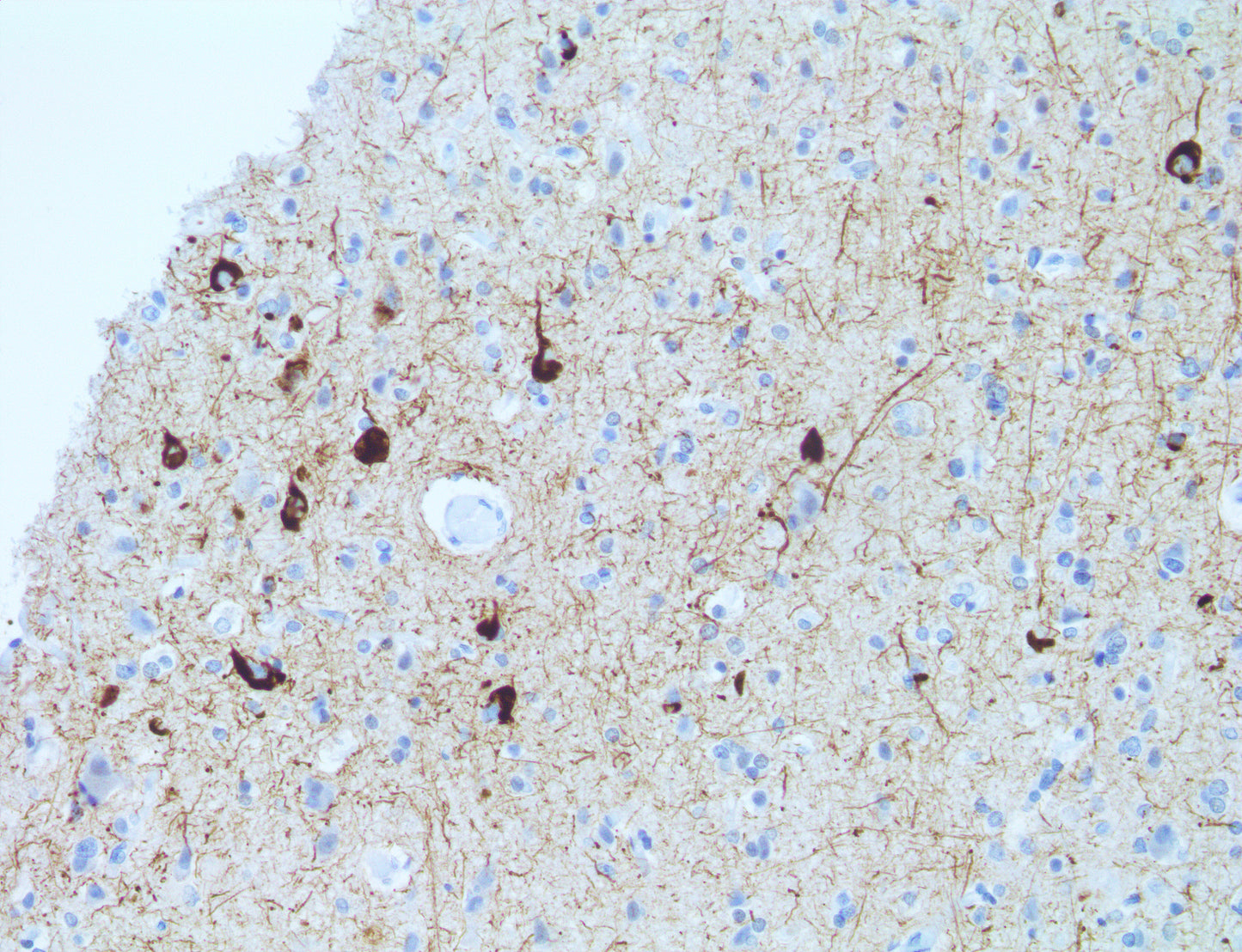
{"type":"root","children":[{"type":"paragraph","children":[{"type":"text","value":"Tau is a phosphorylated protein, containing 85 potential serine (S), threonine (T), and tyrosine (Y) phosphorylation sites. Both the phosphorylation status and isoform expression of tau are developmentally regulated and both are important factors for cytoskeletal plasticity during embryogenesis and early development. Despite the significant heterogeneity that exists between and within the various tauopathies, the deposited tau in pathological lesions is invariably highly phosphorylated.\n Characteristic accumulations of highly phosphorylated tau protein (Thr 181) aggregates are found in several neurodegenerative tauopathies including Alzheimer’s disease (AD), progressive supranuclear palsy (PSP), corticobasal degeneration (CBD), and some forms of frontotemporal lobar dementia (FTLD-tau)."}]}]}
Antibody Type
Mouse Monoclonal
Clone
BSB-176
Isotype
IgG1κ
Localization
Perinuclear, Cytoplasmic
Dilution
1:25-1:50
Species Reactivity
Human
Immunogen
Synthetic peptide of the human pT181 Tau protein.