 US & Canada:
  Email:


 Access IFU & SDS
Summary & Explanation
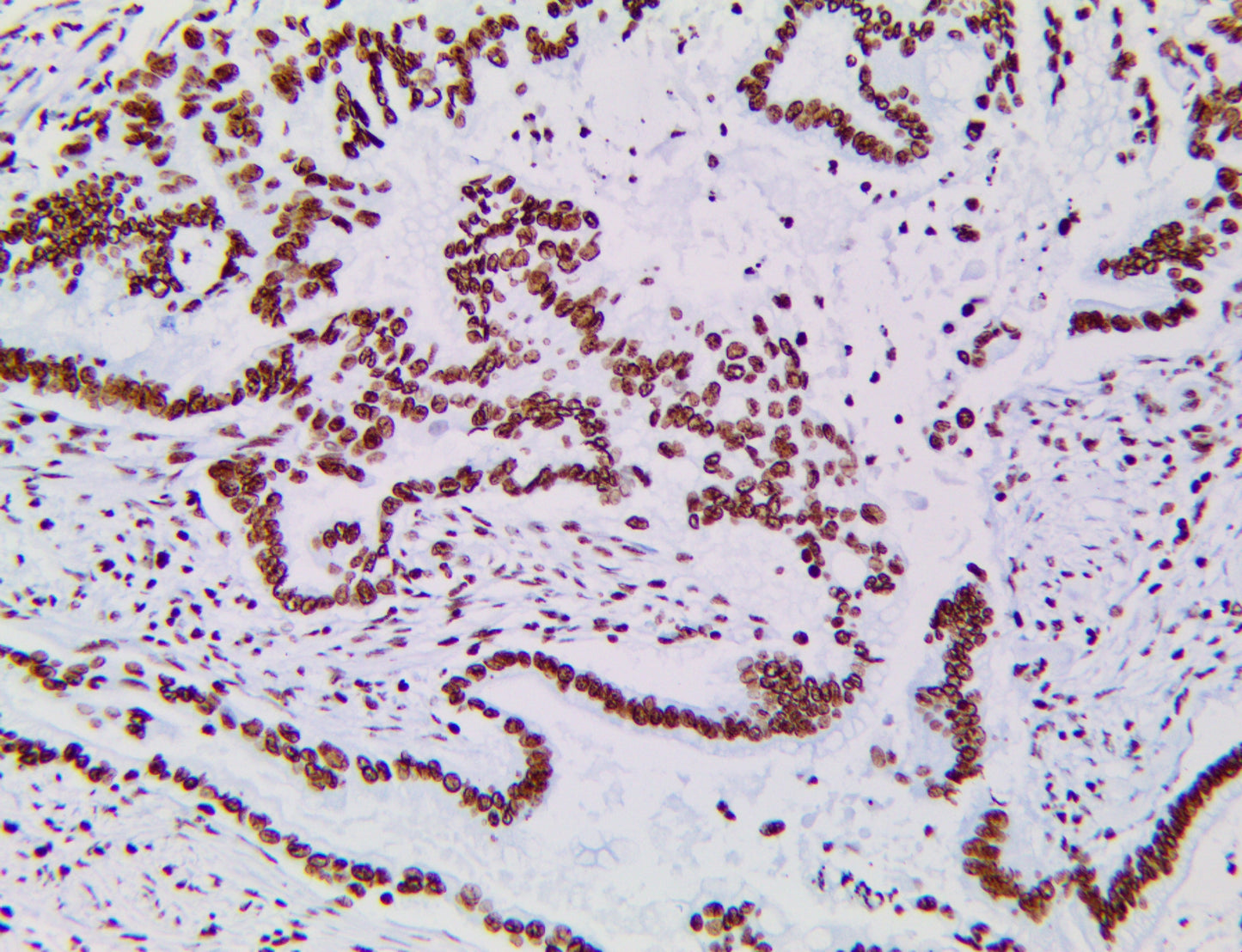
{"type":"root","children":[{"type":"paragraph","children":[{"type":"text","value":"H3K27me3 is a downstream target of the polycomb repressive complex 2 (PRC2); PRC2 contains evolutionarily conserved proteins essential for regulating gene expression. Gain- or loss-of-function mutations in EZH2, a component of PRC2, have been found in a variety of cancer types such as Lymphoma, Melanoma, and Myelodysplastic Lymphoma; gain-of-function mutations can result in H3K27Me hyperactivity and chromatin dysregulation. KDMA6A and B demethylases can act on H3K27Me, and loss-of-function mutations in these proteins have been found in solid and non-solid tumors including types of Leukemia, Lymphoma, Melanoma, Renal and Bladder Cancers, Medulloblastoma and Prostate Cancer.\n As a gene transcription repressor, H3K27me3 has diverse roles in embryogenesis and neoplasia. Loss of H3K27me3 occurs in a significant subset of Malignant Peripheral Nerve Sheath tumors. Other neoplasms may show loss of H3K27me3 expression, such as Meningioma, Radiation Associated Unclassified Sarcoma, Radiation-Associated Angiosarcoma, Dedifferentiated Chondrosarcoma, Melanoma and Merkel Cell Carcinoma, amongst others. Some tumors may exhibit heterogeneous H3K27me3 expression (mosaic pattern)."}]}]}
Antibody Type
Rabbit Monoclonal
Clone
RBT-H3K27Me3
Isotype
IgG
Localization
Nuclear
Dilution
1:50-1:200
Species Reactivity
Human, Mouse, Rat, Monkey
Immunogen
Synthetic peptide corresponding to the amino terminus of the tri-methylated Lys27 of the human Histone H3 protein.