 US & Canada:
  Email:


 Access IFU & SDS
Summary & Explanation
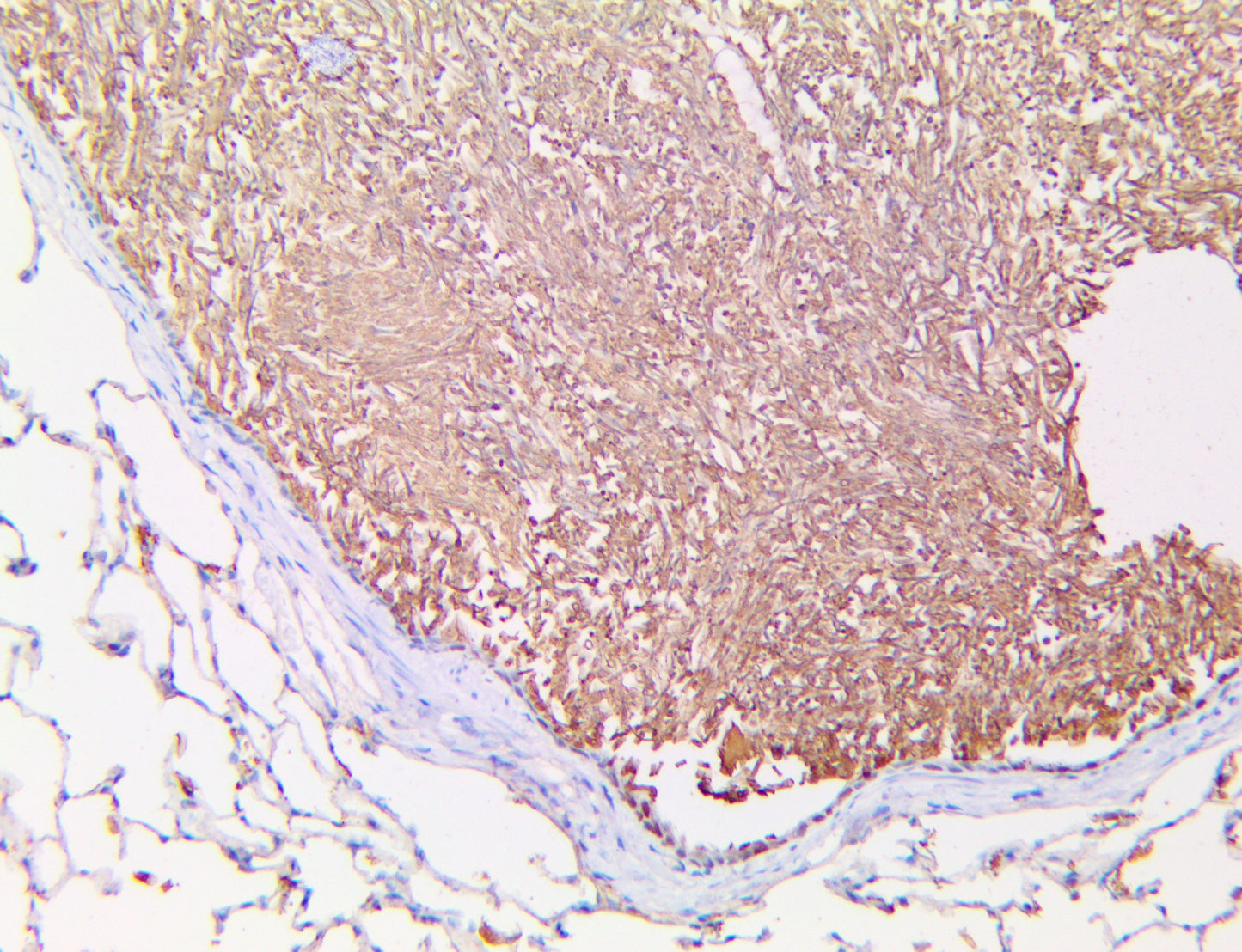
{"type":"root","children":[{"type":"paragraph","children":[{"type":"text","value":"Aspergillus fumigatus and Aspergillus flavus are two common filamentous fungi that cause allergic reactions and Invasive Aspergillosis (IA). The conidia phase can cause fungal infection in the lungs or sinuses of immunocompromised patients who inhale the airborne spores. The spores then produce hyphae in Invasive Pulmonary Aspergillosis (IPA). The Aspergillus hyphae spread locally and can cross into blood vessels to spread to other organs, including the brain, skin, liver, and spleen. \n In the lungs, Aspergillus hyphae cause bronchiolytic lesions, pneumonia, edema, inflammation, and granulomas with necrotic centers. The necrotic centers may contain fungal fragments, also found in pulmonary macrophages. Thrombosis and platelet activation can help prevent the spread of hyphae, though immunocompromised patients are less able to stop the infection. Invasive aspergillosis has an 85% mortality rate; it is often not even discovered until the autopsy, when tissue can be fixed and examined by IHC (Aspergillus is not grown easily from blood cultures). Diagnosis is further complicated by the lack of distinguishing morphological features- infections by Fusarium species, Scedosporium species, and Pseudallescheria boydii cause similar morphological features and may require IHC to make the correct diagnosis."}]}]}
Antibody Type
Rabbit Monoclonal
Clone
RBT-A.fumi
Isotype
IgG
Localization
Cell Wall
Dilution
1:50-1:200
Species Reactivity
Aspergillus Infected Specimen
Immunogen
Aspergillus cell wall polysaccharides.