 US & Canada:
  Email:


 Access IFU & SDS
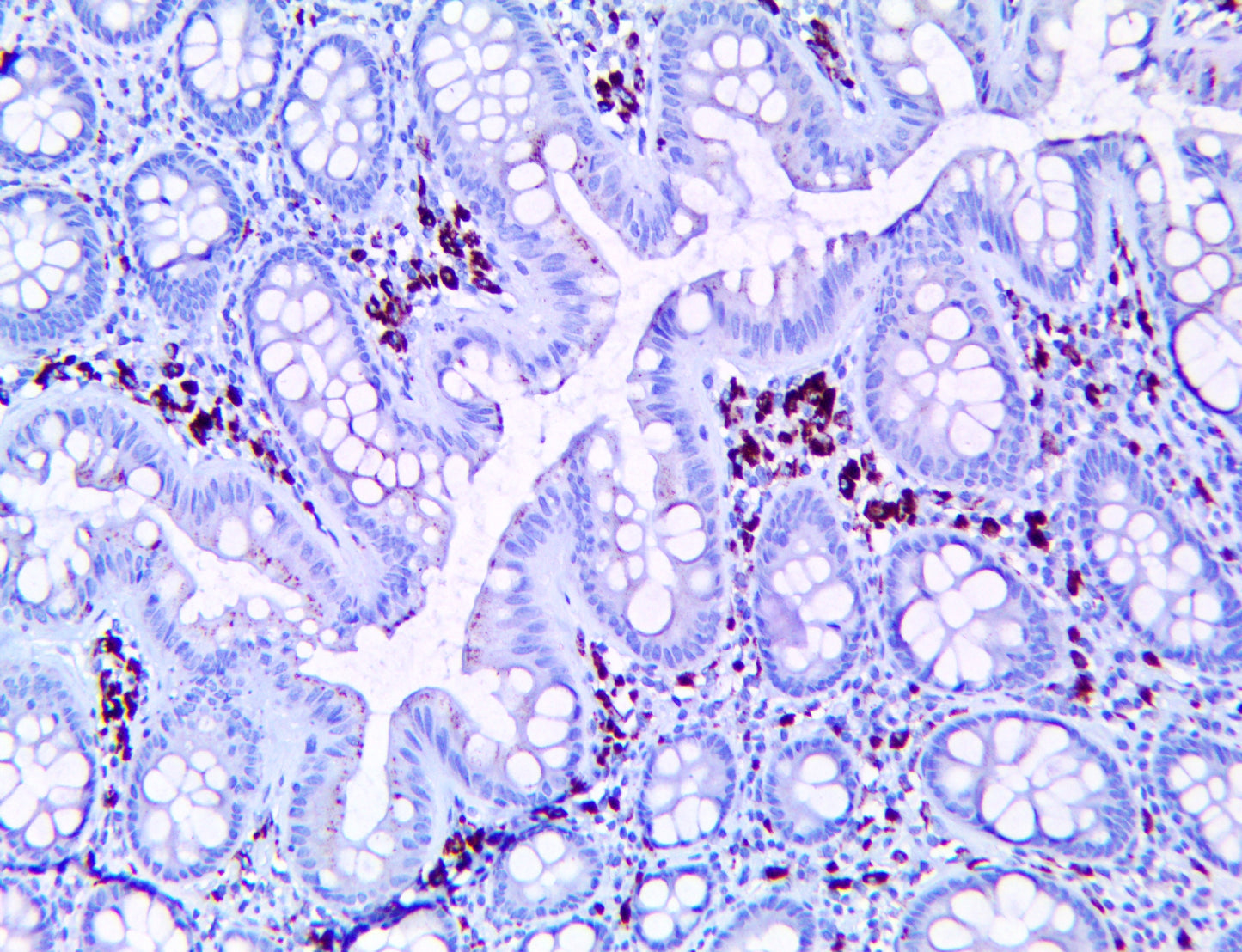
Summary & Explanation
{"type":"root","children":[{"type":"paragraph","children":[{"type":"text","value":"Cathepsin K is a cysteine protease, which may be secreted as a pro-enzyme and is activated in a low-pH environment such as lysosomes. Cathepsin K accepts Arg and Lys residues at the P1 active site, acting on Proteolytically Activated Receptors (PARs) in an extracellular matrix. Cathepsin K also cleaves collagen and degrades bone matrix, and is involved in the mTOR signaling pathway of cellular autophagy and apoptosis. Cathepsin K has also been shown to induce aggregation in platelets and in the Hedgehog signaling pathway."}]},{"type":"paragraph","children":[{"type":"text","value":"As a protease active in the extracellular matrix and lysosomes, Cathepsin K has been implicated in cancer progression and invasiveness. Cathepsin K has been shown to have specific proteolytic activity on PAR-3 and PAR-4, which are expressed in the EMC of epithelial-mesenchymal cells in breast cancer. Proteolytic cleavage of PARs stimulates platelet aggregation and p38 phosphorylation in the MAPK pathway. Cathepsin K-induced proteolytic cleavage induces upregulation of proteins related to metastasis in bone and prostate cancer, and epithelial-mesenchymal-like cells in breast cancer."}]}]}
Antibody Type
Mouse Monoclonal
Clone
BSB-172
Isotype
IgG1, kappa
Localization
Cytoplasmic
Dilution
1:25-1:100
Species Reactivity
Human
Immunogen
Recombinant fragment of human Cathepsin K protein.