 US & Canada:
  Email:


 Access IFU & SDS
Summary & Explanation
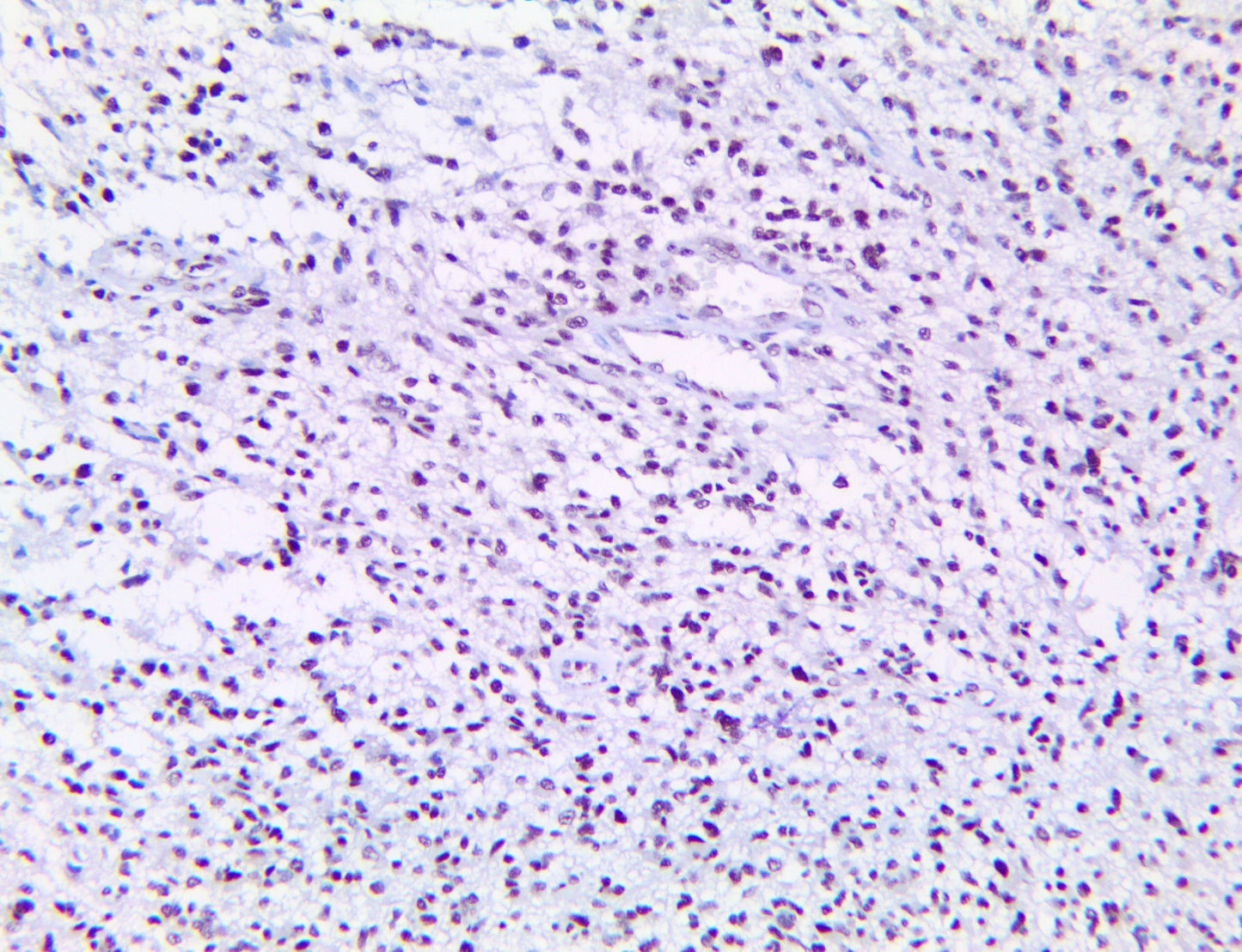
{"type":"root","children":[{"type":"paragraph","children":[{"type":"text","value":"Zinc Finger Domain Containing Protein 3 (ZFAND3) localizes to the nucleus and binds to promoter regions to regulate the expression of several genes related to cancer cell invasion and adhesion: PUF60, Pontin, and Treacle. Zinc-finger domains are often involved in nucleic acid binding, transcriptional regulation, and protein folding; ZFAND3 contains essential domains AN1 and A20, involved in nuclear translocation, protein binding and activation, and RNA stabilization. AN1 stimulates peptidase activity, A20 binds polyubiquinated proteins, and both domains were found to be required to produce the invasive phenotype. ZFAND3 was originally discovered in mouse sperm maturation and has been studied in susceptibility to diabetes."}]},{"type":"paragraph","children":[{"type":"text","value":"In Glioblastoma, ZFAND3 expression indicates higher rates of invasion. Expression was found increased in the nuclei of glioblastoma cells that have become invasive; knock-down of ZFAND3 correlated with downregulation of a set of adhesion-related proteins: COL6A2, EGFR, FNI, NRCAM, and NRP1. While nontumor cells do express ZFAND3, increased expression in the nucleus marks glioblastoma cells. Schuster et al. also noticed the ratio of nuclear to cytoplasmic expression was higher in cells on the periphery of Glioblastoma biopsies, supporting the role of ZFAND3 in tumor invasion."}]}]}
Antibody Type
Mouse Monoclonal
Clone
BSB-169
Isotype
IgG1
Localization
Cytoplasmic, Nuclear
Dilution
1:10-1:50
Species Reactivity
Human, Mouse, Rat
Immunogen
Recombinant human ZFAND3 protein.