 US & Canada:
  Email:


 Access IFU & SDS
Summary & Explanation
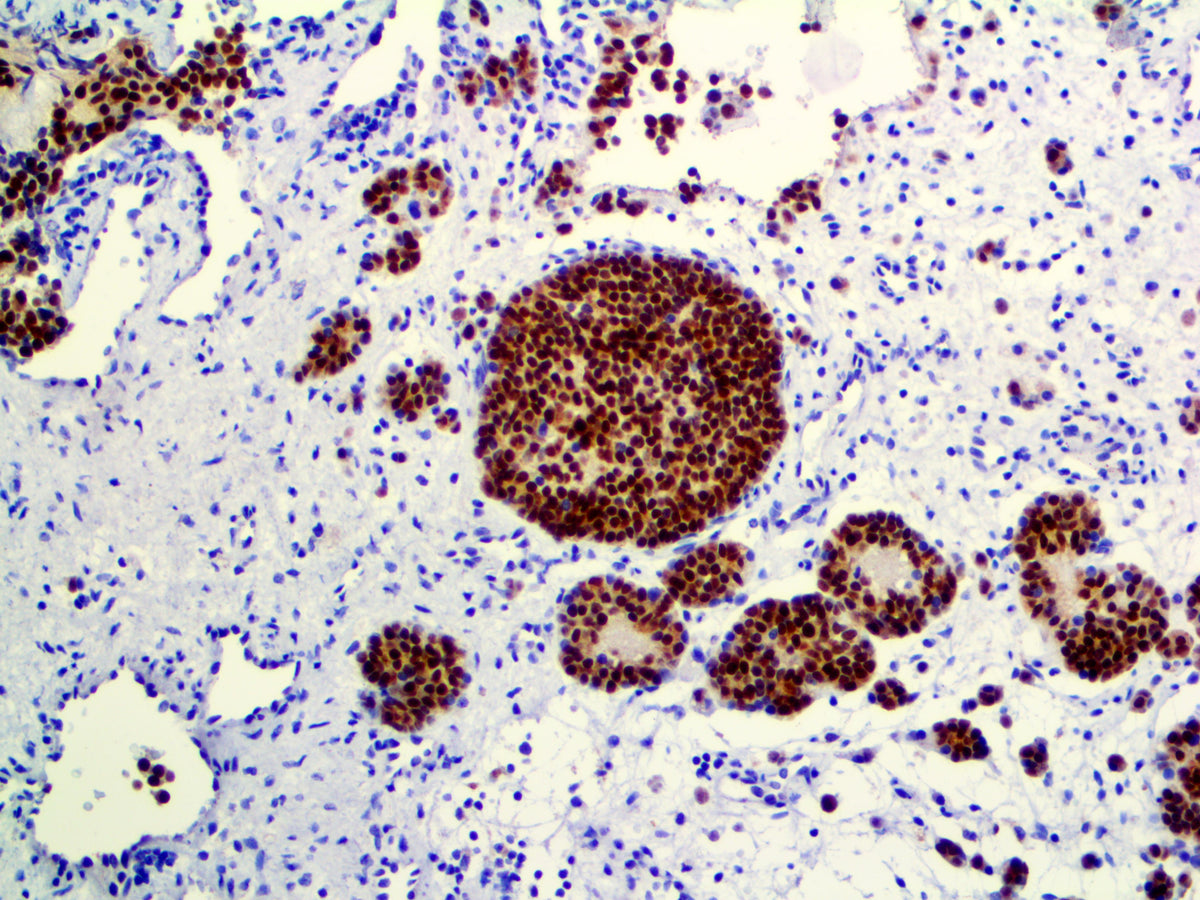
{"type":"root","children":[{"type":"paragraph","children":[{"type":"text","value":"NeuN (Feminizing Locus on X-3, Fox-3, or Hexaribonucleotide Binding Protein-3) is a neuron-specific protein that is present in most central nervous system (CNS) and peripheral nervous system (PNS) neuronal cell types. NeuN protein distributions are restricted to neuronal nuclei, perikarya and some proximal neuronal processes in both fetal and adult brains. However, some neurons fail to be recognized by NeuN at all ages, such as inner nuclear layer retinal cells, Cajal-Retzius cells, Purkinje cells, inferior olivary and dentate nucleus neurons, and sympathetic ganglion cells. NeuN is widely used to label neurons since the vast majority of neurons are strongly positive. NeuN immunoreactivity becomes obvious as neurons mature, typically after they have downregulated expression of doublecortin, a marker seen in the earliest stages of neuronal development. NeuN was detected in most of the amyloid bodies, is considered a marker of neuronal differentiation in brain tumor and has been found in all major subtypes except pilocytic astrocytoma. NeuN IHC have demonstrated NeuN immunoreactivity in 56% of epithelial neuroendocrine carcinomas (ENEC) (19/34): 4 of 7 (57%) grade 1 ENECs (Carcinoid), 4 of 5 (90%) grade 2 ENECs (atypical carcinoid), and 11 of 22 (50%) grade 3 ENECs (small and large cell neuroendocrine carcinoma)."}]}]}
Antibody Type
Rabbit Monoclonal
Clone
RBT-NeuN
Isotype
IgG
Localization
Nuclear
Dilution
1:100-1:500
Species Reactivity
Human
Immunogen
Recombinant NeuN human protein