 US & Canada:
  Email:


 Access IFU & SDS
Summary & Explanation
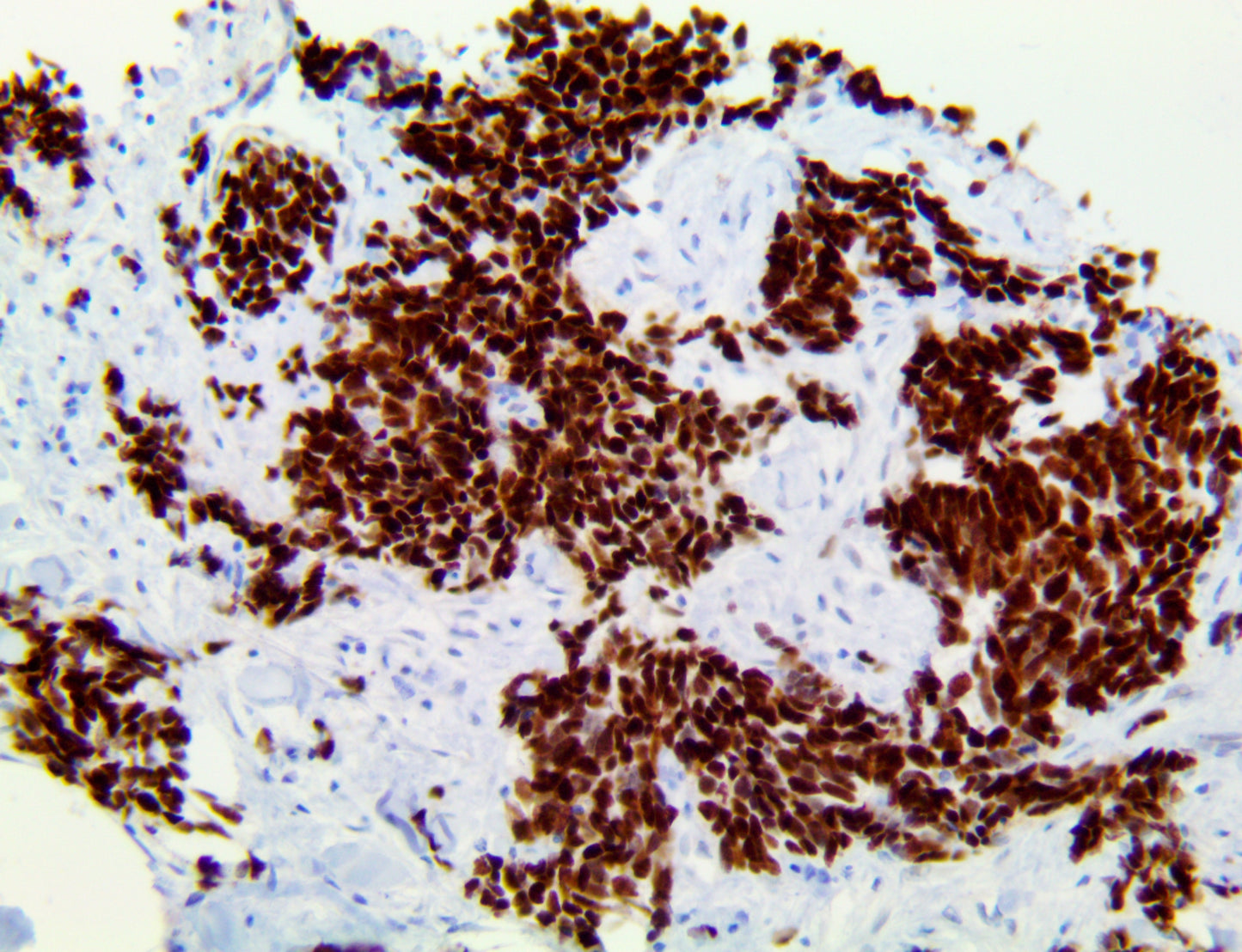
{"type":"root","children":[{"type":"paragraph","children":[{"type":"text","value":"Insulinoma-associated 1 (INSM1) gene encodes a protein containing both a zinc finger DNA-binding domain and a putative prohormone domain, originally isolated from a human insulinoma-glucagonoma subtraction library."}]},{"type":"paragraph","children":[{"type":"text","value":"INSM1 is abundantly expressed in fetal neuroendocrine developmental tissues and expressed in normal adult neuroendocrine (NE) tissues (adrenal medulla, pineal gland, pituitary gland, gastrointestinal enterochromaffin cells, pancreatic islet cells, thyroid C cells) and developing neurons. However there is also a high occurrence of INSM1 found in NE tumors, such as small cell lung cancer (SCLC), pituitary tumors, medullary thyroid carcinoma, Merkel cell carcinoma, olfactory neuroblastoma and pheochromocytoma. It has been reported that INSM1 expresses exclusively in SCLC specimens using immunohistochemistry, and first elucidated that INSM1 regulates the NE differentiation pathway in lung cancer. In addition, it has demonstrated an increased sensitivity and specificity compared to other NE biomarkers (Chromogranin A, Synaptophysin and CD56) in lung cancer specimens. In addition, it’s been shown to be involved in NE differentiation in medullary thyroid carcinoma, pheochromocytoma, intestinal NE carcinoma, islet cell tumor, pituitary tumor, and SCLC cell lines."}]}]}
Antibody Type
Rabbit Monoclonal
Clone
RBT-INSM1
Isotype
IgG
Localization
Nuclear
Dilution
1:25-1:100
Species Reactivity
Human
Immunogen
Synthetic peptide corresponding to residues from the N-terminal domain of the human INSM1 protein.