 US & Canada:
  Email:


 Access IFU & SDS
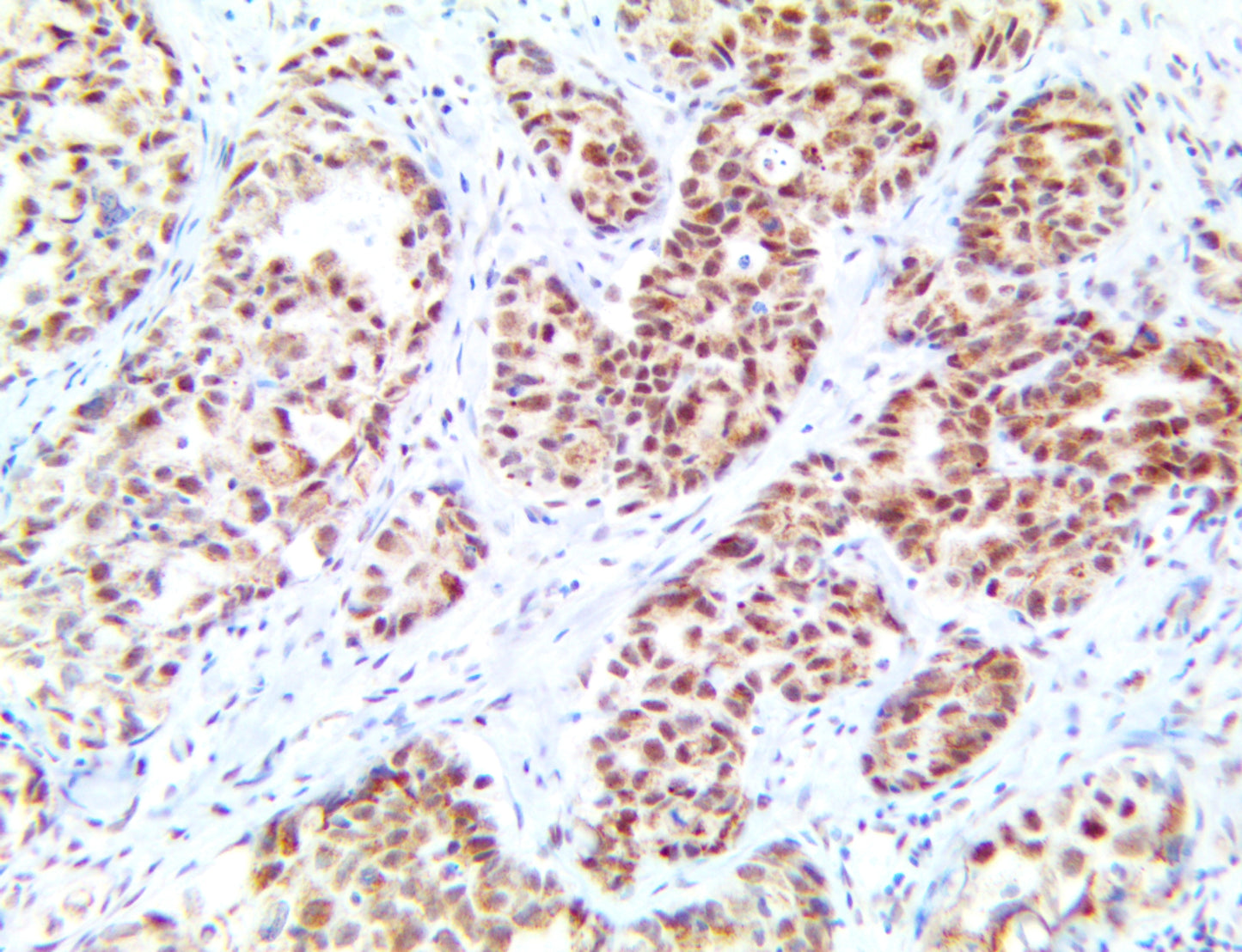
Summary & Explanation
{"type":"root","children":[{"type":"paragraph","children":[{"type":"text","value":"Transactive Response DNA binding protein 43 (TPD-43 or TARDBP) is an RNA and DNA binding protein in the heterogeneous nuclear ribonucleoprotein (hnRNP) family, where it regulates RNA associated with glucose and lipid metabolism."}]},{"type":"paragraph","children":[{"type":"text","value":"TDP-43/TARDBP is associated with several neurodegenerative conditions amyotrophic lateral sclerosis (ALS) and frontotemporal lobar degeneration (FTLD) and metabolic regulation in cancer cells. TDP-43/TARDBP regulation of miRNAs has both tumor supporting and suppressive roles. Upregulation of TDP-43/TARDBP can lead to continued autophagy for survival and suppression of apoptosis pathways, promoting cancer cell survival under conditions of nutrient stress, as was seen in a study of glioblastomas. TDP-43/TARDBP and its targeted miRNAs have been associated with increased cell growth and migration in hepatocellular and lung cancers, but also with tumor inhibition in rhabdomyosarcomas through miRNA miR-500a-3p. TDP-43/TARDBP may also influence the function and targets of MiR-152, and miRNA associated with hepatocellular carcinoma, endometrial, gastric, and ovarian cancers. TDP-43/TARDBP has been found to be a novel oncogene in melanoma and regulates melanoma proliferation and metastasis potentially through modulation of glucose metabolism. TDP43, has been found to promote triple-negative breast cancer (TNBC) progression."}]}]}
Antibody Type
Mouse Monoclonal
Clone
BSB-166
Isotype
IgG2a
Localization
Nuclear, Cytoplasmic
Dilution
1:50-1:200
Species Reactivity
Human, Mouse, Rat, reactive with Horse, Dog, Bovine
Immunogen
Synthetic peptide corresponding to the N-terminus of the human TARDBP protein.