 US & Canada:
  Email:


 Access IFU & SDS
Summary & Explanation
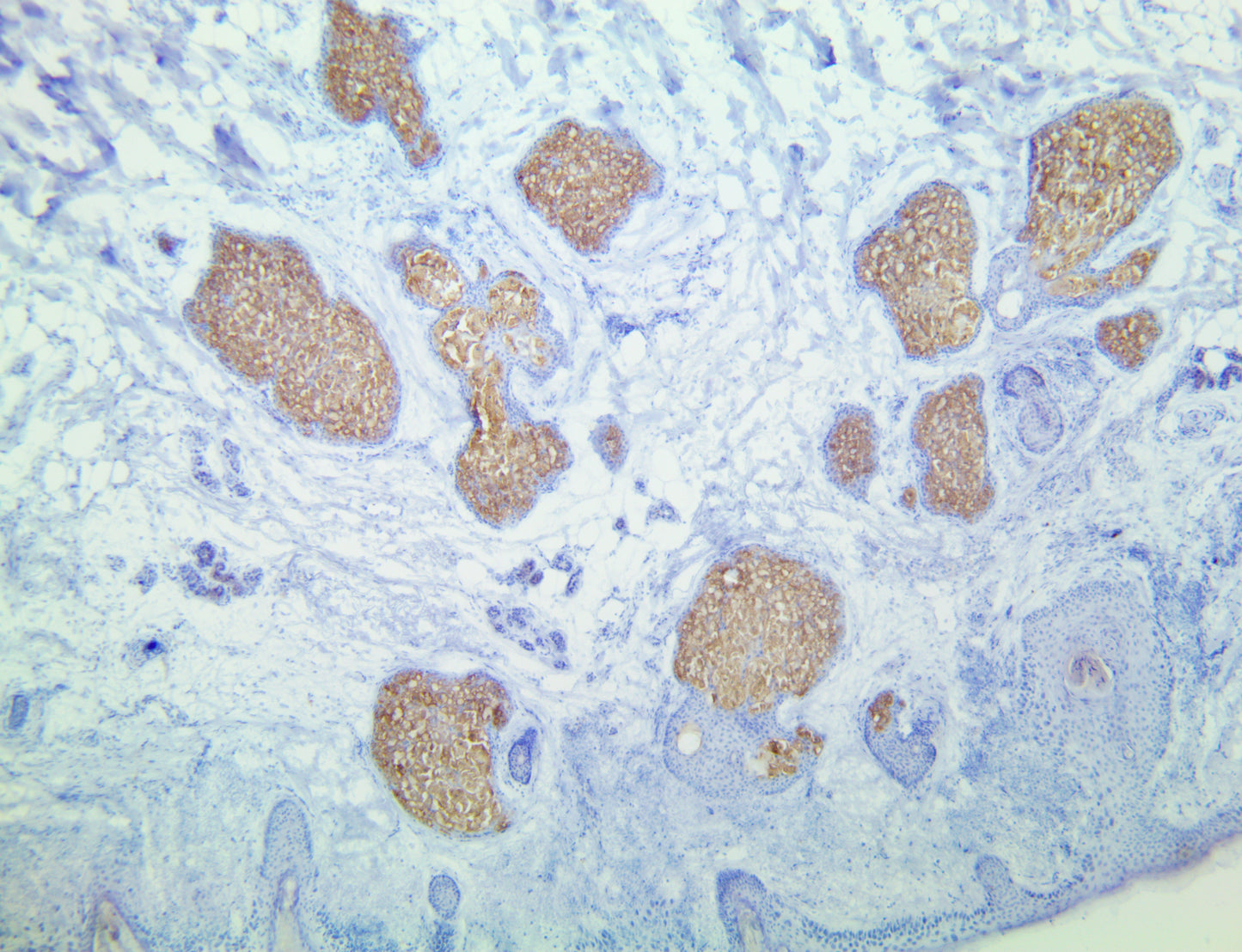
{"type":"root","children":[{"type":"paragraph","children":[{"type":"text","value":"Adipose differentiation-related protein, also known as Perilipin 2 (PLIN2), ADRP or Adipophilin, is a protein which in humans is encoded by the ADFP gene. Adipophilin is associated with the globule surface membrane material. This protein is a major constituent of the globule surface. Increase in mRNA levels is one of the earliest indications of adipocyte differentiation. Adipophilin is present in a wide range of cultured cell lines, including fibroblasts, endothelial, and epithelial cells. In tissues, however, expression of Adipophilin is restricted to certain cell types, such as Lactating Mammary epithelial cells, Adrenal Cortex cells, Sertoli and Leydig cells of the male reproductive system, and Steatosis or fatty change hepatocytes in alcoholic liver Cirrhosis."}]},{"type":"paragraph","children":[{"type":"text","value":"Adipophilin expression in various Sebaceous lesions and other Cutaneous Tumors with a clear cell histology that may mimic sebaceous differentiation. Adipophilin can be valuable in an immunohistochemical panel when evaluating cutaneous lesions with clear cell histology as it identifies intracytoplasmic lipid vesicles in Sebaceous and Xanthomatous lesions. In periocular lesions, it is effective in helping to exclude Basal Cell Carcinoma and Squamous Cell Carcinoma when sebaceous carcinoma is under consideration. Adipophilin expression is not as useful for the differential diagnosis that includes Metastatic Renal Cell Carcinoma, a rare but important, diagnostic differential."}]},{"type":"paragraph","children":[{"type":"text","value":"The pattern of adipophilin reactivity is important to observe as membranous vesicular staining is suggestive of intracellular lipids whereas granular cytoplasmic reactivity is not. Adipophilin is suitable for immunostaining and is helpful in the identification of intracytoplasmic lipids, as seen in Sebaceous lesions. It is especially helpful in identifying intracytoplasmic lipid vesicles in poorly differentiated Sebaceous Carcinomas in challenging cases such as small periocular biopsy specimens."}]}]}
Antibody Type
Mouse Monoclonal
Clone
BSB-91
Isotype
IgG1
Localization
Cytoplasmic, Membranous
Species Reactivity
Human
Immunogen
Synthetic peptide corresponding to the C-terminus of human Adipophilin.