 US & Canada:
  Email:


 Access IFU & SDS
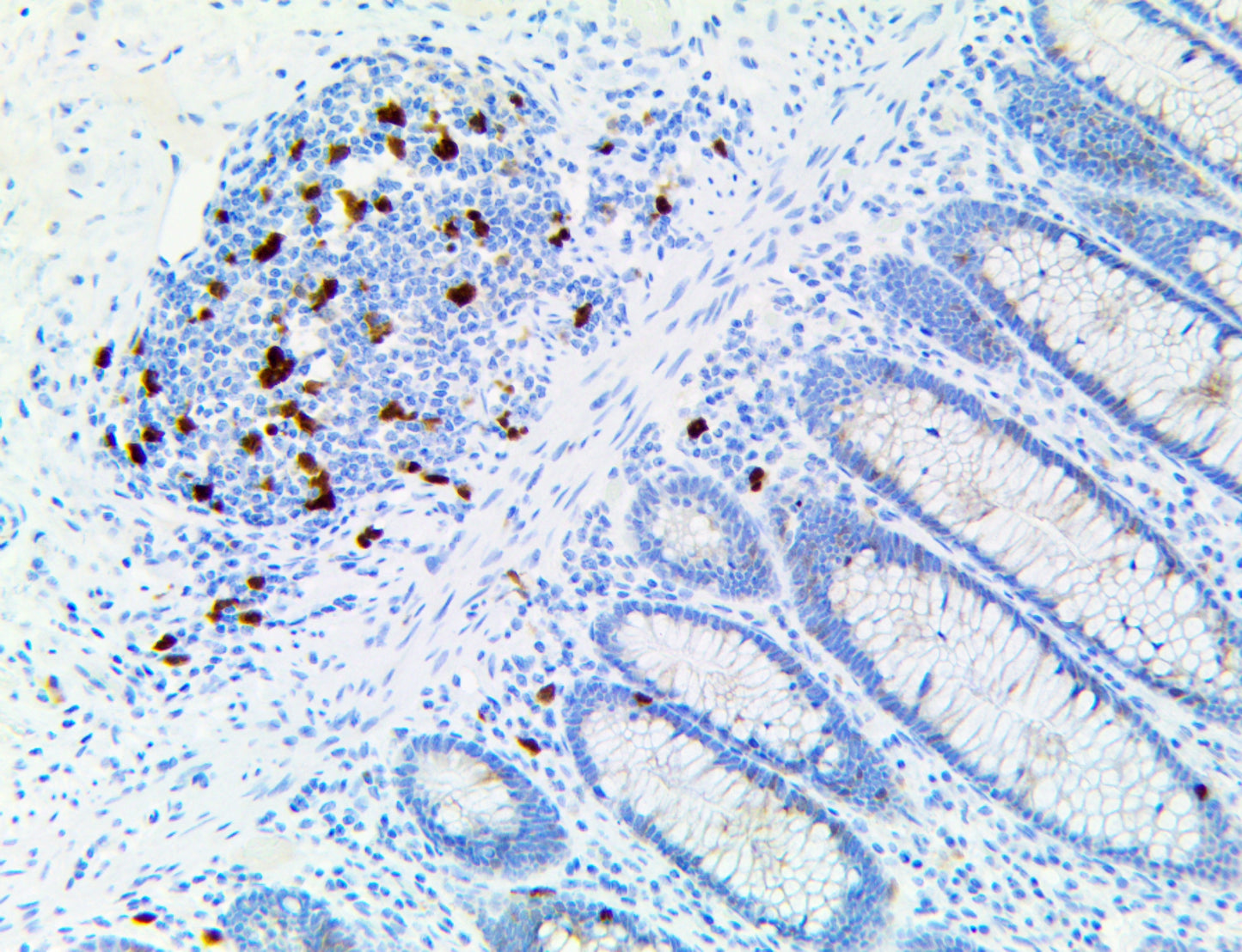
Summary & Explanation
{"type":"root","children":[{"type":"paragraph","children":[{"type":"text","value":"Thymidylate synthase (TS) catalyzes the methylation of deoxyuridine monophosphate to deoxythymidine monophosphate using 5, 10-methylenetetrahydrofolate as a cofactor. This enzyme is critical for DNA repair and replication. Polymorphism of the gene TYMS, which encodes TS, may be associated with etiology of neoplasia and responses to chemotherapy. TS inhibitors like 5-fluorouracil have been successful in down-regulating tumor progression and increasing immune responses in pancreatic, breast, gastric, ovarian, lung, and head & neck cancer."}]},{"type":"paragraph","children":[{"type":"text","value":"A study reported TS protein expression (PE) and gene copy number (GCN) were assayed using IHC and silver in situ hybridization (SISH), respectively, on primary tumors of resected non-small cell lung (NSCLC) patients and concluded that TS PE and GCN vary widely in NSCLC and correlate significantly to each other. TS GCN is higher in SCCs, whereas TS PE does not associate with histological subtypes, clinical features or survival. Variability of TS PE and GCN may indicate potential benefit from pemetrexed therapy in selected SCC patients. A number of studies have investigated the relationship between thymidylate synthase (TS) expression and survival in colorectal cancer (CRC) patients. Most have reported poorer overall and progression-free survival with high TS expression. Another study suggests that immunostaining for TS and p53 protein is useful for pretreatment selection of gastric cancer patients unresponsive to S-1/cisplatin chemotherapy."}]}]}
Antibody Type
Mouse Monoclonal
Clone
BSB-160
Isotype
IgG2a
Localization
Nuclear, Cytoplasmic, Membranous
Dilution
1:25-1:100
Species Reactivity
Human, Mouse, Rat
Immunogen
Synthetic peptide corresponding to the C-terminus of human TS protein.