 US & Canada:
  Email:


 Access IFU & SDS
Summary & Explanation
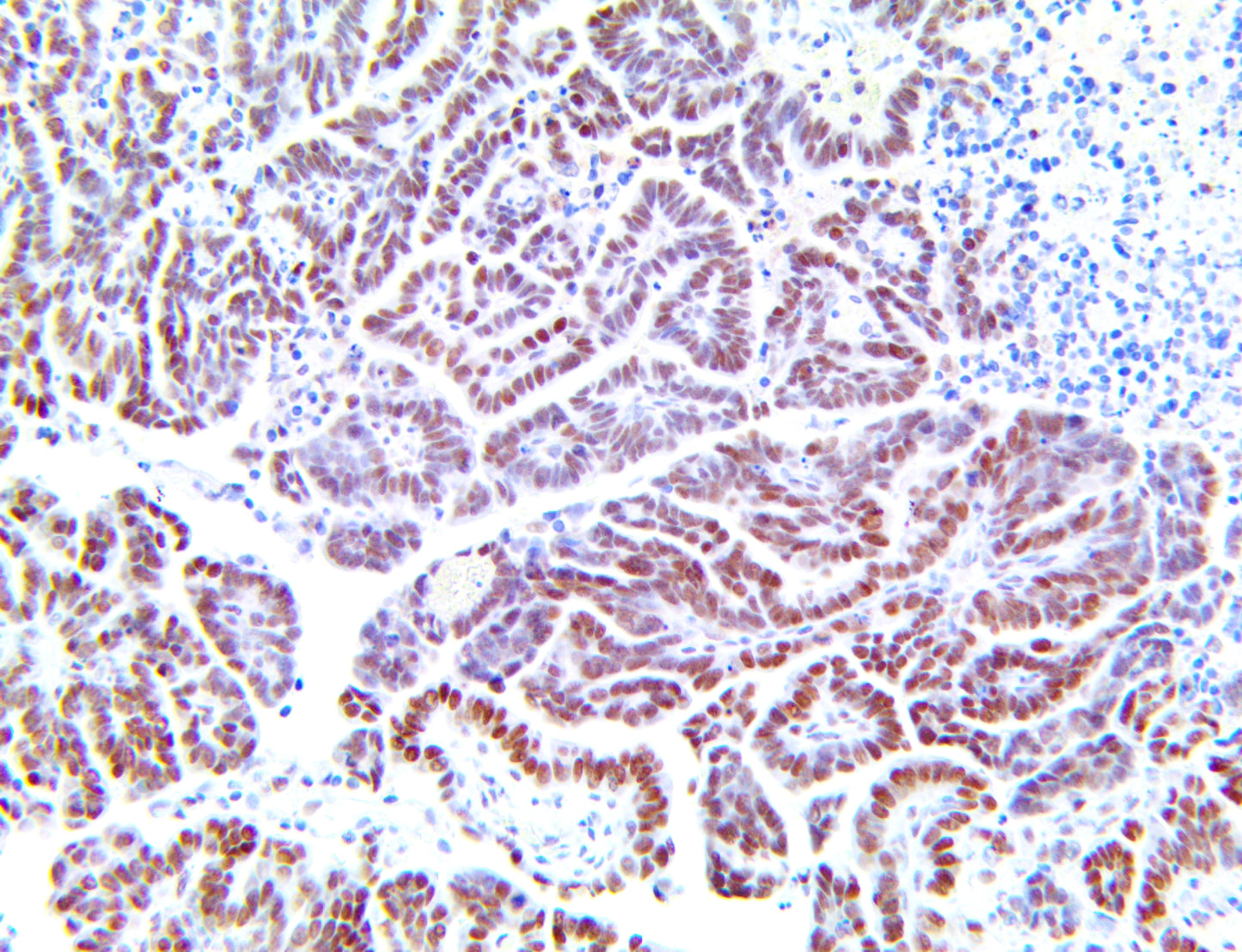
{"type":"root","children":[{"type":"paragraph","children":[{"type":"text","value":"Genes encoding subunits of SWItch/sucrose nonfermentable (SWI/SNF) chromatin remodeling complexes are collectively mutated in 20% of all human cancers. ARID1A is the SWI/SNF subunit gene that is most frequently mutated, at variable frequencies across molecular and histological subtypes of cancer."}]},{"type":"paragraph","children":[{"type":"text","value":"ARID1A is a tumour suppressor gene frequently mutated in Clear Cell and Endometrioid Carcinomas of the Ovary and Endometrium. Loss of ARID1A function as shown by loss of expression, presumably due to mutations, is an early molecular event, occurring before malignant transformation, in the development of the majority of Ovarian Clear Cell and Endometrioid Carcinomas arising in Endometriomas. A study found 21 ARID1A mutations were identified in 14/43 assessable tumours (33%), the majority of which were predicted to be deleterious. Mutations were identified in 6/17 (35%) Ovarian Clear Cell Carcinomas, 5/8 (63%) Ovarian Endometrioid Carcinomas, 2/5 (40%) Endometrial Carcinomas, and 1/7 (14%) Carcinosarcomas. Some studies have demonstrated that ARID1A has a critical tumor suppressor role in the Colon, and that its inactivation leads to the development of Colon Cancers via a mechanism that is distinct from previously established genetic models. ARID1A inactivating mutations are present at a high frequency in advanced endocrine-resistant ER+ Breast Cancer. ARID1A may play an important role in and serves as a valuable prognostic marker in Gastric Cancer."}]}]}
Antibody Type
Rabbit Monoclonal
Clone
EP303
Isotype
IgG
Localization
Nuclear
Dilution
1:25-1:100
Species Reactivity
Human
Immunogen
A synthetic peptide corresponding to residues of human ARID1A (BAF250a) protein.