 US & Canada:
  Email:


 Access IFU & SDS
Summary & Explanation
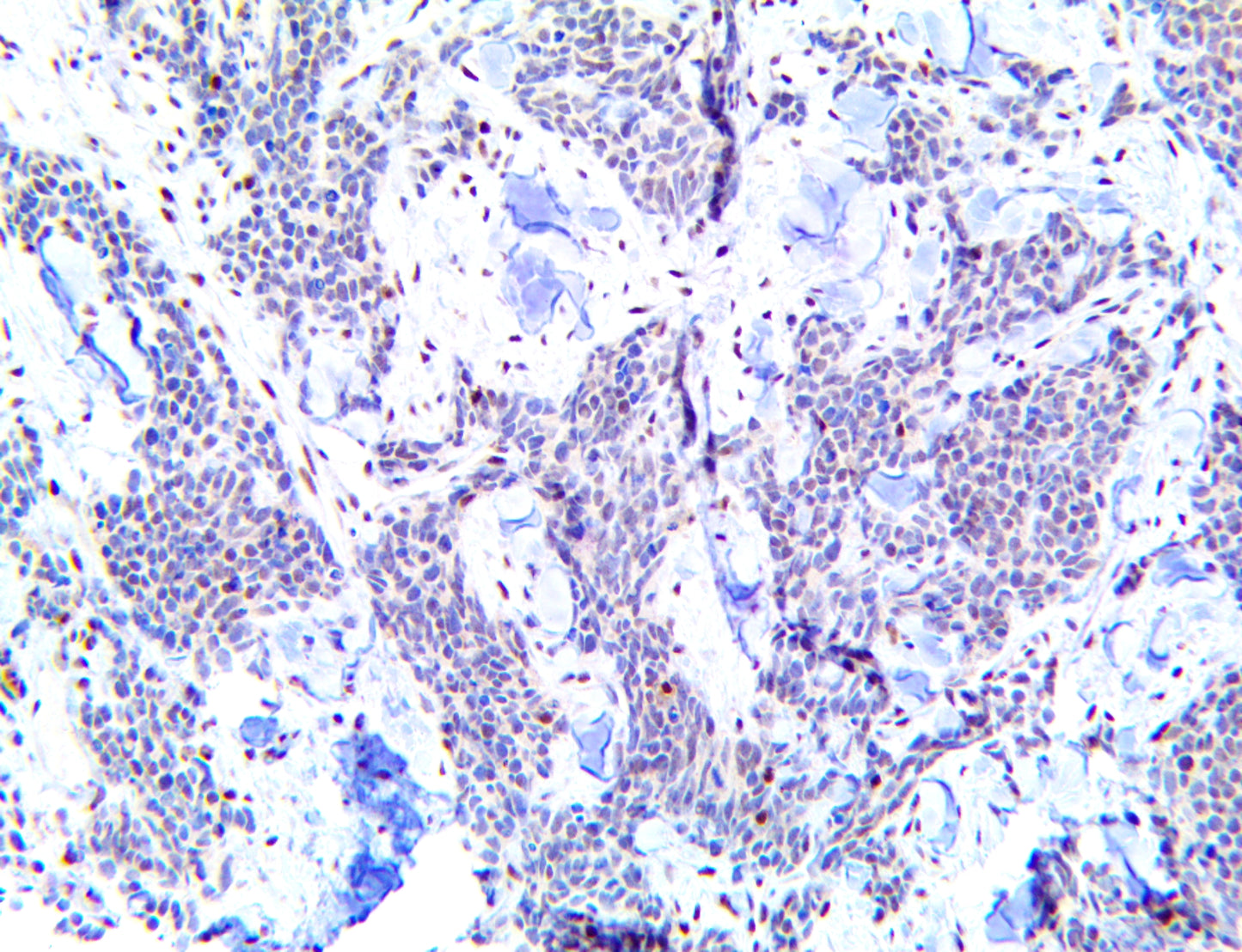
{"type":"root","children":[{"type":"paragraph","children":[{"type":"text","value":"Pygopus Family PHD Finger 2 (PYGO2) is a protein-coding gene associated with G-protein coupled receptor (GPCR) and Wnt signaling pathways, chromatin binding and histone acetyltransferase regulator activity. Pygo2 as a Wnt signaling pathway component has been detected in multiple cancer types."}]},{"type":"paragraph","children":[{"type":"text","value":"One study found that abnormal Pygo2 expression was associated with poor differentiation and a high tumor, node, and metastases stage and poor prognosis in non-small cell lung cancer (NSCLC) patients, therefore abnormal Pygo2 protein expression may be a marker for advanced NSCLC. Another study found that 59% of the patient tumor specimens exhibited positive Pygo2 immunohistochemistry staining and increased intensity with the grade of malignancy, especially for WHO grade III and IV."}]},{"type":"paragraph","children":[{"type":"text","value":"High-level expression has been reported in gliomas compared with normal brain tissues, which suggest an important role of Pygo2 in brain tumor progression. In a Colorectal Cancer study, the expression pattern of Pygo2 was evaluated by immunohistochemistry in tumor tissues and their normal margins, and found the expression of Pygo2 protein was detected in all tumor tissues. Furthermore, this expression was significantly higher in Colorectal Cancer samples than in normal tissues, and a significant association was found between Pygo2 protein expression in Colorectal Cancer and tumor cell metastasis to the lymph nodes. Pygo2 is also associated with Oligospermia."}]}]}
Antibody Type
Mouse Monoclonal
Clone
BSB-156
Isotype
IgG2a
Localization
Nuclear
Dilution
1:50-1:200
Species Reactivity
Human, Mouse, Rat
Immunogen
Synthetic peptide corresponding to the internal region of the human Pygopus 2 protein.