 US & Canada:
  Email:


 Access IFU & SDS
Summary & Explanation
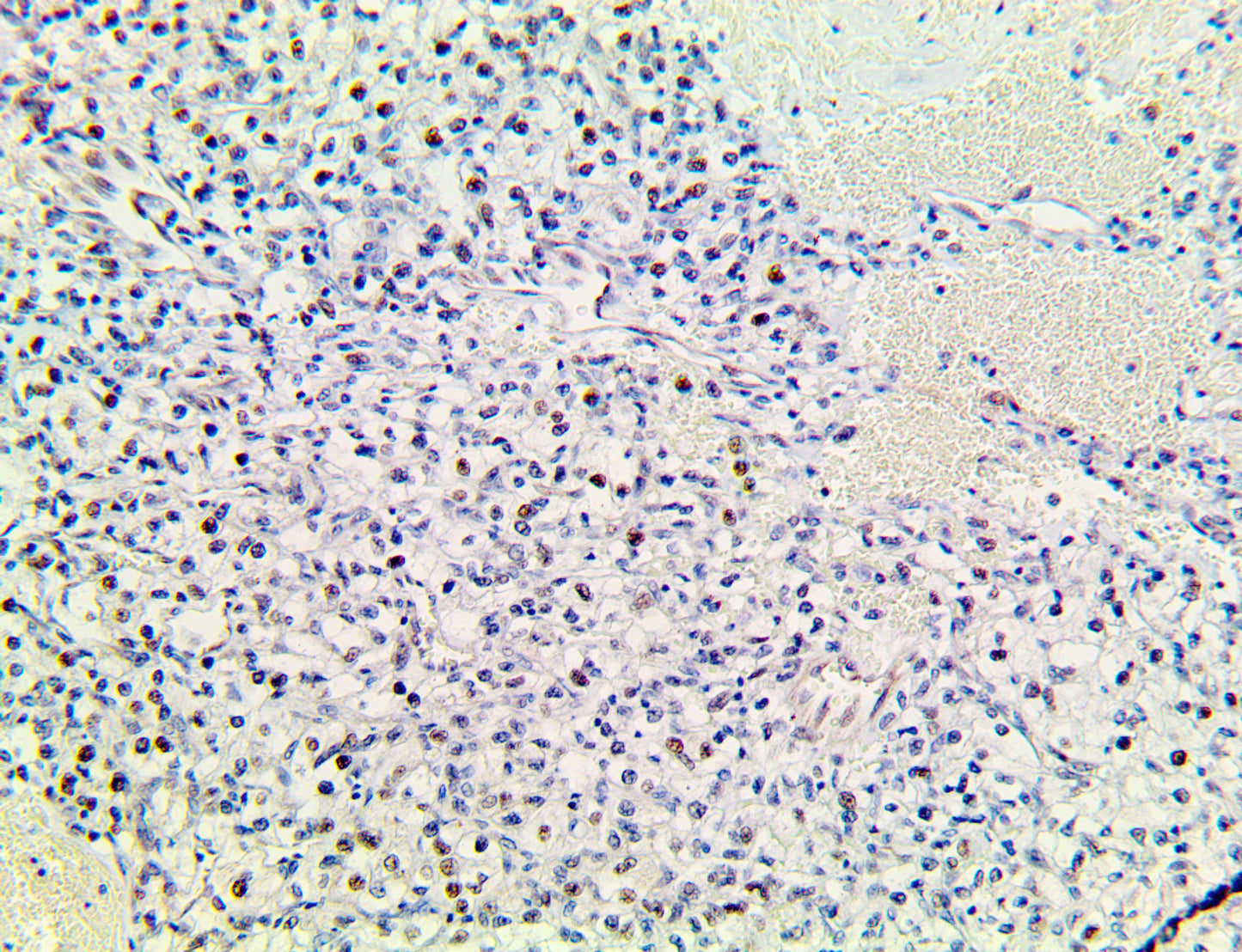
{"type":"root","children":[{"type":"paragraph","children":[{"type":"text","value":"PAX-7 or Paired Box Gene 7 is a transcription factor coded by a gene on locus 1p36, which can fuse with Forkhead Domain Region (FKHR). PAX-7 protein is involved in developmental pathways in neural tube and mesencephalon formation, muscle cell development, and oxidative stress sensitivity. PAX-7 regulates neural cell adhesion molecules and is expressed in proliferating myoblasts, but it is down-regulated after playing its role in cell differentiation toward muscle-derived specification. PAX-7 is restricted to muscle satellite and myogenic precursor cells in adults, although it is upregulated in embryonal (ERMS) and alveolar rhabdomyosarcoma (ARMS) and could suggest a de-differentiated cell type when overexpressed in these tumors. Recent studies suggested that PAX-7 is a novel marker, because it was expressed consistently in Ewing sarcoma, in addition to rhabdomyosarcoma and synovial sarcoma. PAX7 was found expressed in 90% of Ewing sarcomas (90%), mainly in a diffuse and strong manner. Although NKX2-2 showed similar sensitivity, PAX7 showed more extensive and strong reactivity. ARMS differs from ERMS by virtue of its occurrence in older patients, distinctive pseudoalveolar pattern, usual absence of strap cells, and strong myogenin rather than MyoD1 expression. Identification of a PAX3 or PAX7/FKHR fusion gene may be necessary for the confident distinction of ARMS from the most primitive forms of ERMS."}]}]}
Antibody Type
Mouse Monoclonal
Clone
BSB-145
Isotype
IgG2a
Localization
Nuclear, Cytoplasmic
Dilution
1:25-1:100
Species Reactivity
Human, Mouse, Rat
Immunogen
Recombinant PAX-7 of human origin.