 US & Canada:
  Email:


 Access IFU & SDS
Summary & Explanation
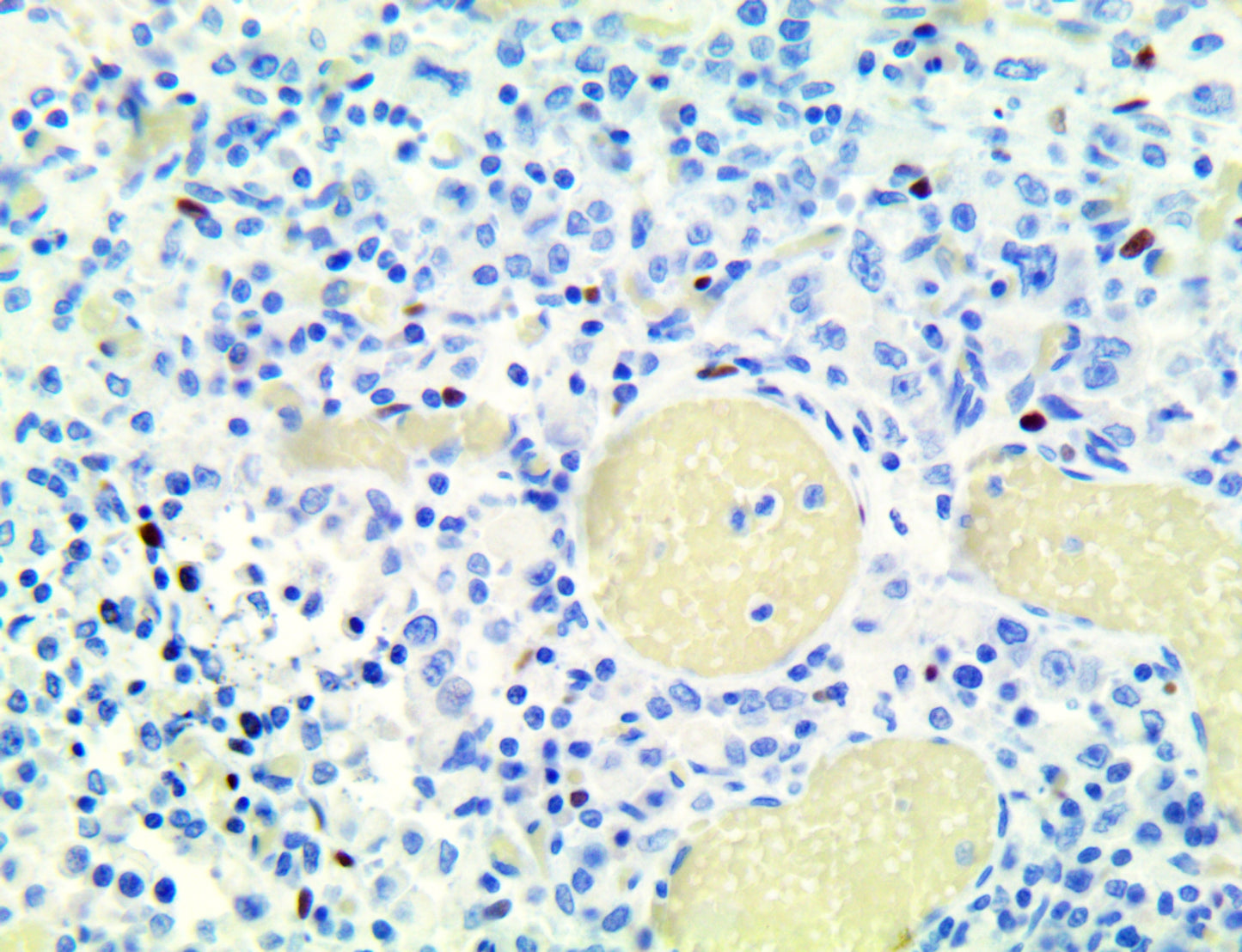
{"type":"root","children":[{"type":"paragraph","children":[{"type":"text","value":"Neurotrophic tyrosine kinase (NTRK) proto-oncogene family codes for proteins Trk A, Trk B, and Trk C, which participate in pathways of neuron cell growth, differentiation, signaling, and survival. The transmembrane neurotrophic receptors are activated by neurotrophins (Nerve Growth Factor, Brain-Derived Growth Factor, and neurotrophins 3/4/5) and in turn the TRKs activate MAPK, AKT, and Phospholipase C pathways. Non-fusion alterations in NTRK have been found in 14% of tested cancers. panTRK staining can be cytoplasmic, nuclear (as in NTRK-ETV6 and NTRK-LMNA fusions), or membranous (in NTRK-TMP3/4) depending on the fusion pair. NTRK fusions result in NTRK3-ETV6 pairs in 90% of cases, most commonly found in Carcinomas and Sarcomas of the Mammary and Salivary Secretory Glands. NTRK gene fusions are also found in Brain primary tumors and metastases, Lung, Breast, Papillary Thyroid Carcinoma, Colorectal and Pancreatic cancer. NTRK mesenchymal tumors have multiple morphological features and coexpression of S100, CD34, and panTRK."}]}]}
Antibody Type
Rabbit Monoclonal
Clone
RM423
Isotype
IgG
Localization
Membranous
Dilution
1:25-1:100
Species Reactivity
Human
Immunogen
Synthetic peptide corresponding to the C-terminus of the human TRK protein.