 US & Canada:
  Email:


 Access IFU & SDS
Summary & Explanation
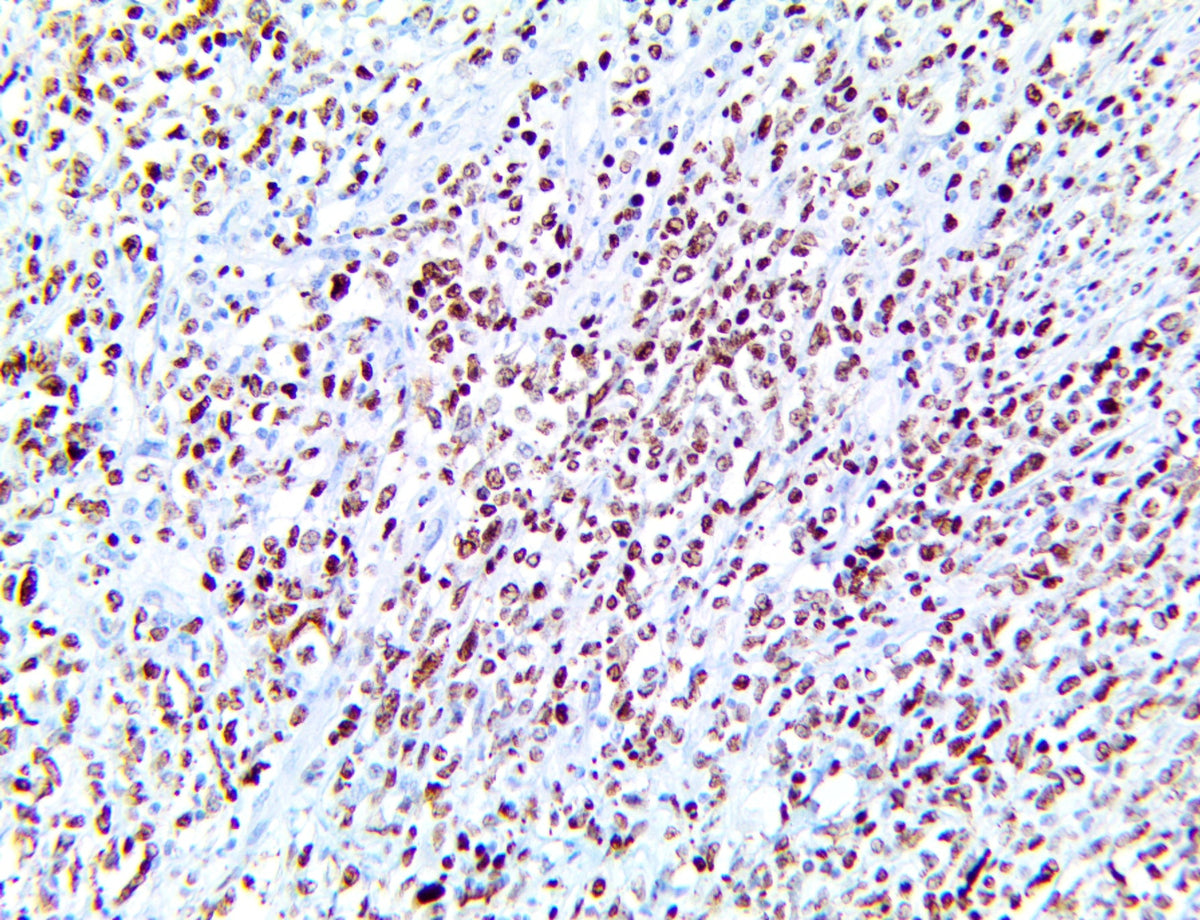
{"type":"root","children":[{"type":"paragraph","children":[{"type":"text","value":"Myeloid cell Nuclear Differentiation Antigen (MNDA) is present in granulocytes and monocytes (myeloid and B cells), found in the marginal zones of germinal centers in tonsil, lymph node, spleen. MNDA is a highly basic protein from 1q22, and is part of the family of nuclear proteins expressed in reaction to interferons. MNDA contains a Pyrin ‘death domain’ used in self-association and is suggested to induce or help prevent different programmed cell death pathways in hematopoietic cells."},{"type":"text","value":"MNDA expression is studied mainly in leukemias and lymphomas. MNDA is a marker to distinguish Nodal Marginal Zone Lymphoma from Follicular Lymphoma, and has been shown to be downregulated in Myelodysplastic Syndrome, a precursor for Leukemia. MNDA overexpression in Osteosarcoma induces apoptosis and protects patients from metastasis, and expression in Chronic Lymphocytic Leukemia indicates the degradation of anti-apoptotic mRNA, allowing cells suffering genotoxic stress to undergo apoptosis."}]}]}
Antibody Type
Mouse Monoclonal
Clone
BSB-157
Reactivity
Paraffin, Frozen
Control
Breast, Colon, Fallopian Tube, Brain, Tonsil, Transitional Cell Carcinoma, T Cell Lymphoblastic Lymphoma
Isotype
IgG1
Localization
Nuclear
Dilution
1:50-1:200
Species Reactivity
Human
Immunogen
Synthetic peptide corresponding to the C-terminus of the human MNDA protein.