 US & Canada:
  Email:


 Access IFU & SDS
Summary & Explanation
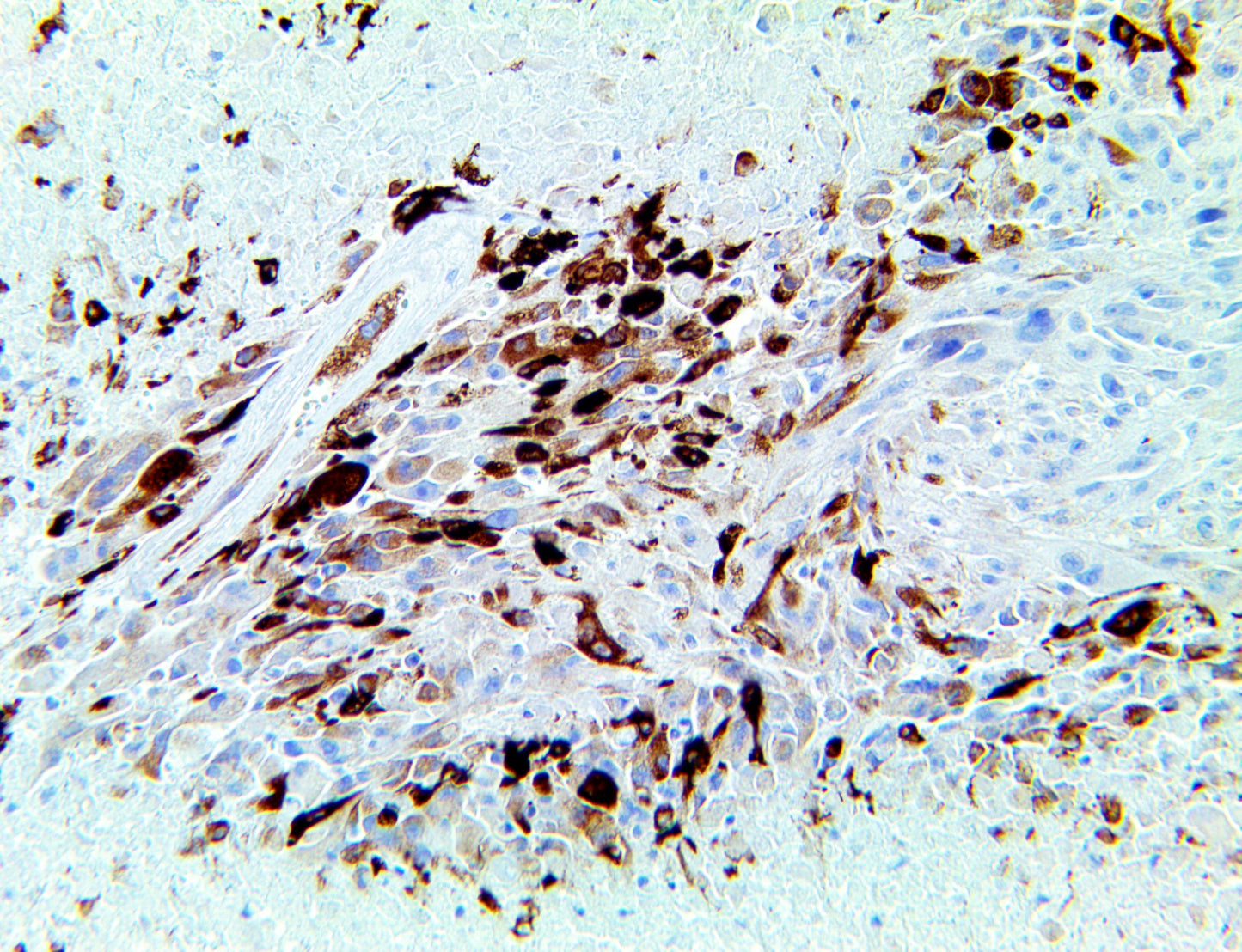
{"type":"root","children":[{"type":"paragraph","children":[{"type":"text","value":"IDH1 is an isocitrate dehydrogenase isozymes and encoded by the gene IDH1. IDH1 is involved in the citric acid cycle during glucose metabolism and catalyzes the oxidation of isocitrate to âº-ketoglutarate and reduction of NADP+ to NADPH. Both âº-ketoglutarate and NADPH play a role in protecting cells from oxidative stress and mitigating oxidative damage.\n Mutation in residue 132 of IDH1 results in loss of enzymatic function, build up of 2-hydroxyglutarate, and change in histone and DNA methylation. \n Mutation of IDH1 is implicated in metaphyseal chondromatosis with aciduria as well as diffused gliomas and a number of neoplasms such as acute myeloid leukemia, acute lymphocytic leukemia, myelofibrosis, intrahepatic cholangiocarcinoma, melanoma, chondroid tumors, and certain rare forms of colonic and prostate carcinomas. However studies have shown that IDH1 mutation is not a direct trigger of oncogenesis, but strongly associated with other tumor-promoting mutations. Screening for IDH1 mutation can provide valuable information on diagnosis and prognosis of glioma. Glioma with IDH1 mutation tend to be less aggressive than glioma without IDH1 mutation."}]}]}
Antibody Type
Rabbit Monoclonal
Clone
RBT-IDH1
Isotype
IgG
Localization
Cytoplasmic
Dilution
1:25-1:100
Species Reactivity
Human
Immunogen
Synthetic peptide corresponding to IDH1 R132H mutant