 US & Canada:
  Email:


 Access IFU & SDS
Summary & Explanation
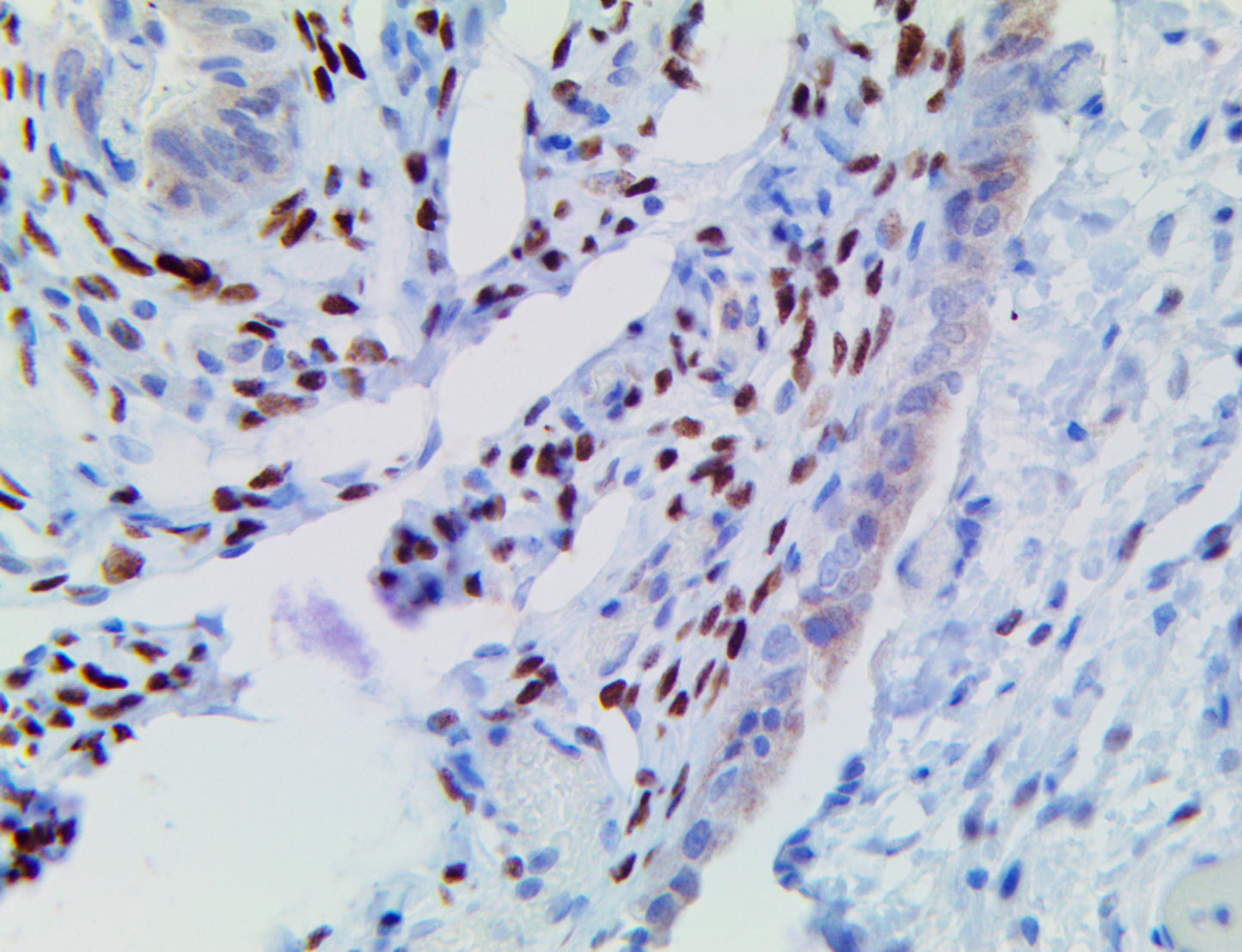
{"type":"root","children":[{"type":"paragraph","children":[{"type":"text","value":"The Forkhead box L2 (FOXL2) gene encodes FOXL2, a transcription factor involved in ovarian development and function. Before birth and in adulthood, the FOXL2 protein regulates the growth and proliferation of hormone-producing ovarian granulosa cells. FOXL2 is also involved in the breakdown of fats, steroid hormones, and potentially harmful reactive oxygen species in the ovaries."}]},{"type":"paragraph","children":[{"type":"text","value":"FOXL2 is a relatively sensitive and highly specific for Sex Cord-Stromal Tumors (SCST). FOXL2 expression is present in almost all SCSTs with a FOXL2 mutation or without a mutation. A specific somatic mutation in the FOXL2 gene has been found in Adult Granulosa Cell Tumor (402C→G / C134W), which is present in 70-95% of Ovarian Adult Granulosa Cell Tumors but not in Ovarian Fibromas. This mutation is also present in 2 of 5 men with Adult Granulosa Cell Tumor but absent in Ovarian Juvenile Granulosa Cell Tumors. Studies have demonstrated that FOXL2 is expressed in Cervical Squamous Cancer. FOXL2 suppresses the proliferation and promotes apoptosis of Cervical Cancer cells mainly through decreasing Ki-67 expression and increasing Fas ligand expression. FOXL2 has also been found to restrain the invasiveness of Cervical Cancer cells; hence, FOXL2 might be a novel tumor suppressor in Cervical Cancer. A study has demonstrated that FOXL2 is expressed in Breast Cancer and influences clinical outcome with improved recurrence-free survival in cases with nuclear expression. In a multivariate Cox model, nuclear FOXL2 was a significant prognostic factor in ER-positive patients treated with tamoxifen and tumors expressing nuclear FOXL2 were also more likely positive for stromal and/or cytoplasmic aromatase."}]}]}
Antibody Type
Rabbit Polyclonal
Clone
Polyclonal
Isotype
IgG
Localization
Nuclear, Cytoplasmic
Dilution
1:50-1:200
Species Reactivity
Human, Mouse, Pig, Bovine
Immunogen
Synthetic peptide corresponding to the C-terminus residues of the human FOXL2 protein.