 US & Canada:
  Email:


 Access IFU & SDS
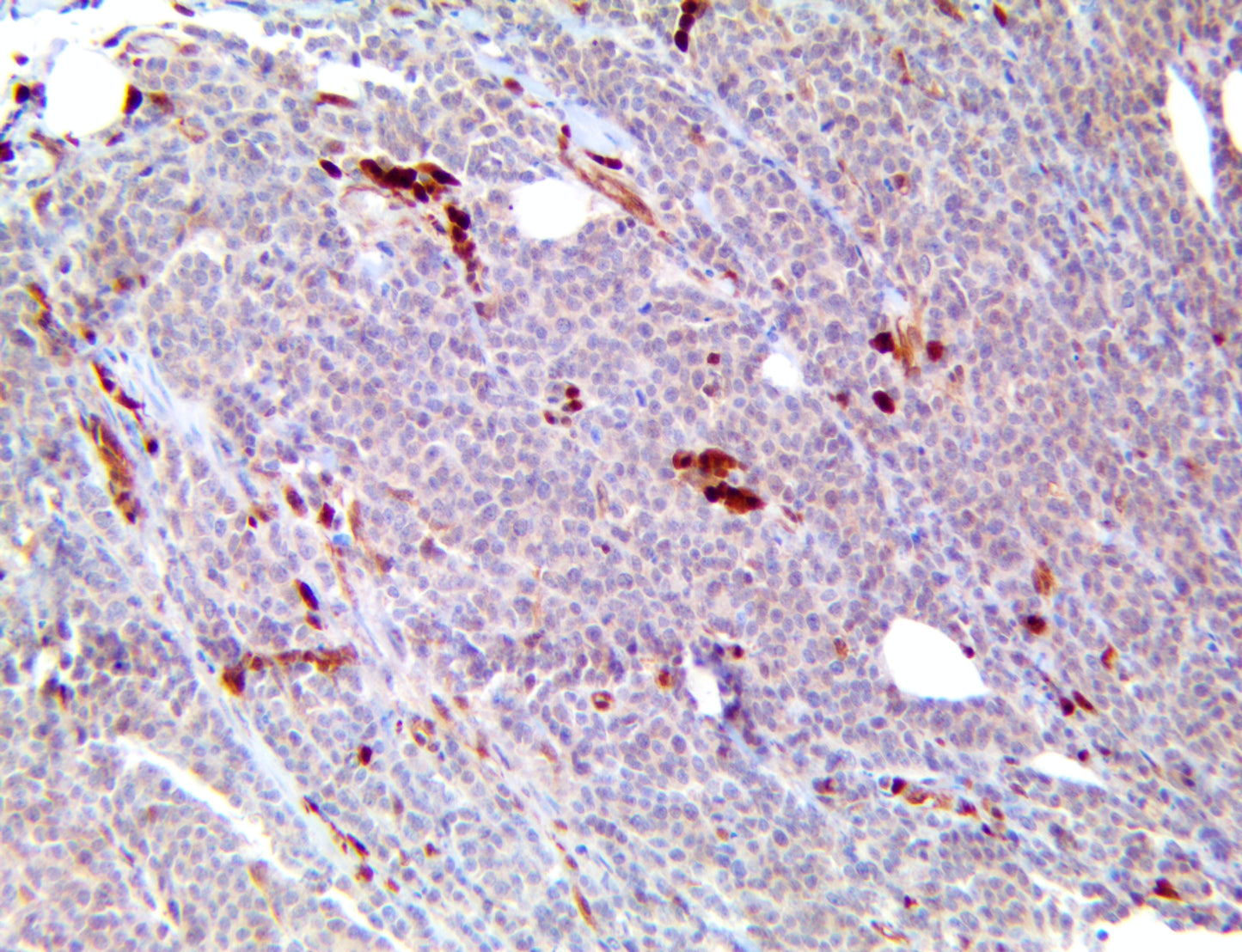
Summary & Explanation
{"type":"root","children":[{"type":"paragraph","children":[{"type":"text","value":"Caspase-3 is a cysteine-aspartic acid protease encoded by the gene CASP3 on chromosome 4q35.1. Caspase-3 belongs to the caspase family, which is a family of enzymes crucial to mediating apoptosis. Once activated, Caspase-3 degrades intracellular proteins as well as functional proteins and induces cell death."}]},{"type":"paragraph","children":[{"type":"text","value":"Dysregulated apoptosis is a typical characteristic of human cancer. Abnormal Caspase-3 expression has been directly associated with acute Myelogenous Leukemia, where Caspase-3 overexpression has been detected. On the contrary, decreased expression of Caspase-3 has been found in Prostate Cancer. Another study has found a significant association between high Caspase-3 levels and increased death rates in Breast Cancer using IHC, highlighting the prognostic potential of Caspase-3. In another study, IHC analysis of Gastric, Ovarian, Cervical, and Colorectal Cancer demonstrated that patients with high expression of cleaved Caspase-3 had a significantly shorter overall survival time compared with those with low cleaved Caspase-3 expression. Additionally, a link between Caspase-3 expression and tumor stage and lymph node metastasis was found in Gastric and Ovarian cancer. Caspase-3 is the predominant caspase involved in amyloid-β precursor protein (APP) cleavage, consistent with its marked elevation in dying neurons of Alzheimer’s disease brains and colocalization of its APP cleavage product with Aβ in senile plaques. Caspases thus appear to play a dual role in proteolytic processing of APP and the resulting propensity for Aβ peptide formation, as well as in the ultimate apoptotic death of neurons in Alzheimer’s disease."}]}]}
Antibody Type
Rabbit Monoclonal
Clone
RM250
Isotype
IgG
Localization
Nuclear, Cytoplasmic
Dilution
1:50-1:200
Species Reactivity
Human
Immunogen
Synthetic peptide corresponding to residues within the human Caspase-3 subunit p17.