 US & Canada:
  Email:


 Access IFU & SDS
Summary & Explanation
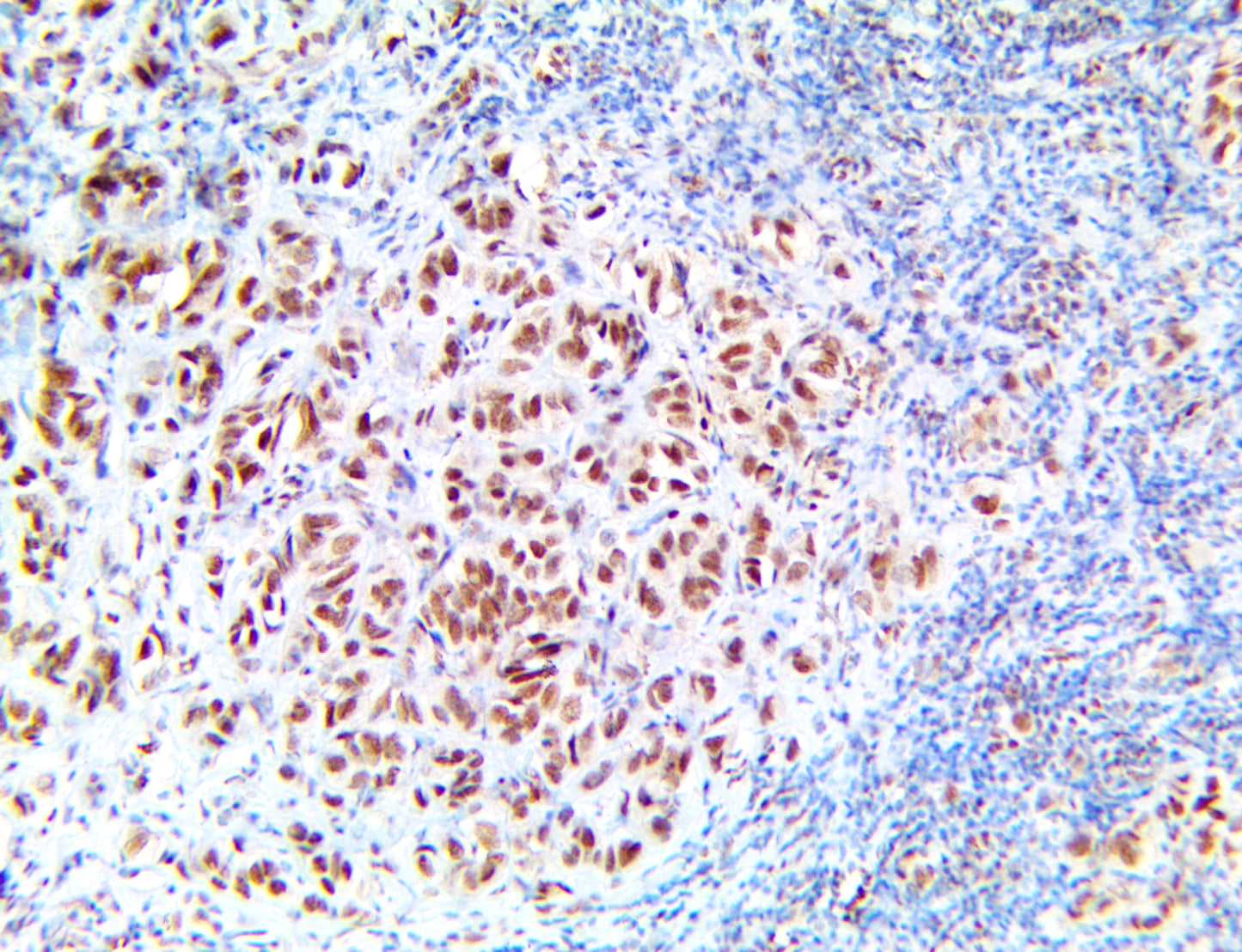
{"type":"root","children":[{"type":"paragraph","children":[{"type":"text","value":"Brahma-related gene-1 (BRG-1) protein is encoded by the gene SMARCA-4, which is localized on chromosome 19. BRG-1 is the core catalytic ATPase subunit of the SWItch/sucrose non-fermentable (SWI/SNF) complex. SWI/SNFs are a member of the family of ATP-dependent chromatin-remodeling complexes and the function of SWI/SNFs is to facilitate the transcriptional activation or repression of target genes. BRG-1 is essential for DNA repair, differentiation, and organ development. \n There are several studies that suggest the involvement of BRG-1 in different cancer types. It was found that the loss of BRG-1 expression occurs in a portion of tested cancers types, including Breast, Colon, Head/Neck, Ovarian, Liver and Renal Cell Cancer. On the contrary, overexpression of BRG-1 was found in Breast, Colorectal, and Prostate Cancer, as well as Melanoma and Neuroblastoma. There is no established cutoff for determining high versus low expression; staining of the surrounding normal tissue has been used as a median value relative to which BRG-1/SMARCA4 expression may be considered increased or decreased. An IHC analysis of BRG-1 in Non-Small Cell Lung Cancer (NSCLC) patients revealed that the survival rate of BRG-1 negative patients was 0%, when compared to BRG-1 positive patients, indicating the prognostic value of BRG-1 as a biomarker. Other IHC studies found that the loss of BRG-1 protein expression highly correlates with Small Cell Carcinoma of the Ovary, Hypercalcemic type (SCCOHT), suggesting BRG-1 as a diagnostic marker for SCCOHT."}]}]}
Antibody Type
Mouse Monoclonal
Clone
BSB-154
Isotype
IgG1
Localization
Nuclear
Dilution
1:25-1:100
Species Reactivity
Human, Mouse, Rat
Immunogen
Synthetic peptide corresponding to the N-terminus of the human Brg-1 protein.