 US & Canada:
  Email:


 Access IFU & SDS
Summary & Explanation
{"type":"root","children":[{"type":"paragraph","children":[{"type":"text","value":"The cytokine C-X-C motif chemokine 12 (CXCL12) is synthesized by metastasis target tissues and has been shown to attract tumor cells that express the receptor, C-X-C chemokine receptor type 4 (CXCR4).\n CXCL12 is an inflammatory chemokine involved in Phospholipase C, MAPK, and PI3K-Akt-mTOR, and JAK/STAT pathways. CXCL12 interacts with its receptor CXCR4 to promote immunosuppression, chemotaxis, adhesion and migration, cell proliferation and survival. CXCL12 is involved in tumor protection and metastasis, where it induces angiogenesis and epithelial-to-mesenchymal transition and inhibits apoptosis and host immune response. CXCL12 is highly expressed in cancer-associated fibroblasts and tumor stroma, where it sequesters T cells and prevents them from infiltrating and attacking the tumor."}]},{"type":"paragraph","children":[{"type":"text","value":"Expression of CXCL12 and CXCR4 in breast, pancreatic, esophageal, lung, prostate, and ovarian Cancers increases angiogenesis and is associated with poor prognosis, especially in the presence of HER2-neu which inhibits degradation of the CXCL12/CXCR4 signaling complex. Expression of CXCL12 in organs like lungs, lymph nodes, bone marrow, liver increases likelihood of metastasis to those sites. CXCL12 expression and activity is controlled by hypoxia, ACKR3 (CXCR7) receptor, and post-translational modifications; CXCL12 hypermethylation has been reported in gastric, breast, colon, lung, and prostate cancer. A large study found high CXCL12 expression associated with reduced overall survival in patients with oesophagogastric, pancreatic and lung cancer, whereas in breast cancer patients high CXCL12 expression conferred an overall survival advantage."}]}]}
Antibody Type
Mouse Monoclonal
Clone
BSB-165
Isotype
IgG1
Localization
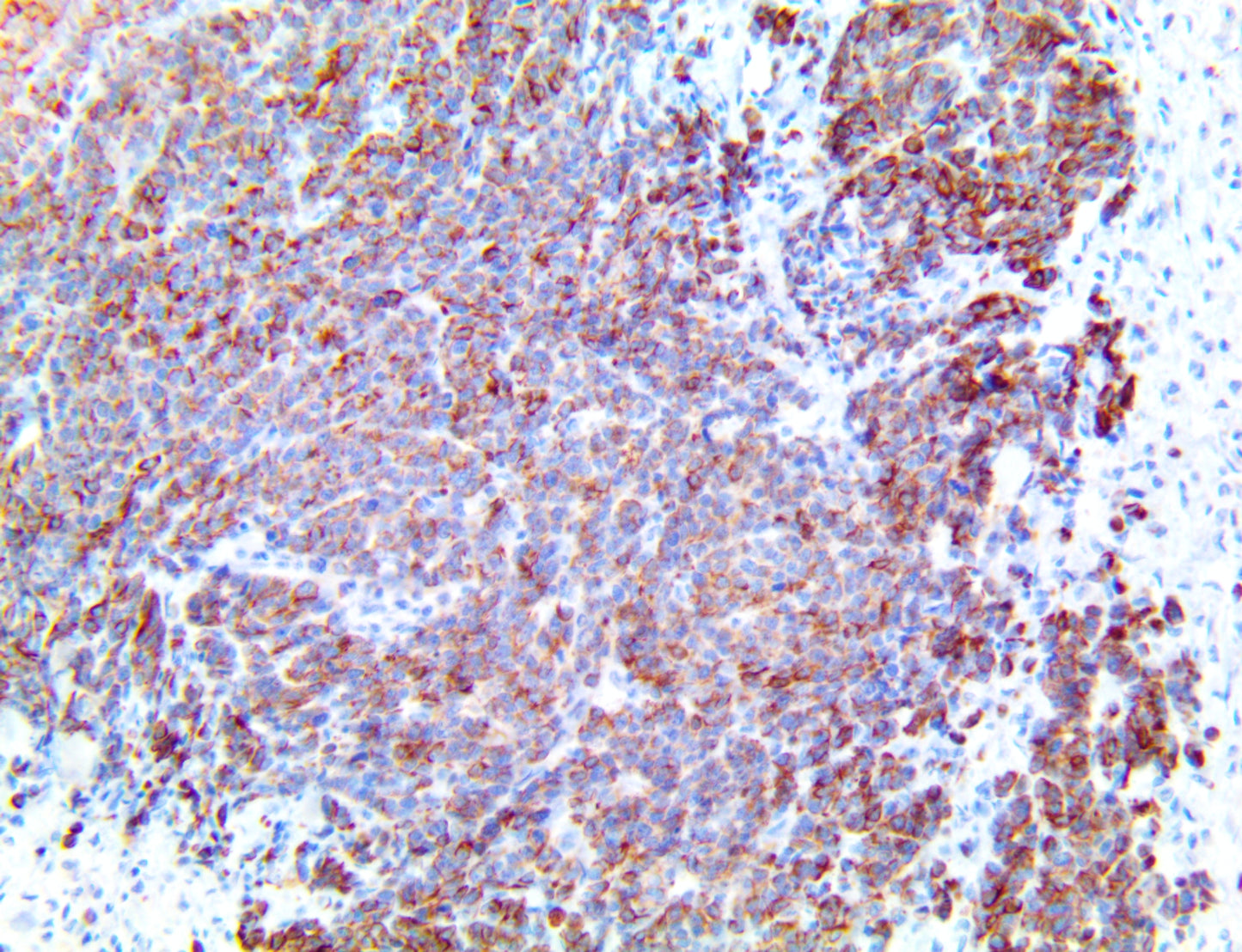
Cytoplasmic, Membranous
Dilution
1:25-1:100
Species Reactivity
Human
Immunogen
Recombinant human CXCL12/SDF‑1 alpha protein.