 US & Canada:
  Email:


 Access IFU & SDS
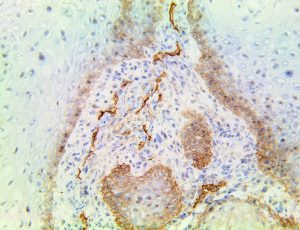
Summary & Explanation
{"type":"root","children":[{"type":"paragraph","children":[{"type":"text","value":"Podoplanin, also known as D2-40, is a mucin-type transmembrane glycoprotein involved in a wide variety of functions including regulation of organ development, cell motility, tumorigenesis and metastasis. Expression patterns have been seen in different organs including the central nervous system, kidney, lung, heart, intestine, and lymphoid organs. It is predominantly expressed in lymphatic endothelial cells, where it contributes to the maintenance of lymphatic vessel integrity, lymphangiogenesis, and lymphatic fluid drainage. Podoplanin interacts with other proteins, such as CLEC-2, and mediates signaling pathways involved in lymphatic development and function. Podoplanin expression is often upregulated in tumors, particularly those with a propensity for lymphatic metastasis where it promotes tumor lymphangiogenesis by inducing the proliferation and migration of lymphatic endothelial cells, thereby facilitating the spread of cancer cells to regional lymph nodes and distant organs. Podoplanin expression has been reported in various types of cancer, including squamous cell carcinoma, malignant mesothelioma, germ cell tumors, and certain types of sarcoma."}]}]}
Antibody Type
Mouse Monoclonal
Clone
D2-40
Isotype
IgG1
Localization
Cytoplasmic
Species Reactivity
Human
Immunogen
Resected tissue from dysgerminoma of the ovary.