 US & Canada:
  Email:


 Access IFU & SDS
Summary & Explanation
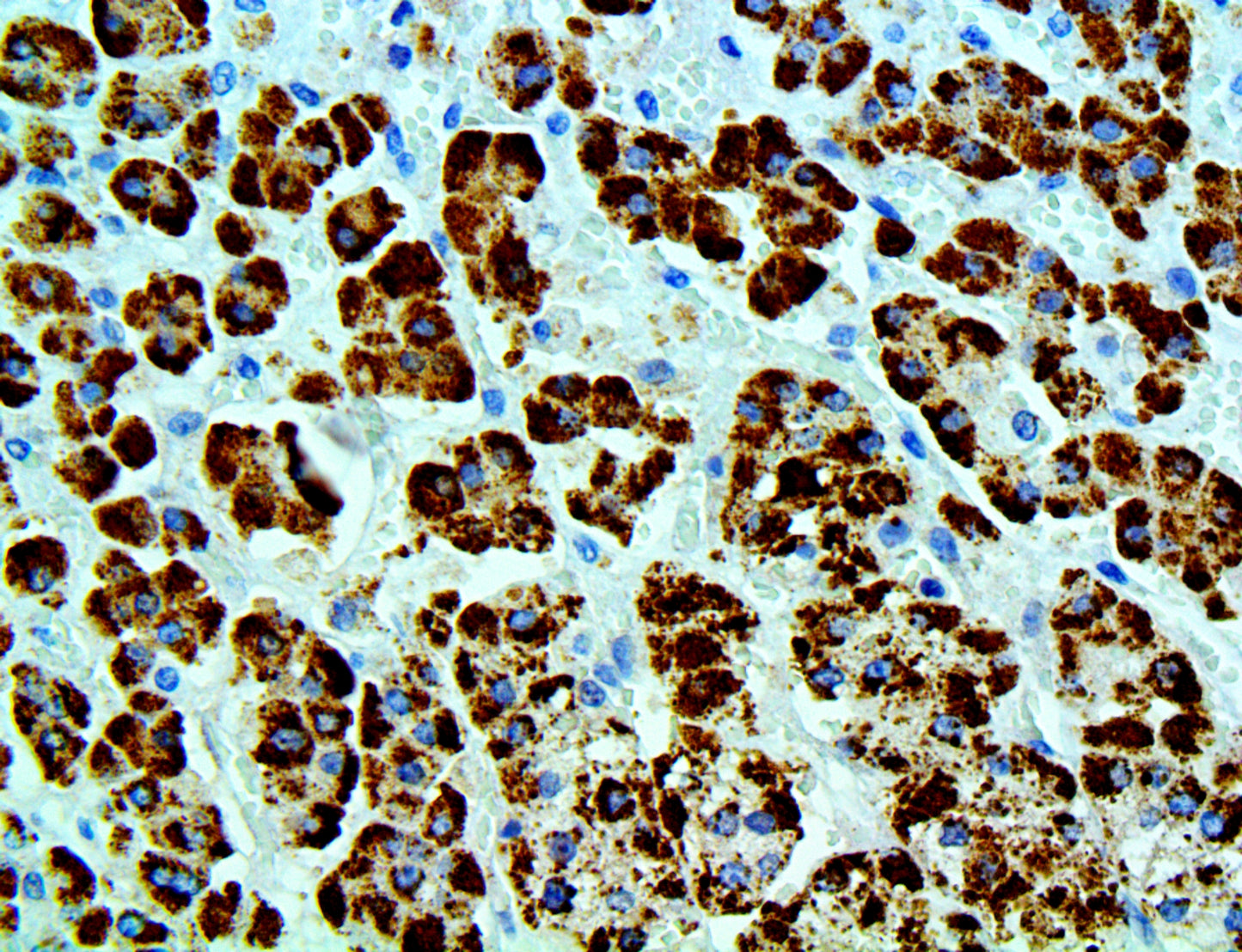
{"type":"root","children":[{"type":"paragraph","children":[{"type":"text","value":"Steroidogenic acute regulatory protein (STAR) is a protein that in humans is encoded by the STAR gene. The protein encoded by this gene plays a key role in the acute regulation of steroid hormone synthesis by enhancing the conversion of cholesterol into pregnenolone. This protein permits the cleavage of cholesterol into pregnenolone by mediating the transport of cholesterol from the outer mitochondrial membrane to the inner mitochondrial membrane."}]},{"type":"paragraph","children":[{"type":"text","value":"STAR is primarily present in steroid-producing cells, including Leydig cells in the testis, theca cells and luteal cells in the ovary and adrenal cells in the adrenal cortex. Low level of STAR expression in other tissues that produce steroid hormones for local use have been reported. STAR is a sensitive and specific marker for Leydig cell tumor. It is useful for differential diagnosis of sex-cord stromal tumor (SCST). Mutations in this gene are a cause of congenital lipoid adrenal hyperplasia (CLAH), also called lipoid CAH"}]}]}
Antibody Type
Rabbit Monoclonal
Clone
EP226
Isotype
IgG
Localization
Cytoplasmic
Dilution
1:50-1:200
Species Reactivity
Human, Mouse, Rat
Immunogen
Synthetic peptide corresponding to residues of human Steroidogenic Acute Regulatory Protein (STAR) protein.